
Septoria brown spot
Septoria glycines
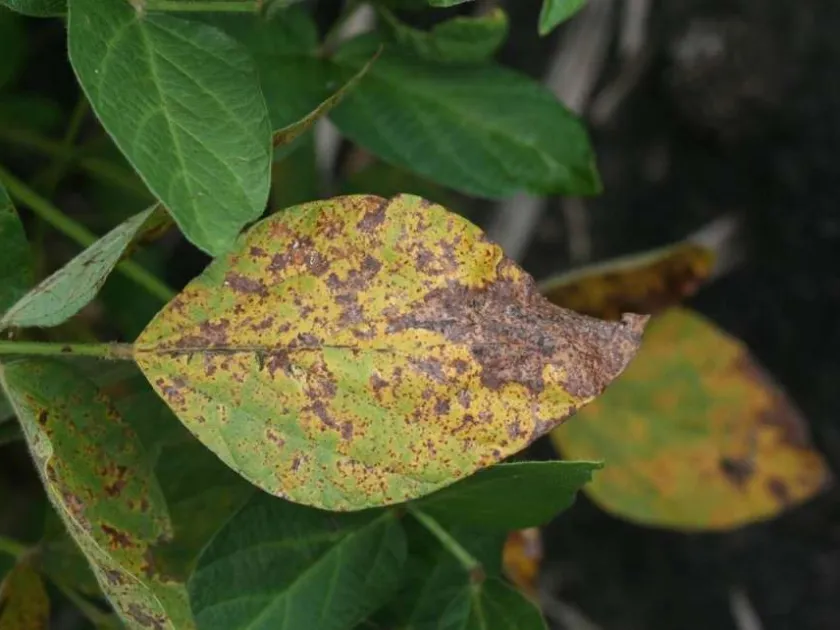
Description
Symptoms
Symptoms typically begin on the cotyledons and lower leaves. Initial signs include small, reddish-brown to dark brown spots that often have an irregular, angular shape constrained by leaf veins.
As the infection progresses, the tissues surrounding the lesions may develop chlorosis (yellowing). This is a characteristic response of the soybean plant to the toxins produced by the fungus.
Under favorable conditions, these small spots coalesce to form larger, irregular necrotic patches. The leaves eventually turn yellow and drop prematurely, which is a hallmark of severe infestation.
A key diagnostic feature is the presence of tiny, black pycnidia within the center of the brown spots. These can often be seen with the naked eye or a hand lens, confirming the presence of the pathogen.
While primarily a leaf disease, in severe cases, the symptoms can extend to stems, petioles, and even pods, causing discoloration and potentially reducing the quality of the developing seeds.
Pathogen
The causal agent of brown spot in soybeans is the fungus Septoria glycines. This pathogen is a host-specific fungus that primarily affects soybean crops, leading to significant foliage damage.
The fungus is classified as a deuteromycete and produces pycnidia — small, dark-colored fruiting bodies — within the lesions on the leaves. These structures serve as the primary site for the development of conidia (spores).
Septoria glycines overwinters on soybean crop debris left in the soil. The pathogen can remain viable for several years, waiting for the right environmental conditions to initiate a new infection cycle.
In the spring, conidia are splashed onto the lower leaves by raindrops or carried by wind. This initial inoculation establishes the disease in the field, from which secondary infections spread upwards during the growing season.
The life cycle of the pathogen is highly dependent on environmental moisture. Once established, the fungus can produce multiple cycles of spores, rapidly increasing the infection rate in dense soybean canopies.
Conditions for development
Warm and moist weather is essential for the development of Septoria brown spot. The optimal temperature range for fungal germination and infection is between +20 °C and +25 °C.
Frequent rainfall, heavy dew, and high humidity provide the necessary water for conidia to spread and penetrate leaf tissue. In contrast, dry conditions can significantly inhibit the progression of the disease.
High plant density and limited air circulation within the canopy create an ideal microclimate for the pathogen. Fields with low airflow remain wet for longer periods, facilitating rapid fungal spread.
Continuous cropping of soybeans is a major risk factor. Growing soybeans in the same field year after year allows the pathogen population to build up in the soil and on residual crop stubble.
Poor field hygiene, particularly the practice of reduced or no-till farming without proper residue management, keeps the pathogen inoculum on the surface, increasing the chance of early infection.
Why it matters
Septoria brown spot causes damage by reducing the plant's total photosynthetic area. Since leaves are the primary source of energy for seed development, premature defoliation directly affects yield.
The loss of leaves during the critical grain-filling period results in lighter, smaller seeds. This reduces both the yield quantity and the overall market quality of the soybean harvest.
In severe cases, the disease can weaken the plants, making them more susceptible to other stressors, including drought and secondary infections from other pathogens like downy mildew or bacteria.
Yield losses vary depending on the severity of the infection and the timing of the onset. In favorable conditions, losses can range from minor to significant if the defoliation happens early in the season.
Beyond quantity, seed quality may also suffer. The protein and oil content might be negatively impacted, potentially reducing the value of the harvested crop for commercial or industrial processing.
Protection
The most effective management strategy is crop rotation. Planting non-host crops like corn or wheat for at least 2–3 years helps deplete the population of Septoria glycines in the soil.
Tillage practices that incorporate crop residue into the soil speed up decomposition and reduce the amount of inoculum available to infect the next soybean crop.
Selecting resistant or tolerant soybean varieties is a foundational approach. Growers should consult local variety trials to find the best options suited for their region's disease pressure.
- Use high-quality, fungicide-treated seeds.
- Optimize seeding rates to improve canopy airflow.
- Maintain balanced soil fertility to support overall plant vigor.
Fungicide application is recommended if the disease risk is high. Applications of triazole or strobilurin-based fungicides during the R1 to R3 growth stages can be highly effective in controlling the spread of the pathogen.
Discussion
No discussions yet — be the first.