
Septoria leaf spot of celandine
Septoria chelidonii
Description
Symptoms
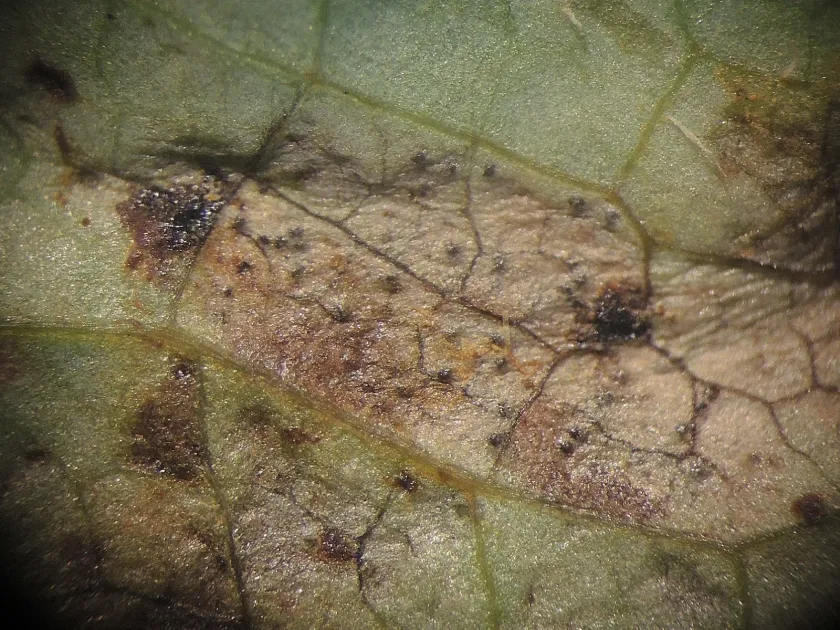
The characteristic symptoms include the appearance of small, circular to angular spots on the leaves. These spots start as pale green or yellowish patches and gradually turn brown with a darker, distinct margin.
Visible diagnostic features are the tiny, black, pimple-like structures called pycnidia scattered across the surface of the lesions. These are often easier to identify with a magnifying lens and confirm the presence of the pathogen.
As the infection spreads, individual spots frequently coalesce to form larger, irregular necrotic areas. This leads to the premature yellowing (chlorosis) and shriveling of the entire leaf, which eventually turns brown and dies.
The disease typically progresses from the lower foliage, which remains in contact with the humid soil or is more shaded, to the upper parts of the plant, especially under conditions of prolonged canopy wetness.
Severe infestations lead to defoliation, which severely stunts the plant's growth and diminishes its medicinal quality, making the harvest unsuitable for processing or commercial use.
Pathogen
The disease is caused by the fungus Septoria chelidonii, an ascomycete pathogen specifically adapted to infecting the greater celandine plant. It functions as a parasitic organism that colonizes the leaf tissues of its host.
The life cycle of the pathogen is centered around the production of pycnidia, which are microscopic, flask-shaped structures embedded within the leaf lesions. These structures release conidia, the primary infectious units, during periods of wet weather.
The mycelium of the fungus penetrates the epidermal cells and grows within the intercellular spaces of the leaf, causing chlorosis and subsequent necrosis as the pathogen consumes nutrients and produces metabolic waste.
Overwintering occurs primarily in the form of dormant spores or mycelium on infected plant debris. These residues serve as the primary source of inoculum when favorable conditions for infection return in the spring.
Septoria chelidonii exhibits a high degree of host specificity, which allows it to thrive in natural celandine populations while posing a persistent threat to commercial cultivation efforts.
Conditions for development
The development and spread of the disease are highly dependent on high humidity and prolonged leaf wetness. Rain splashes are the main mechanism for the dispersal of conidia from the lower infected leaves to the upper foliage.
Moderate temperatures ranging from 18°C to 25°C are ideal for the germination of spores and the rapid colonization of host tissues. In such climates, the interval between infection and symptom expression is significantly reduced.
Dense plant spacing creates a stagnant microclimate with poor air circulation, which prevents leaves from drying quickly after dew or rain, thereby providing the perfect environment for the fungus to thrive.
Any damage to the leaf surface, whether caused by insect herbivory or physical abrasion, provides an entry point for the fungal spores, accelerating the colonization process.
Lack of proper field sanitation, such as leaving infected leaf litter on the ground, ensures that high levels of inoculum remain available for the next infection cycle, increasing the disease severity over time.
Why it matters
The primary impact of Septoria leaf spot is the reduction of the photosynthetic leaf area. This limits the plant's ability to accumulate biomass and produce the complex secondary metabolites characteristic of celandine.
For medicinal herb production, even moderate infections can render the crop worthless. The presence of necrotic lesions reduces the chemical quality of the plant material, making it unsuitable for pharmacological formulations.
Premature leaf drop weakens the plant's overall vitality, negatively affecting the health of the root system and decreasing the plant's chances of winter survival or successful regrowth in the following season.
In cases of epidemic proportions, the disease can lead to total crop failure, necessitating the destruction of the infected plants to prevent further spread to surrounding fields.
The cumulative effect of tissue damage and nutrient diversion to the pathogen results in poor overall plant performance, reduced seed quality, and significant economic losses for growers.
Protection
Integrated pest management (IPM) is essential for controlling this disease. The most effective approach is to maintain high standards of sanitation, including the removal and destruction of all infected plant materials at the end of the season.
- Practice crop rotation to minimize inoculum buildup in the soil.
- Maintain proper plant spacing to improve air circulation and reduce canopy humidity.
- Use drip irrigation instead of overhead watering to prevent spore dispersal.
- Apply authorized fungicides only when absolutely necessary and following regulatory guidelines.
Biocontrol agents, such as beneficial bacteria, can be employed as a proactive measure to suppress the growth of Septoria species while ensuring the final product remains organic and contaminant-free.
Early identification of symptoms and prompt removal of the first few infected leaves can prevent the disease from becoming a widespread problem within the field.
Discussion
No discussions yet — be the first.