
Septoria leaf spot of hemp
Septoria cannabis
Description
Symptoms
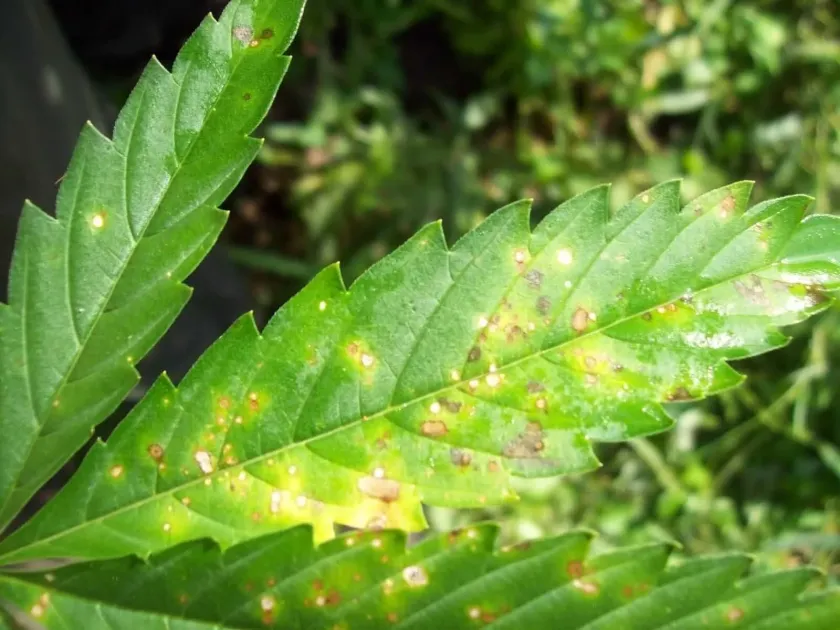
The characteristic symptoms of Septoria leaf spot are circular or irregular spots on the leaves. Initially, these spots appear as pale yellow or light brown patches with faint margins.
As the disease progresses, the spots expand and turn dark brown, often developing a darker, well-defined border. The lower leaves are typically the first to show symptoms because they are closer to the moist soil.
A distinctive sign of this disease is the presence of small, black, pinhead-sized dots in the center of the necrotic spots. These are the pycnidia, and their visibility confirms a Septoria infection.
Severely infected leaves become chlorotic, wither, and eventually fall off prematurely. This defoliation can move upward from the bottom of the plant as the infection spreads.
In humid conditions, the infection can occasionally affect petioles and stems, showing necrotic streaks that weaken the structural integrity of the plant.
Pathogen
The disease is caused by the fungus Septoria cannabis. This pathogen is a specialized fungus that belongs to the group of Ascomycetes, known for forming pycnidia in its host tissues.
The fungus produces pycnidia, which are microscopic, flask-shaped structures where spores (pycnidiospores) are generated. These spores serve as the primary inoculum for spreading the disease across the field.
The pathogen can overwinter in plant debris and soil. Once the conditions become favorable, the spores are splashed by water or carried by the wind to the lower leaves of healthy hemp plants.
Infection occurs primarily through the stomata of the leaves. Once inside, the fungal mycelium colonizes the intracellular spaces, feeding on the plant's nutrients and gradually breaking down the cellular structure.
The biological cycle of this pathogen is highly dependent on humidity, as the fungus requires a water film on the leaf surface for successful spore germination and invasion.
Conditions for development
Septoria leaf spot thrives in temperate conditions, with temperatures ranging from +18°C to +25°C. This temperature range is ideal for rapid fungal growth and sporulation.
High humidity and prolonged periods of leaf wetness are essential triggers for the disease. Rainfall or overhead irrigation keeps the foliage moist, facilitating the spread of spores.
Poor aeration in dense plantings significantly increases the risk of an outbreak. When air cannot circulate, the humidity levels remain high, providing a perfect environment for the fungus.
Weed infestation around the field can create a damp microclimate, further encouraging the disease. Additionally, some weeds can act as alternative hosts for related Septoria species.
Excessive moisture retention following heavy rain or lack of sunlight in the lower canopy layer are the primary environmental factors favoring the spread of the pathogen.
Why it matters
The primary damage caused by Septoria leaf spot is the reduction of the photosynthetic leaf area. This leads to a decline in plant vigor, slower growth rates, and reduced biomass accumulation.
In industrial hemp, the loss of foliage directly impacts the quality and quantity of the fiber. The plant's inability to synthesize sufficient nutrients results in thinner or weaker fiber strands.
Severe infection stresses the plant, making it more vulnerable to secondary infections by other fungi or colonization by various pests, which further threatens the crop yield.
Premature leaf drop leads to an imbalanced plant, which can result in poor development of inflorescences or lower seed yield in seed-producing hemp crops.
Economic losses are cumulative, including both the potential reduction in raw material weight and the additional costs associated with implementing emergency fungicide controls.
Protection
Crop rotation is the most critical management practice. Avoiding planting hemp in the same field for at least 3 years helps break the survival cycle of the Septoria cannabis fungus.
Sanitation is vital; growers should remove and destroy crop residues after harvest to minimize the number of spores that survive to infect the next season's crop.
Managing planting density ensures adequate airflow throughout the canopy, which helps leaves dry faster and reduces the chance of fungal spores establishing themselves.
Selecting resistant or less susceptible hemp cultivars is an effective long-term strategy for minimizing the impact of the disease in areas where Septoria is common.
When the disease reaches an economic threshold, the application of copper-based or systemic fungicides can help protect the remaining healthy leaves from further infection.
Discussion
No discussions yet — be the first.