
Septocyta leaf spot
Septocyta
Description
Symptoms
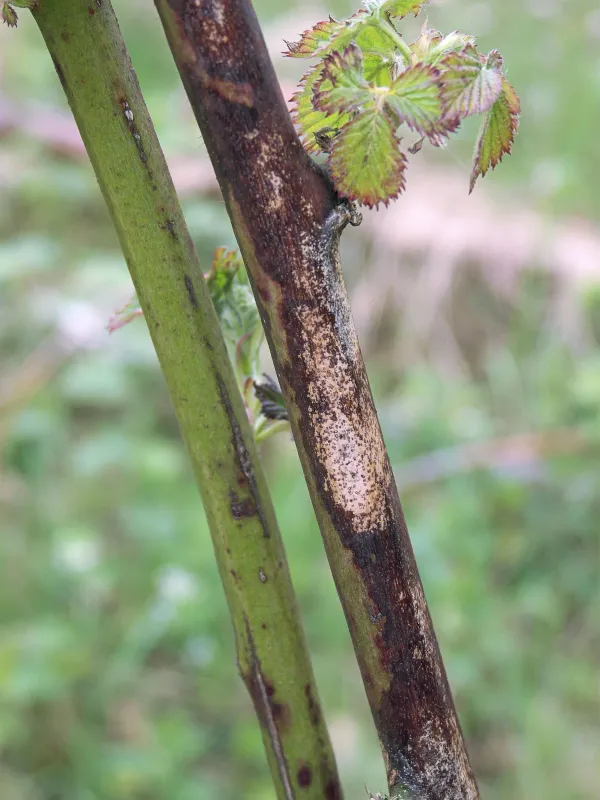
The primary symptom of the disease is the development of small, circular spots on the canes, which eventually transition into larger, necrotic lesions.
The spots are often characterized by a distinct purplish-brown border surrounding a lighter-colored center where tiny black pycnidia become visible to the naked eye.
As the disease progresses, the bark on the affected canes tends to crack and peel, eventually leading to the death of the upper sections of the shoot.
Foliage can also show symptoms, manifesting as irregular spotting and premature leaf drop if the infection is sufficiently severe.
Affected plants often display a generally stunted appearance with sparse foliage and reduced vigor, reflecting the systemic damage caused to the vascular system.
Pathogen
Septocyta leaf spot is caused by the fungal pathogen Septocyta ruborum, which primarily targets bramble fruits such as blackberries and sometimes raspberries.
This fungus is an ascomycete that spreads through microscopic spores produced in specialized fruiting bodies known as pycnidia located on infected stems.
The life cycle of the pathogen is closely tied to the host tissue, where it resides as mycelium, gradually invading the cortex and causing internal cell damage.
It remains dormant in infected canes or debris throughout the winter season, serving as a primary source of inoculum for the following spring's infection cycle.
The biology of the fungus allows it to persist in the field for several years, making it a recurring challenge for producers of cane berries.
Conditions for development
Septocyta thrive in environments characterized by high humidity, prolonged periods of leaf wetness, and moderate temperatures throughout the growing season.
Dense plantings with poor air circulation create microclimates that retain moisture, allowing spores to germinate and infect healthy plant tissues more easily.
The pathogen is primarily disseminated by splashing rain and overhead irrigation, which carry spores from established lesions to susceptible green tissues.
Warm spring and early summer weather coincides with the rapid expansion of young canes, which are highly susceptible to initial infections by the fungal spores.
Mechanical injuries resulting from pruning, insect feeding, or general field maintenance create entry points for the fungus, exacerbating the disease spread.
Why it matters
The economic impact of Septocyta leaf spot is significant, as it leads to reduced cane vigor, poor fruit quality, and lower annual yields for affected plantations.
Repeated infection weakens the root system and the overall structure of the plant, potentially leading to the death of entire canes or plants in severe cases.
Loss of photosynthetic leaf area and damage to stems reduce the plant's ability to store necessary carbohydrates for the following year's growth.
Fruit quality suffers as the plant redirects energy to fight the infection rather than developing large, healthy, and flavorful berries.
Persistent infection can ultimately lead to the loss of commercial viability, necessitating expensive replanting of the entire berry block.
Protection
Effective control starts with strict sanitation, including the prompt removal and destruction of all infected canes after the harvest is completed.
Integrating fungicide programs during the early bud-break and vegetative growth stages can prevent the initial colonization of young tissues.
Cultural practices that prioritize airflow, such as proper spacing and thinning of canes, are essential to minimize the period of leaf wetness.
Ensuring that the soil drainage is adequate and avoiding overcrowding help to keep the environment less hospitable to fungal growth.
- Regular pruning to remove weak or damaged wood.
- Disinfecting pruning tools between different plant rows.
- Monitoring for early signs of lesions to manage outbreaks immediately.
Discussion
No discussions yet — be the first.