
Flax selenophoma leaf spot
Selenophoma linicola
Description
Symptoms
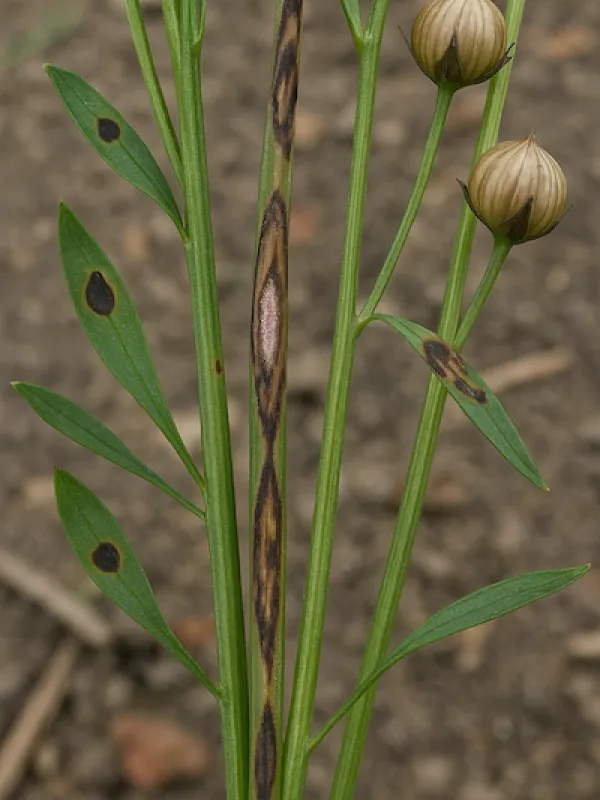
The first symptoms of selenophoma leaf spot appear on cotyledons and leaves as small, circular, light-colored spots. As the disease progresses, these spots enlarge and turn brown or dark with a distinct margin.
Black dots, known as pycnidia, become clearly visible on the infected tissues, arranged in concentric circles or scattered randomly. In conditions of high humidity, the spots may coalesce, causing leaf necrosis.
When stems are affected, elongated brown lesions form, which weaken the structural integrity of the plant. This leads to stem lodging and premature drying of the plant tops.
During the flowering stage, the pathogen can infect the bolls, penetrating the interior and contaminating the seeds, rendering them unsuitable for sowing.
The disease often occurs in patches within a field, a characteristic feature of fungal infections spread by airborne spores.
Pathogen
The disease is caused by the imperfect fungus Selenophoma linicola (synonym Septoria linicola). This pathogen affects both fiber flax and oilseed flax throughout the entire growing season.
The fungus survives on infected plant debris, in the soil, and on seeds, which serve as the primary source of infection. Conidia are dispersed by wind and rain splashes, ensuring rapid spread within the fields.
The life cycle of the pathogen is closely tied to environmental humidity. Under favorable conditions, the fungus produces pycnidia containing a large quantity of infectious spores.
The pathogen can survive unfavorable winter periods by remaining dormant as mycelium in infected seeds or crop stubble.
Scientific studies confirm that the host range of this species is limited to the genus Linum, which allows for effective crop rotation planning to reduce the overall infection pressure.
Conditions for development
The development of selenophoma leaf spot is favored by moist and moderately warm weather. The optimal temperature for spore germination ranges between +18°C and +22°C under high relative humidity.
Frequent rainfall during the flax flowering period creates an ideal microclimate for intensive sporulation and infection of new areas within the field.
Dense crop stands with poor air circulation contribute to the persistence of moisture on the leaves, which significantly accelerates the rate of disease progression.
Improper agronomic practices, particularly excessive nitrogen fertilizer application, reduce the natural immunity of the flax plant and make it more susceptible to penetration by Selenophoma linicola.
In dry years, the disease development slows down, but the pathogen does not perish; instead, it enters a latent phase, waiting for favorable moisture conditions.
Why it matters
Selenophoma leaf spot significantly reduces flax productivity, negatively impacting both the quantity and quality of the fiber. Stem infections reduce fiber strength, leading to harvest losses.
Infection of the bolls results in shriveled seeds with low germination rates, necessitating mandatory seed treatment before planting.
Seed yield can decrease by 15–30% depending on the severity of the infection and the specific weather conditions of the growing season.
The quality of flax fiber drops sharply due to the degradation of stem tissues by the fungal mycelium, making the raw material unsuitable for high-quality textile production.
Severe infestations in fields can lead to a total loss of commercial value for the crop if timely protective measures are not implemented.
Protection
The primary control method is strict adherence to crop rotation, ensuring a gap of at least 5–6 years before returning flax to the same field to interrupt the pathogen life cycle.
The use of healthy, certified seed material that has undergone mandatory phytosanitary fungicide treatment significantly reduces the risk of epiphytotic outbreaks.
Thorough burial of post-harvest crop residues via deep plowing promotes rapid decomposition and the destruction of fungal spores residing in the soil.
The application of chemical crop protection products, such as systemic fungicides, is effective during the early budding stage if the first signs of the disease appear.
- Optimizing stand density to improve air circulation.
- Applying balanced doses of phosphorus and potassium fertilizers.
- Eliminating weeds that may act as alternative hosts for the infection.
Discussion
No discussions yet — be the first.