
Scytonema julianum
Scytonema julianum
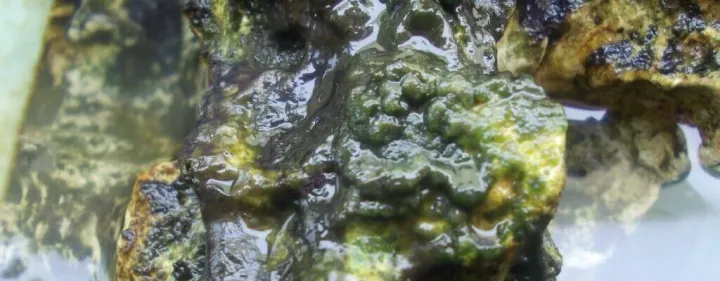
Description
Symptoms
The primary symptom is the appearance of dark, bluish-green or brownish velvet-like patches on the trunks and major limbs of trees.
Under humid conditions, these colonies become slippery and gelatinous, while in dry weather, they may appear as dry, brittle crusts.
Signs are most commonly found on the shaded, northern-facing sides of trees, where moisture tends to accumulate and persist longer.
The bark beneath these mats often appears discolored or weakened, with a tendency to develop small cracks or premature weathering.
- Dark greenish-brown patches on the bark.
- Slippery, gelatinous texture during wet weather.
- Flaking of surface bark layers where algae have colonized.
Pathogen
Scytonema julianum is a filamentous cyanobacterium that often establishes itself as an epiphyte on the bark of various woody plants.
While not a primary parasite, it thrives on surfaces providing moisture, acting as a competitive organism that alters the local bark microenvironment.
The biological success of this pathogen is attributed to its ability to fix nitrogen and perform photosynthesis in nutrient-poor conditions.
The morphology consists of complex, branching filaments that aggregate into dense, dark mats, which change appearance based on hydration levels.
As a member of the Cyanobacteria phylum, it is highly adaptable, often found in environments where humidity remains consistently high for extended periods.
Conditions for development
High relative humidity and poor air circulation within the tree canopy are the primary drivers for the rapid spread of Scytonema julianum.
Lack of direct sunlight due to dense, unpruned foliage provides a stable microclimate that is ideal for cyanobacterial growth.
Accumulation of dead bark and organic debris creates a rich substrate that facilitates the initial colonization of the surface.
Stable, moderate temperatures combined with regular rainfall allow the organism to remain active throughout the growing season.
Neglected orchards, where tree density is high and pruning is infrequent, are significantly more susceptible to heavy infestation.
Why it matters
The presence of dense algal mats blocks the bark lenticels, which are essential for gas exchange and respiration of the tree’s living tissues.
The trapped moisture underneath the colonies provides an entry point for secondary bacterial and fungal pathogens, potentially causing bark necrosis.
Trees covered with Scytonema julianum show reduced vigor and may suffer from delayed growth due to impaired physiological processes in the bark.
The bark underneath the algae becomes less resilient to extreme weather conditions, including winter frosts and solar radiation.
Chronic infestation can lead to the slow decline of the tree's overall health, as the tree redirects energy to defend its surface tissues.
Protection
Mechanical cleaning of trunks and branches to remove dead, loose bark is the most immediate and effective way to manage the infestation.
Implementing regular pruning schedules improves air circulation and light penetration, effectively drying out the bark surface.
Applying copper-based fungicides during the dormant season acts as an effective control measure against the spread of cyanobacteria.
Whitewashing tree trunks with lime-based solutions creates an alkaline surface that prevents the re-establishment of algae.
Ensuring proper tree nutrition strengthens the tree’s natural defense mechanisms, making the bark less hospitable to epiphytic organisms.
Discussion
No discussions yet — be the first.