
Scytinostroma portentosum
Scytinostroma portentosum
Description
Symptoms
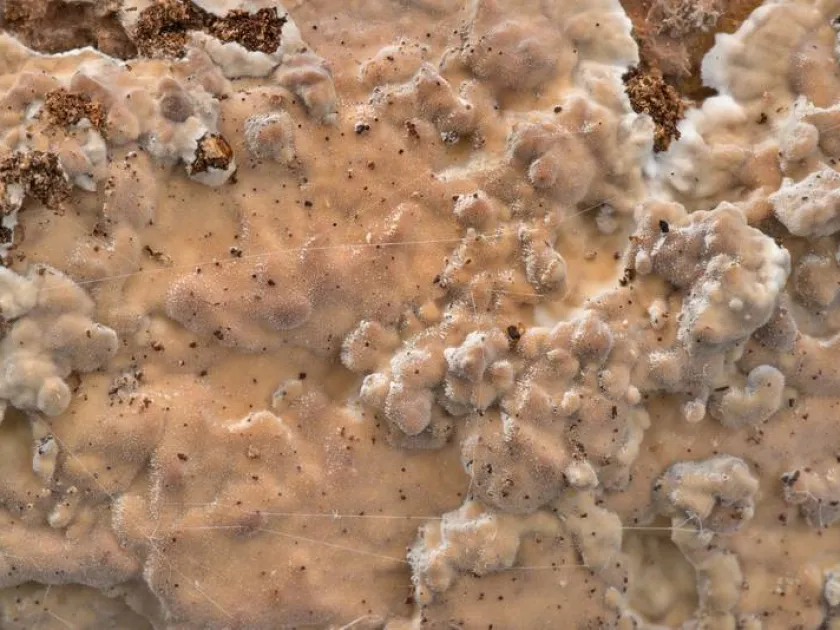
The primary external symptoms of infection include the formation of characteristic fungal fruiting bodies on the bark. These growths appear as whitish, cream, or yellowish crusts or leathery films that adhere tightly to the substrate, often emerging from cracks in the bark.
A key internal symptom is the alteration of wood color and texture in the affected area. The heartwood shows signs of destructive rot, becoming brittle, easily splintering, and losing its natural strength, often shifting toward pale or mottled shades of decay.
Visual inspection of infected areas often reveals fissures in the bark from which exudates may leak. The bark itself may become uneven, start to peel off, or exhibit premature drying, indicating deep-seated physiological damage to the tree's vascular system.
During advanced stages of the disease, the crown of the tree may exhibit symptoms such as premature yellowing and leaf drop, as well as the dieback of terminal shoots. These signs occur because the fungal growth obstructs the xylem and phloem, preventing adequate nutrient and water movement.
Diagnosis also involves observing the lower trunk and root collar regions, where Scytinostroma portentosum is most likely to display its active sporulation. In humid weather, these fruiting bodies may appear slightly slimy or velvety to the touch.
Pathogen
Scytinostroma portentosum is a basidiomycete fungus belonging to the Russulales order, recognized as a destructive plant pathogen affecting woody species. This fungus is known for causing specific types of wood rot, targeting the structural tissues of trunks and branches, making it a critical subject in forest pathology.
The pathogen functions as a wood-decay saprotroph that can transition to a parasitic lifestyle under favorable conditions. It typically enters trees through mechanical injuries to the bark, pruning wounds, or frost cracks, where it begins the process of enzymatic degradation of lignin and cellulose.
The biology of this fungus is characterized by the formation of flat, resupinate (crust-like) fruiting bodies. These structures, which often have a leathery or felt-like texture, develop directly on the surface of the bark or exposed wood, serving as the primary source for spore dissemination within forest ecosystems.
This fungus thrives in moderately humid environments and is frequently encountered in hardwood and mixed forest stands. It possesses significant enzymatic activity, allowing it to break down wood structure even in trees that are relatively healthy but under environmental stress.
The fungal mycelium penetrates deep into the wood structure, forming a complex network that systematically degrades the functional tissues responsible for water and nutrient transport. This leads to the biological degradation of the trunk and a subsequent loss of structural integrity.
Conditions for development
Disease development is closely linked to high humidity and precipitation, which facilitate the spread and germination of basidiospores. The fungus is most active during periods of prolonged rainfall when the bark surface remains moist for extended durations, a necessity for fungal establishment.
Temperature plays a decisive role in the fungus's metabolism. Optimal growth conditions are typically found in the mild temperatures of spring and autumn, where sufficient warmth combines with high humidity levels found in the forest floor and surrounding atmosphere.
The presence of infection entry points is an essential prerequisite for colonization. The fungus most frequently attacks trees that have sustained damage from insect pests, frost heaving, sunscald, or mechanical trauma caused by forestry equipment and maintenance operations.
Trees weakened by drought, industrial pollution, or soil nutrient deficiencies are particularly susceptible, as their natural immune responses are compromised. These trees act as primary reservoirs, from which the infection spreads to surrounding healthy specimens.
Overcrowded forest stands, where ventilation is poor and humidity levels remain elevated around the lower trunks, create the perfect microclimate for the spore germination of Scytinostroma portentosum and the subsequent spread of mycelium throughout the woody tissue.
Why it matters
The primary hazard of this fungus is its ability to compromise the structural integrity of the tree. As decay progresses, the trunk loses its mechanical strength, significantly increasing the risk of windthrow and breakage even during moderate wind conditions.
Economic losses are significant due to the dramatic reduction in timber quality. Wood affected by this pathogen becomes unsuitable for construction or high-end furniture manufacturing, as the fiber structure is irreversibly damaged by fungal enzymes.
Long-term parasitism leads to the gradual decline of the tree, resulting in reduced annual growth and overall vitality. Eventually, the tree may die, necessitating removal and posing challenges for forest management and landscape maintenance.
The dispersal of fungal spores from infected trees to healthy ones creates expanding infection centers that can devastate forest stands. This poses a threat to the long-term sustainability of the ecosystem and requires costly intervention and containment strategies.
Disruption of the ecological balance within forest communities caused by large-scale tree mortality leads to changes in floral and faunal diversity. Furthermore, dead wood serves as a breeding ground for secondary pests and opportunistic fungal infections.
Protection
The most effective management strategy is the implementation of timely sanitary thinning. Removing infected trees that display visible fruiting bodies is essential to reduce the overall inoculum load and stop the spread of spores to healthy neighboring trees.
Preventative measures include maintaining optimal stand density to ensure adequate air circulation. Regular thinning helps maintain a microclimate that is unfavorable for fungal spore germination and promotes the development of vigorous, resilient trees.
Minimizing mechanical injury to trunks during logging and pruning is critical. Every bark wound is a potential gateway for infection, so it is necessary to employ careful handling techniques and minimize physical damage to the trees during all maintenance operations.
When damage occurs or pruning is performed, the application of appropriate disinfectant treatments or wound sealants is recommended. These measures create a protective barrier that prevents spores from entering exposed tissues and protects against primary fungal colonization.
Regular monitoring of forest and parkland areas, especially during spring and autumn, is vital. Early detection of Scytinostroma portentosum allows for targeted containment actions before the disease can reach epidemic proportions across the site.
Discussion
No discussions yet — be the first.