
Scutellinia crinita
Scutellinia crinita
Description
Symptoms
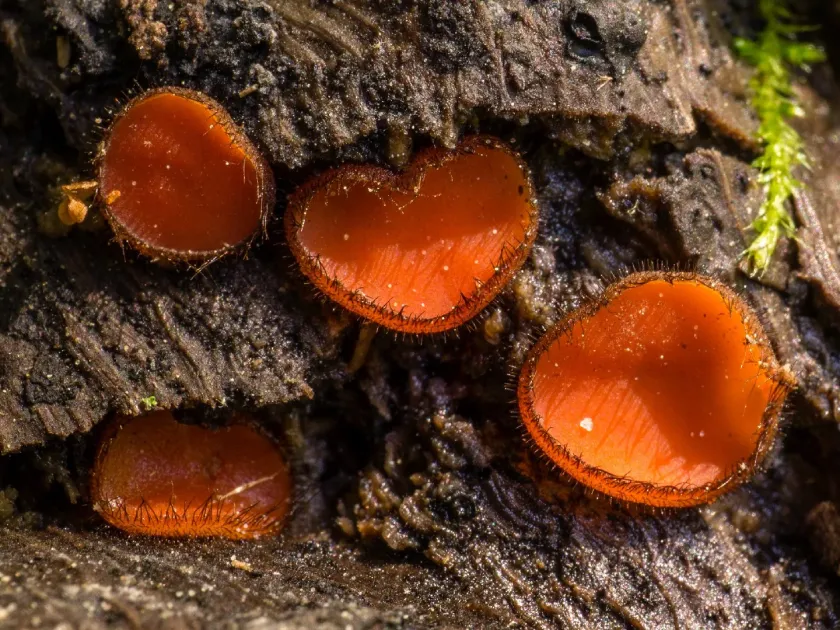
The primary visual sign of infestation is the appearance of bright red, saucer-shaped discs, ranging from 5 to 15 millimeters in diameter, on the soil surface.
These fruiting bodies are typically found on moist substrates rich in woody debris, peat, or decaying organic mulch used in potting mixes.
Plants near fungal colonies often show signs of stress, such as yellowing of the lower leaves and stunted growth, caused by an altered root-zone environment.
In the early stages, the substrate may be covered by a thin white mycelial network before the characteristic red fruit bodies begin to emerge.
Failure to control the initial growth can lead to widespread coverage of the soil surface, resulting in significant aesthetic and functional issues for plant production.
Pathogen
Scutellinia crinita is an ascomycete fungus belonging to the Pyronemataceae family. In agronomy, it is often viewed as a saprophytic indicator species that colonizes organic-rich substrates in greenhouse environments.
The pathogen falls under the Pezizales order. Its lifecycle is intrinsically tied to the decomposition of cellulose and lignin-rich materials within the growing media.
Unlike obligate parasites, this fungus is not always harmful to living tissues, but its massive presence indicates fundamental failures in standard nursery management practices.
Biologically, the fungus competes for nutrients in the soil. Its spores are easily spread via air or water, making it a persistent inhabitant in moist greenhouse conditions.
It is morphologically distinct, featuring bright red, cup-shaped fruiting bodies surrounded by dark, stiff hairs, which provide its characteristic "eyelash" appearance.
Conditions for development
Excessive moisture is the primary condition driving the development of Scutellinia crinita, especially when combined with inadequate air circulation.
Substrates containing high amounts of uncomposted wood bark or woody shavings provide an ideal nutritional base for this saprophyte to thrive.
Temperatures between +15°C and +22°C are optimal for the rapid maturation and active dispersal of spores within the greenhouse production area.
Low light levels and stagnant air around pots prevent surface evaporation, creating a persistent micro-humidity that triggers colony development.
Improper irrigation schedules, specifically overwatering, lead to waterlogging, which is a critical factor for the emergence of this fungus.
Why it matters
The primary economic impact is the loss of commercial value for seedlings and ornamental plants due to the unattractive presence of fungal structures.
The fungus actively decomposes organic matter, which can cause temporary nitrogen deficiency in the root zone as microbes consume available nutrients.
Dense mycelial mats on the soil surface impede air exchange, leading to root-zone hypoxia, which can cause secondary root rot and plant decline.
The presence of Scutellinia crinita acts as a marker for soil conditions that often attract fungus gnats (Sciaridae), which can physically damage roots.
In severe cases, the unchecked growth of the fungus can lead to uneven development of plant batches, significantly reducing the overall quality of the crop.
Protection
The most important control step is optimizing irrigation by allowing the top layer of the substrate to dry out between waterings to disrupt the fungal lifecycle.
Using sterile, high-quality growing media free from large fragments of uncomposted wood significantly reduces the risk of Scutellinia colonization.
Improving greenhouse ventilation decreases relative humidity and surface moisture, making the environment unfavorable for fruiting body formation.
In cases of localized infestation, mechanical removal of the affected substrate and disinfecting tools with approved fungicides can effectively manage the issue.
Biological control methods, such as applying Trichoderma species, can outcompete the fungus and suppress its development without the need for harsh chemicals.
Discussion
No discussions yet — be the first.