
Scopuloides rimosa
Scopuloides rimosa
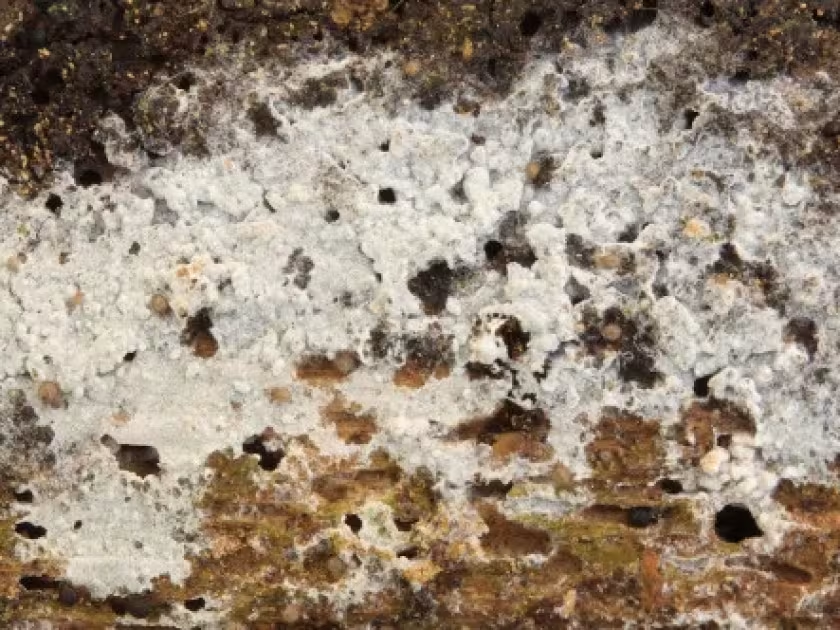
Description
Symptoms
The most visible sign of infection is the development of crust-like fruit bodies on the tree surface. These structures typically feature deep cracks, which inspired the common name of the fungus.
As the infection progresses, the infected wood loses its structural integrity. It often becomes soft, brittle, and loses its original coloration, turning into a degraded mass of fibers.
Beneath the bark, one can observe mycelial mats or strands. These structures are often creamy or whitish in color and indicate the active growth of the fungus within the wood.
Deep cracks appearing on the bark or wood surface are common symptoms. These fissures provide direct access for moisture and further fungal penetration into the inner layers of the trunk.
Advanced cases show widespread damage, where the fungus covers large portions of the trunk. This is particularly frequent in the lower sections of the tree where moisture levels are higher.
Pathogen
Scopuloides rimosa is a wood-decaying fungus that belongs to the group of basidiomycetes. It acts primarily as a saprotroph, decomposing organic matter, but it can also infect stressed trees.
The fungus is known for its ability to break down complex polymers like lignin and cellulose within the wood structure. This metabolic process leads to the loss of physical properties in the wood.
It propagates through the production of spores within specialized structures known as fruit bodies. These fruit bodies appear as thin, crust-like layers on the surface of the bark or exposed wood.
The fungal mycelium penetrates deeply into the host tissue, forming extensive networks. These networks are responsible for the destructive rot that characterizes the infection caused by this organism.
In forest ecosystems, it occupies a specific niche as a decomposer. While it is essential for the nutrient cycle, its presence on valuable timber species is problematic for forest managers.
Conditions for development
Moisture availability is the primary factor driving the development of Scopuloides rimosa. High humidity and prolonged dampness of the wood are necessary for the spores to germinate successfully.
Mechanical injuries to the tree provide ideal entry points for the fungus. Scars from pruning, wildlife damage, or logging operations significantly increase the risk of colonization.
Temperature also plays a crucial role in the fungus's life cycle. Warm, humid weather conditions during the growing season facilitate both mycelial growth and spore production.
Stand density affects the microclimate around the tree trunks. Poor air circulation in dense forests maintains high moisture levels, which supports the spread of the pathogen.
The physiological status of the host tree is also important. Trees weakened by drought, nutrient deficiencies, or other diseases are significantly more susceptible to infection by this fungus.
Why it matters
The main impact of Scopuloides rimosa is the reduction in timber quality. Infected trees become unfit for lumber production, which leads to significant economic losses in the forestry sector.
The decay caused by the fungus severely weakens the mechanical strength of the trunk. This increases the tree's susceptibility to breakage and windthrow, especially during storms.
The overall productivity of the forest stand declines when infection levels are high. The loss of annual biomass increments reduces the long-term value of the forest area.
In protected areas, the fungus can lead to the loss of individual trees, which alters the habitat structure. This can influence local biodiversity if the infection becomes widespread.
If left untreated, the fungus acts as a persistent source of infection for neighboring trees. This necessitates active management to prevent the spread to healthy portions of the forest.
Protection
Effective management begins with strict sanitation practices. Removing dead wood and infected trees early prevents the buildup of spores that could otherwise spread the disease.
Preventing mechanical damage during forest operations is a crucial preventive measure. Maintaining the integrity of the tree bark is the best defense against fungal entry.
If trees are wounded, the application of protective coatings or antifungal treatments can help isolate the area and prevent colonization by wood-decay fungi.
Maintaining proper stand density is vital for improving air circulation and drying conditions in the forest. This limits the humidity levels needed by the fungus for its development.
Monitoring programs are essential for early detection. Regular forest health assessments allow managers to act before a localized infection becomes a serious management problem.
Discussion
No discussions yet — be the first.