
Scopuloides leprosa
Scopuloides leprosa
Description
Symptoms
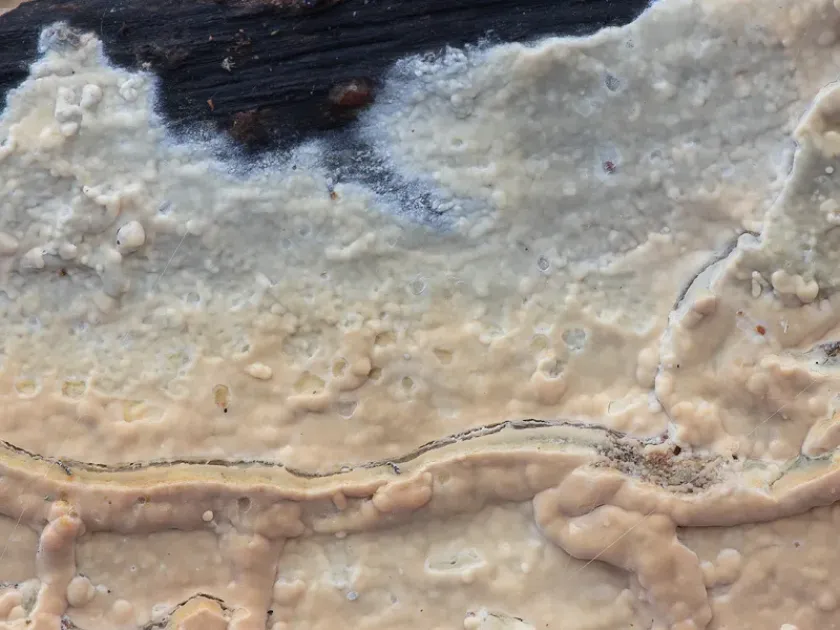
The most distinctive symptom of Scopuloides leprosa is the formation of resupinate, crust-like sporocarps. These fruit bodies are typically white to creamy-white and grow in thin, flattened patches on the bark or wood surface.
Infected wood tissues show characteristic changes associated with white rot. The wood becomes pale, soft, and fibrous, losing its natural hardness. In advanced stages, the internal layers of the wood may separate along the growth rings.
On living trees, the presence of the fungus is often signaled by the death of bark tissues. Patches of necrosed bark may appear, and in the case of trunk infections, the tree may show signs of overall decline and reduced vigor.
A microscopic examination of infected wood reveals the dense presence of fungal hyphae penetrating the xylem cells. These hyphae secrete specific enzymes that break down the cell walls, resulting in a distinct visual appearance of the decayed substrate.
Increased fragility of the timber is a clear warning sign. If a tree or wood section crumbles easily or breaks under slight pressure, it is likely infested by wood-decaying fungi like Scopuloides leprosa.
Pathogen
Scopuloides leprosa is a basidiomycetous fungus classified within the order Polyporales. It is a wood-inhabiting pathogen that causes white rot, primarily affecting various timber and forest tree species across diverse climatic zones.
As a necrotrophic pathogen, this fungus thrives by decomposing the structural components of wood, specifically lignin and cellulose. This process leads to the loss of mechanical strength in the host tree, eventually resulting in the breakdown of its tissue structure.
The life cycle of Scopuloides leprosa involves the production of basidiospores on resupinate fruit bodies that develop directly on the host's surface. These spores act as the primary dispersal mechanism, carried by wind to new susceptible sites.
The fungus is highly resilient and can remain viable in decaying wood residues for long periods. This persistence allows it to establish significant infection reservoirs in forests where coarse woody debris is left on the forest floor.
Research into its biology highlights its role as a decomposer, but in managed forests, it is considered a serious pathogen. Its ability to degrade complex polymers makes it an efficient destroyer of wood products if environmental conditions are conducive.
Conditions for development
Humidity is the primary limiting factor for the development of Scopuloides leprosa. The fungus requires high moisture levels within the wood to facilitate enzyme activity and mycelial spread, often occurring in deep-shade or water-logged areas.
Mechanical injuries to the tree, such as storm damage, logging wounds, or animal browsing, create necessary entry points. The fungus lacks the ability to penetrate healthy, intact bark, making wound management critical.
Optimal temperatures for mycelial growth typically fall between 15°C and 25°C. However, the pathogen is known for its ability to persist during colder periods, allowing for resumed growth as soon as favorable thermal conditions return.
High planting density in forests creates a specific microclimate characterized by reduced airflow and increased surface moisture. This environment is highly conducive to spore germination and the subsequent establishment of fungal colonies.
Host susceptibility is significantly increased in trees experiencing physiological stress. Factors such as nutrient deficiencies, drought, or competition from other trees weaken the host’s natural defenses, allowing the fungus to infect more easily.
Why it matters
The primary harm caused by Scopuloides leprosa is the reduction in the quality and value of commercial timber. Decayed wood is structurally unsound and often unsuitable for high-grade construction or wood manufacturing purposes.
Trees affected by this pathogen are at a high risk of windthrow or breakage. This poses a significant danger in public and managed forest areas, leading to property damage and threats to human safety.
Economic losses in the forestry sector are driven by the need for premature harvesting and the costs associated with sanitary thinning operations. Left untreated, the fungus can devastate entire stands of susceptible timber.
The fungus can also affect logs stored in depots if they are placed in direct contact with damp soil or in areas with poor drainage. This leads to substantial losses in inventory and requires the implementation of costly protection measures.
Ecologically, the infestation alters the forest structure by killing trees that would otherwise contribute to ecosystem stability. This shift can negatively impact wildlife habitats and change the composition of the local plant community.
Protection
Effective management begins with stringent sanitary practices, including the prompt removal and disposal of infected trees. This reduces the spore load in the environment and slows the spread of the disease to healthy hosts.
Minimizing mechanical injury during forestry operations is essential. Logging equipment should be operated with care, and wounds on residual trees should be treated with appropriate sealants to prevent fungal entry.
Applying protective fungicides to fresh stumps after logging is a proven strategy. This barrier treatment inhibits the colonisation of the freshly exposed wood by airborne fungal spores, protecting the remaining stand.
Proper timber storage is crucial for wood products. Logs should be stacked off the ground on dry supports, in well-ventilated areas, to ensure that moisture content remains below the threshold required for fungal growth.
Long-term forest management plans should prioritize the diversity of tree species. Mixed-species stands are generally more resilient to specific fungal pathogens, as the host density is lower and the overall health of the ecosystem is enhanced.
Discussion
No discussions yet — be the first.