
Scopulariopsis coprophila
Scopulariopsis coprophila
Description
Symptoms
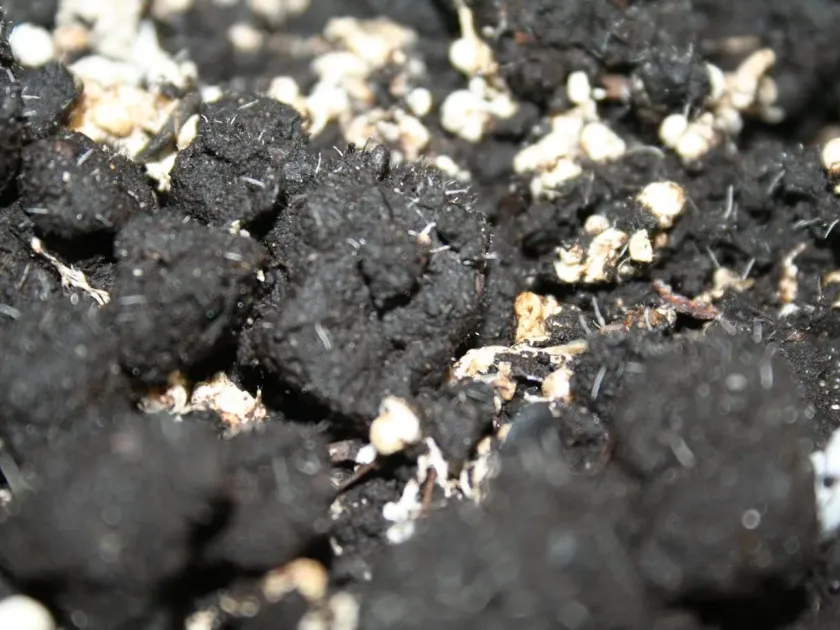
The initial symptom of infection is the emergence of a characteristic white or creamy coating on the surface of the casing soil. Over time, the color of the colonies shifts to brown or grey due to mass sporulation.
The mycelium of the pathogen penetrates deep into the substrate, forming a dense network. This prevents the cultivated mushrooms from accessing necessary nutrients, resulting in inhibited growth and development.
Mushrooms that manage to develop within an infected area often exhibit deformities, dark patches, and premature decay. In severe cases, the substrate may emit a distinct musty or foul odor.
Infection typically begins in isolated spots, which expand rapidly across the surface of the beds. There is often a visible contrast between healthy mycelium and the zones colonized by the pathogen.
In the final stages, the substrate becomes loose and loses its structure, turning into a degraded mass unsuitable for fruiting. Total substrate degradation is a hallmark of an advanced infection.
Pathogen
The causal agent of this disease is the microscopic soil-borne fungus Scopulariopsis coprophila, which belongs to the group of deuteromycetes. This organism is well-known for its rapid decomposition of nitrogen-rich organic substrates.
This pathogen is frequently encountered in manures, composts, and other substrates utilized in industrial mushroom production. It is an aggressive saprotroph that, given favorable conditions, outcompetes cultivated species.
Biologically, Scopulariopsis coprophila produces high quantities of spores that disperse easily via air currents or contaminated tools. This makes it a significant risk factor within indoor growing facilities.
The fungus possesses a potent enzymatic apparatus, allowing it to efficiently assimilate nitrogenous compounds. In commercial growing, this capability results in the rapid colonization and displacement of the cultivated mycelium.
Mycological research indicates that this pathogen often forms persistent colonies that are difficult to eradicate with standard sanitation. Its establishment frequently serves as a precursor for secondary colonization by other mould species.
Conditions for development
The development of Scopulariopsis coprophila is primarily driven by failures in the compost pasteurization process. Insufficient thermal treatment allows the pathogen's spores to survive and activate during the crop cycle.
High relative humidity, exceeding 90%, is a key factor in accelerating the growth of the fungus. Condensation on substrate surfaces or structural elements of the facility is particularly dangerous.
Temperature ranges between 22–26°C are highly favorable for rapid colonization of the substrate. Deviations from recommended growth parameters towards higher temperatures stimulate mould development.
Lack of sanitation, such as the accumulation of dust and old substrate residues in the growing rooms, creates an ideal environment for the multiplication of the infection.
The presence of insect pests, such as sciarid flies, contributes to the spread of spores throughout the growing facility. Therefore, effective pest management is an essential part of disease control.
Why it matters
The primary damage consists of total crop failure in affected areas. Due to its rapid growth rate, the pathogen quickly outcompetes the cultivated species, consuming nutrients and space.
The quality of the harvested produce is severely degraded; infected mushrooms have poor shelf life and unattractive appearances. Furthermore, there is a constant risk of spores contaminating healthy produce.
Economic losses include the cost of disposing of infected substrate, as well as the need for extensive and prolonged disinfection procedures. Facility downtime results in significant indirect financial loss.
Systemic infection of the substrate can lead to long-term contamination of the entire facility if immediate action is not taken. The pathogen can become a persistent threat to future growing cycles.
Alterations in the chemical composition of the substrate, caused by the fungus, render it unsuitable for reuse, thereby increasing operational costs related to compost production.
Protection
The cornerstone of protection is ensuring rigorous quality control of compost pasteurization. Strict adherence to thermal regimes is essential to ensure the destruction of pathogenic fungal spores.
Regular disinfection of facilities, equipment, and tools using approved fungicides and antiseptics should be carried out between growing cycles to reduce the overall pathogen load.
Optimizing the microclimate, particularly maintaining correct ventilation and humidity levels, minimizes the risk of mould foci. Preventing the formation of surface water droplets is critical.
Localized and timely removal of infected substrate patches helps curb the spread of the infection. One should remove the infected area with a safety margin to ensure complete elimination.
The use of high-quality casing materials and rigorous insect protection are necessary measures. Maintaining hygiene in working areas and using dedicated protective clothing for personnel are essential practices.
Discussion
No discussions yet — be the first.