
Scopulariopsis brevicaulis
Scopulariopsis brevicaulis
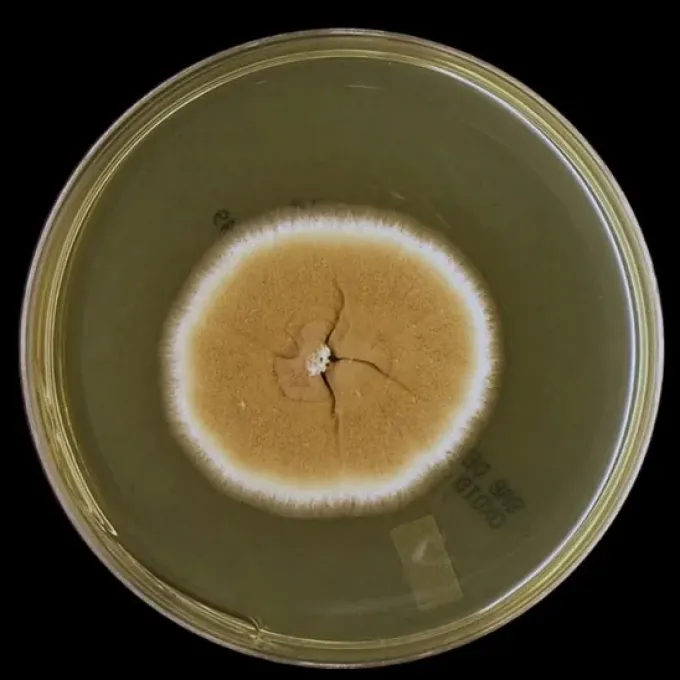
Description
Pathogen
Scopulariopsis brevicaulis is a cosmopolitan saprotrophic fungus belonging to the Ascomycota phylum, commonly found in soil, dust, and organic matter.
While primarily a decomposer, it functions as a facultative parasite that can invade weakened plant tissues, stored grains, and seeds under suboptimal conditions.
The fungus reproduces via conidia, which are highly resilient and easily dispersed by air currents, water splashes, and agricultural machinery across fields.
Biologically, it is highly adaptable, demonstrating significant tolerance to varying pH levels and environmental stressors, which ensures its persistence in diverse ecosystems.
In agronomy, it is frequently identified as a significant post-harvest pathogen responsible for the molding and degradation of various seeds and produce.
Conditions for development
The development of Scopulariopsis brevicaulis is primarily triggered by high relative humidity (above 70%) within the storage environment or the plant microclimate.
The ideal temperature range for rapid mycelial growth and sporulation is between +20°C and +30°C, though the organism can survive at much lower temperatures.
Poor aeration in silos, warehouses, or greenhouses acts as a catalyst for the proliferation of this fungus, allowing it to spread rapidly from infected to healthy materials.
Mechanical injuries to the seed coat or the surface of vegetables and fruits serve as primary entry points, allowing the fungus to penetrate internal tissues easily.
High organic matter content in the soil, combined with excess moisture, fosters an environment where the fungal population can thrive and remain active for extended periods.
Why it matters
The primary impact of this pathogen is a significant reduction in seed germination rates due to the destruction of the embryo and stored nutrients.
Infection leads to surface discoloration, the appearance of powdery fungal growth, and subsequent rotting of produce, rendering it unfit for commercial use.
The metabolic activity of the fungus releases phytotoxic compounds that inhibit the growth of emerging seedlings, leading to poor crop stands in the field.
Stored agricultural commodities become highly susceptible to decay, resulting in substantial financial losses for farmers and processors due to spoiled batches.
In closed agricultural systems, such as greenhouses, the fungus can induce root rot and systemic weakness, severely limiting the productivity of horticultural crops.
Protection
Effective management begins with rigorous drying of seeds and grain to moisture levels that inhibit fungal development, typically below 12-14%.
Maintaining a dry, well-ventilated, and cool environment in storage facilities is essential to suppress the activity of Scopulariopsis species.
The use of high-quality, fungicide-treated seeds is a critical preventive measure to ensure successful emergence and minimize initial field infection.
Crop rotation and strict sanitation practices, such as the removal of debris from fields, help lower the inoculum pressure in the soil environment.
- Regular monitoring of seed moisture levels during storage.
- Sanitization and disinfection of warehouse equipment.
- Seed treatment with appropriate systemic fungicides before planting.
Discussion
No discussions yet — be the first.