
Scolecostigmina leaf spot
Scolecostigmina palmivora
Description
Symptoms
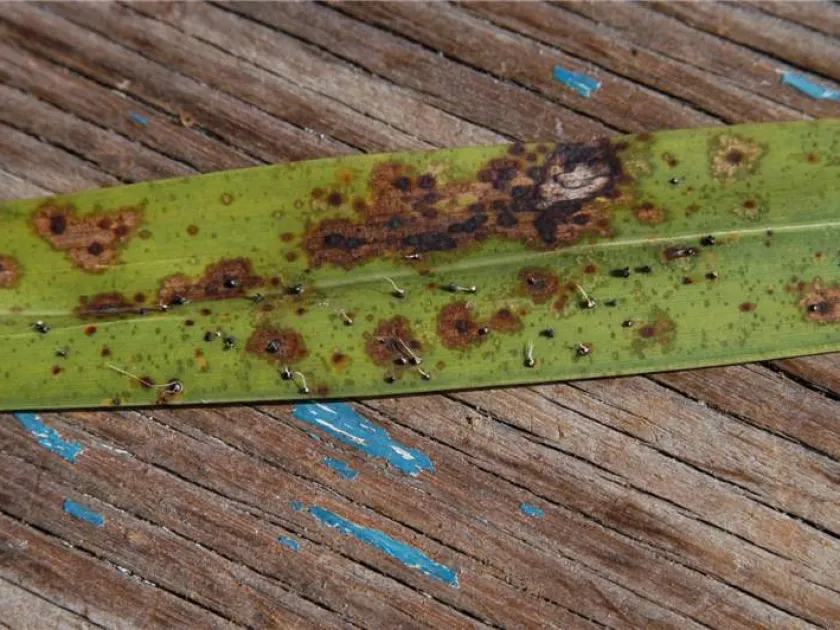
Early symptoms appear as small, chlorotic flecks on the foliage. As the infection progresses, these spots expand and turn brown or black, often becoming angular or irregular in shape.
A distinct feature of this disease is the presence of a pale yellow or whitish halo surrounding the necrotic spot, which helps distinguish it from other palm leaf disorders.
Under conditions of high humidity, an olive-grey or sooty mold-like growth can be observed on the undersides of the spots, representing the mass production of fungal conidia.
If the infection remains untreated, the spots coalesce, causing significant tissue death. This leads to the premature yellowing, withering, and eventual necrosis of the entire leaf.
- Development of small yellow flecks on foliage
- Dark necrotic spots surrounded by a chlorotic halo
- Presence of olive-grey spores in humid conditions
- Premature leaf death and decline
Pathogen
The causal agent of this disease is the fungus Scolecostigmina palmivora, formerly known as Cercospora palmivora. This fungal pathogen is a specialized parasite that primarily attacks various palm species across tropical and subtropical regions.
The fungus penetrates the plant tissues through stomata or mechanical wounds. Once inside, the mycelium develops, disrupting the normal cellular functions of the leaf tissue and impeding photosynthesis.
Reproduction is achieved through conidia, which are easily disseminated by wind, rain splashes, or irrigation water. This efficiency allows the fungus to spread rapidly within a nursery or landscape setting.
The pathogen persists in necrotic leaf tissue and plant debris. These residues serve as the primary reservoir for infection, allowing the disease to carry over from one season to the next.
Fungal activity is sustained by the formation of microscopic spores that can survive in various environmental conditions until the host environment becomes conducive to germination and growth.
Conditions for development
High relative humidity is the primary driver for the development of Scolecostigmina palmivora. Prolonged leaf wetness is essential for the fungal spores to germinate and penetrate the host tissue.
Optimal temperatures for the growth and spread of the fungus range from 20°C to 28°C. These warm conditions significantly accelerate the incubation period of the disease.
Poor ventilation, particularly in greenhouses or dense indoor settings, creates a stagnant microclimate that traps moisture on the leaf surface, favoring infection.
Overhead irrigation is a significant risk factor, as water splashes help disseminate spores from infected lower leaves to healthy upper foliage, ensuring the continuation of the disease cycle.
Plants under stress—due to nutrient deficiencies, improper lighting, or lack of proper acclimatization—are much more susceptible to colonization by this pathogen.
Why it matters
The most immediate harm from this disease is the severe degradation of the palm’s ornamental value. The aesthetic appeal of the foliage is ruined, making the plants unsuitable for display.
The reduction in healthy green tissue hinders the plant’s ability to photosynthesize effectively, resulting in stunted growth and weakened overall plant vigor.
Persistent infection depletes the palm’s energy reserves, as the plant constantly attempts to repair tissue or replace lost leaves, leading to a long-term decline in health.
In nursery settings, the presence of this fungus can lead to mass losses, as infected stock often fails to meet quality standards and requires intensive, costly management.
If left unchecked, the disease can weaken the plant to the point where it becomes vulnerable to secondary opportunistic infections, potentially leading to the death of the palm.
Protection
Preventative measures start with proper irrigation practices: always water at the base of the plant to keep the foliage dry, which is the most effective way to prevent infection.
Regular sanitation is critical. Promptly prune and dispose of all infected leaves to minimize the amount of inoculum available in the immediate environment.
Copper-based fungicides can be used as a protective treatment to create a barrier on the leaf surface, preventing the spores from establishing an infection.
For more severe cases, systemic fungicides, such as those in the triazole or strobilurin classes, are recommended to treat the infection from within the plant tissues.
Improving the plant’s environment—providing better airflow, adequate light, and proper balanced nutrition—is essential for fostering natural resistance against the fungus.
Discussion
No discussions yet — be the first.