
Schaereria
Schaereria
Description
Symptoms
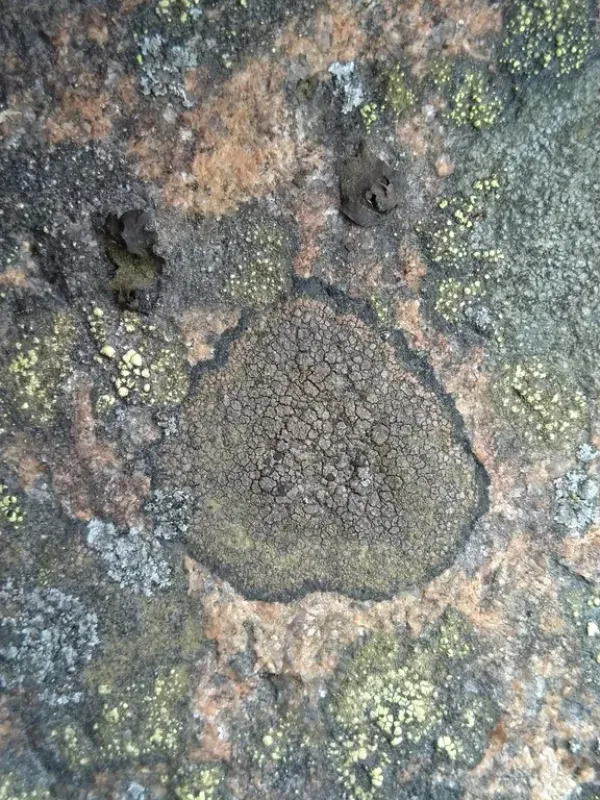
Schaereria manifests as a thin, crust-like growth that adheres tightly to the surface of bark or rock.
The primary diagnostic features include apothecia, which appear as minute, black, discoid fruiting bodies embedded within the thallus.
The thallus itself is often greyish, brown, or ochre in color and typically has a granular or areolate texture.
Unlike pathogenic fungi that cause lesions or rot, this lichen maintains a distinct boundary and does not cause localized wilting or discoloration.
Observers can identify it by its slow growth and the lack of any detrimental effects on the immediate surrounding plant tissue.
Pathogen
It is important to clarify that Schaereria is not a plant disease or pathogen. It is a genus of crustose lichens belonging to the Schaereriaceae family.
The organism exists as a stable symbiotic association between a fungus (the mycobiont) and an alga or cyanobacteria (the photobiont).
Within agricultural and gardening contexts, these lichens act as epiphytes, meaning they use the tree bark merely as a substrate for attachment.
They derive no nutrients or water from the host plant, and they do not penetrate the internal tissues of the tree.
Because they are not parasitic, they do not interfere with the plant's metabolic processes or cause tissue decay.
Conditions for development
The growth of these lichens is highly dependent on humidity levels, favoring environments with consistent air moisture.
Schaereria is known to be an indicator of good air quality, as it is highly sensitive to sulfur dioxide and other air pollutants.
They thrive in environments with moderate sunlight and low air disturbance, which allows the thallus to maintain moisture.
Because they grow very slowly, they are most commonly found on long-lived trees with stable, rough-textured bark surfaces.
Stable temperatures are generally preferred, although lichens possess physiological adaptations that allow them to endure extreme temperature shifts.
Why it matters
Schaereria causes no direct physiological damage to the host plant, as it does not compete for resources like nutrients or water.
The only potential disadvantage is that dense lichen colonies may provide a hiding place for overwintering pests, such as scales or mites.
In very extreme cases of heavy colonization, some minor reduction in gas exchange through bark lenticels might occur, but this is rarely significant.
For the vast majority of cases, the presence of Schaereria on an orchard tree is a harmless aesthetic feature.
It does not cause yield loss, shoot dieback, or tree decline, meaning no aggressive intervention is usually required.
Protection
There is no need for chemical fungicides, as Schaereria is not an infectious disease.
If removal is desired for aesthetic reasons, manual scrubbing of the bark with a stiff brush during the dormant season is highly effective.
Pruning to increase light penetration and air circulation within the tree canopy naturally discourages the growth of these organisms.
Applying a lime wash to trunks during the dormant season can alter the surface pH, preventing new lichen spores from establishing themselves.
Proper orchard management, including consistent fertilization and pest control, is the most effective approach for maintaining healthy bark.
Discussion
No discussions yet — be the first.