
Sawadaea polyfida
Sawadaea polyfida
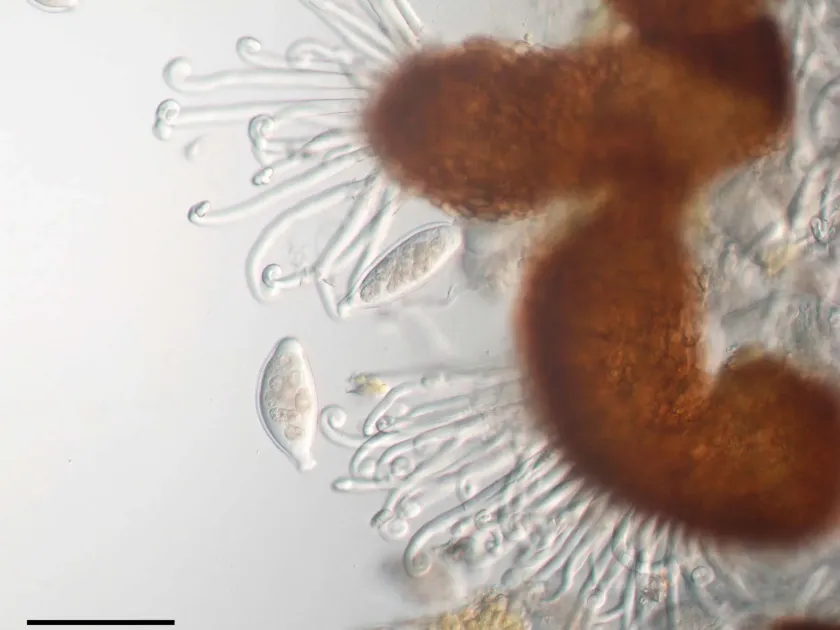
Description
Symptoms
The primary symptom of infection is the emergence of white, flour-like mycelial mats on the leaf surface, which can eventually cover the entire foliage.
Infected leaves often exhibit signs of physiological stress, including stunted growth, curling, and an atypical yellow or chlorotic appearance.
As the infection progresses, the fungal growth can spread to leaf petioles and young succulent shoots, leading to visible deformation.
In some cases, the infected leaf tissue may become brittle, leading to early senescence and premature leaf drop in mid-to-late summer.
- White powdery spots on leaf blades.
- Curled and distorted young leaves.
- Premature yellowing and leaf fall.
- Visible mycelium growth on twigs.
Pathogen
Sawadaea polyfida is a specialized fungal pathogen responsible for causing powdery mildew infections on various species of maple trees.
The fungus is an obligate biotroph, meaning it requires living host tissue to complete its life cycle and derive nutrients for growth.
It produces vast amounts of asexual spores called conidia, which are easily wind-dispersed to facilitate secondary infections throughout the growing season.
The pathogen overwinters as cleistothecia, which are small, dark fruiting bodies found on decaying leaves on the ground, waiting for favorable spring conditions.
The biology of this fungus is highly synchronized with the leaf development of host trees, ensuring it has access to susceptible tissues at the right time.
Conditions for development
The development of Sawadaea polyfida is strongly favored by moderate temperatures accompanied by high atmospheric humidity.
Poor ventilation within the tree canopy traps moisture, creating an ideal microenvironment for spore germination and rapid fungal expansion.
Overcrowded nursery or park conditions significantly increase the rate of disease transmission between neighboring trees.
Trees suffering from water stress or poor soil conditions are often more susceptible to colonization by the pathogen due to compromised defense mechanisms.
Persistent cloudy weather with high humidity and lack of direct sunlight further accelerates the progression of the powdery mildew outbreak.
Why it matters
By covering the leaf surface, the fungus significantly reduces the photosynthetic efficiency of the tree, starving it of vital energy reserves.
Chronic infections weaken the tree, making it more susceptible to environmental stresses such as drought, frost, and secondary pest attacks.
In ornamental landscaping, the unsightly appearance of infected maples degrades the aesthetic quality of public parks and private gardens.
For young saplings, severe infection can lead to stunted development and failure to establish properly in the landscape.
Repeated annual cycles of infection result in reduced wood growth and potentially the dieback of weaker, more stressed branches.
Protection
Sanitation is the first line of defense; removing and destroying fallen leaves reduces the primary inoculum for the following year.
Proper pruning techniques should be applied to improve air circulation within the canopy, limiting the humidity required by the fungus.
Fungicidal sprays containing sulfur or modern systemic triazoles can be effective when applied early upon the first signs of the disease.
Providing adequate water and proper fertilization promotes robust tree growth, which enhances the tree's natural defense against fungal pathogens.
Selecting disease-resistant maple cultivars during the planning phase is the most sustainable way to prevent long-term management issues.
Discussion
No discussions yet — be the first.