
Sawadaea
Sawadaea
Description
Symptoms
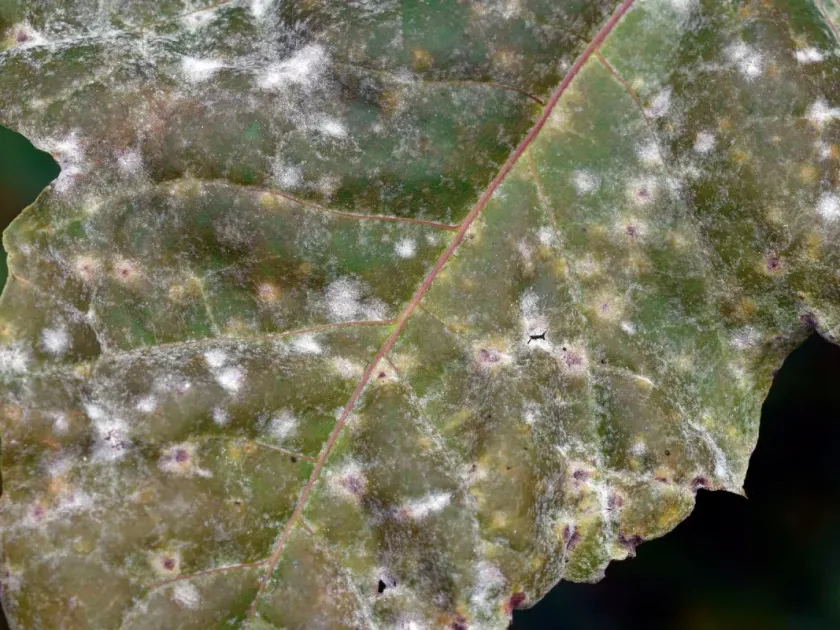
The most characteristic sign of a Sawadaea infection is the appearance of a thin, white, web-like mycelium on the upper leaf surface, which gradually develops into a thick, floury white coating.
Leaves affected by the disease often exhibit signs of curling, distortion, or stunted growth. In severe cases, the infected leaf tissue may show chlorosis, appearing as pale or mottled patches.
During late summer and autumn, the mycelial mat becomes speckled with minute black dots. These are the cleistothecia, which signify the sexual stage of the fungus's development.
The infection typically progresses from the lower canopy upwards. If left untreated, the leaves may wither and drop prematurely, which is a significant indicator of high disease pressure.
Some maple cultivars show distinct color changes in the areas where haustoria penetrate the leaf cells, which can be misidentified as a viral infection if the powdery coating is not yet prominent.
Pathogen
Sawadaea is a genus of fungi belonging to the Erysiphaceae family, commonly known as powdery mildews. These fungi are obligate parasites that specifically target the foliage of various woody plant species.
The most significant species, Sawadaea tulasnei, is widely recognized as the primary pathogen causing powdery mildew on maples (Acer species). The fungus lives on the surface of the leaves, drawing nutrients through specialized structures called haustoria.
The life cycle involves an asexual phase where conidia are produced and dispersed by wind, leading to rapid secondary infections during the spring and summer months.
To survive the winter, the fungus produces sexual structures known as cleistothecia. These appear as tiny, dark, spherical bodies on the surface of infected leaves and bark, waiting to release ascospores when conditions become favorable.
The parasitic relationship involves the fungus penetrating the plant's epidermis, which disrupts the normal physiological processes, including water regulation and carbon fixation in the leaf tissue.
Conditions for development
Sawadaea thrives in environments with high humidity and moderate temperatures, typically ranging from 18 to 25 degrees Celsius. These conditions are optimal for spore germination and mycelial expansion.
Poor airflow within the tree canopy significantly increases the risk of an outbreak. Dense planting or lack of proper pruning creates a humid microclimate that favors fungal proliferation.
Extended periods of overcast, damp weather provide the ideal environment for the spread of conidia via wind and rain splashing, leading to the rapid colonization of healthy leaves.
Trees that are under stress—whether due to drought, nutritional deficiencies, or root damage—are more susceptible to infection and show faster rates of symptom progression.
The accumulation of leaf litter under the trees acts as a reservoir for the pathogen. Overwintering spores in this debris can lead to early spring infections when the first new leaves emerge.
Why it matters
The primary damage caused by Sawadaea is the impairment of photosynthesis. By covering the leaf surface, the fungus reduces the amount of sunlight reaching the chloroplasts.
Persistent infection weakens the tree's ability to store energy for the winter. This often leads to increased susceptibility to winter cold injury and dieback of young twigs.
In landscaping, the aesthetic damage is severe. The white, dusty appearance of the foliage makes ornamental maples unattractive and reduces their value in public and private spaces.
Chronic infestation year after year depletes the tree's internal reserves, leading to stunted overall growth, reduced crown density, and potentially the death of older, weakened branches.
Furthermore, the physical injury to the leaf epidermis caused by the fungus creates entry points for other opportunistic pathogens, which can exacerbate the tree's health decline.
Protection
Good horticultural practices are the first line of defense. Proper pruning to improve airflow through the canopy is essential for reducing the humidity levels favored by the fungus.
Sanitation is critical; all fallen leaves must be raked and removed from the site to destroy the overwintering source of the fungus. Do not use infected leaves for compost.
- Apply sulfur-based fungicides as a preventative measure during early spring growth.
- Use systemic fungicides (such as triazoles) to stop existing infections during the summer.
- Ensure the tree is well-watered and fertilized to maintain overall vigor and natural defense mechanisms.
- Choose resistant maple species or cultivars when planning new plantings to avoid future outbreaks.
- Monitor trees regularly and initiate treatment at the first sign of white mycelium on the leaves.
For chemical control, rotating different classes of fungicides is highly recommended to manage potential resistance development in the fungus population and ensure long-term efficacy.
Discussion
No discussions yet — be the first.