
Sarcosphaera crassa
Sarcosphaera crassa
Description
Symptoms
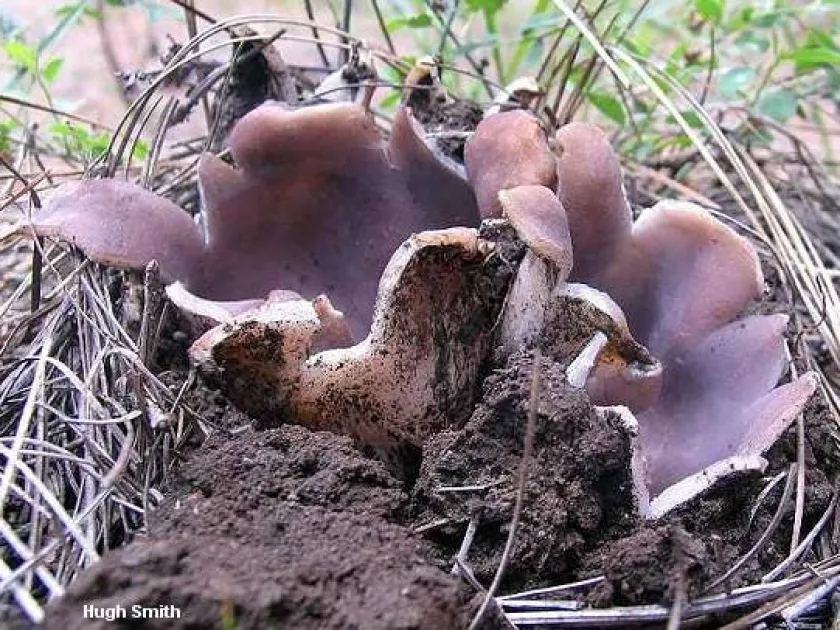
The most distinctive signs appear during spring as the soil surface cracks and ruptures, revealing the grayish-white or purplish rims of the fruiting bodies.
The interior of the apothecia displays a characteristic bright violet or lilac hue, which is the most reliable feature for identification compared to other spring fungi.
Plants located near dense clusters of the fungus may exhibit signs of stress or stunted growth, likely due to the aggressive expansion of the underground mycelium.
The soil around the fruiting bodies often becomes loose and porous, as the mycelium displaces soil particles to accommodate the growing apothecia.
Upon maturity, the fruiting bodies may release clouds of spores when disturbed, further increasing the potential for localized spread across the field.
Pathogen
Sarcosphaera crassa is an ascomycete fungus belonging to the Pyronemataceae family. It is often found in forest soils and calcareous substrates, acting as a saprotroph or a facultative mycorrhizal symbiont.
The fungus develops large fruiting bodies, known as apothecia, which mature beneath the soil surface. As they grow, they break through the ground, exposing their inner surface, which often resembles a crown or a star.
Biologically, it is involved in the decomposition of organic matter, which can impact the local soil microbial community and nutrient cycling in the root zone.
The fungus propagates via spores, which are spread by water runoff and soil movement, allowing it to colonize new areas if environmental conditions remain stable.
While not a primary plant pathogen, its presence in agricultural fields is monitored due to its toxicity and potential to interfere with soil structure and microflora.
Conditions for development
Sarcosphaera crassa thrives in moist, calcareous, or loamy soils rich in organic matter, typically in shaded or semi-shaded environments.
The optimal development period coincides with the spring thaw and subsequent wet weather, which provides the necessary hydration for rapid apothecia expansion.
Neutral to slightly alkaline pH levels are generally preferred by this species, making fields with significant lime content more susceptible to colonization.
Human activity, such as deep tillage or soil movement from nearby forest edges, often introduces the fungus to cultivated lands, where it may establish itself.
Excessive moisture and minimal sunlight are critical limiting factors for its survival, keeping the fungus away from well-drained, sun-exposed monoculture areas.
Why it matters
The primary danger of Sarcosphaera crassa is its severe toxicity to humans and animals if ingested. It is a dangerous, poisonous fungus that must be avoided.
The fungus may produce secondary metabolites that can inhibit the development of nearby crops, negatively affecting the overall yield of a specific field patch.
It poses a significant safety risk to agricultural workers who might mistake it for edible spring mushrooms, leading to accidental poisoning cases.
The massive underground mycelial network can lead to soil compaction or uneven water absorption, which hinders uniform plant growth across the affected field.
In cases of high infestation, the presence of these fungi creates a negative perception of crop quality and site safety among farmers and land managers.
Protection
There are no registered chemical fungicides specifically for the eradication of Sarcosphaera crassa, as it is not a direct threat to crop yield in industrial settings.
Mechanical removal remains the most effective control measure: carefully excise the fruiting bodies and the surrounding soil and dispose of them properly off-site.
Prevention focuses on maintaining good sanitation practices, such as preventing forest debris from being incorporated into agricultural soils during land clearing.
Monitoring the soil pH and improving drainage can make the environment less favorable for the fungus, potentially limiting its growth and spread.
Educating staff on mycological safety and the risks of unidentified fungi is essential to prevent accidental ingestion and promote safe field working conditions.
Discussion
No discussions yet — be the first.