
Sarcosoma globosum
Sarcosoma globosum
Description
Pathogen
Sarcosoma globosum is a rare species of ascomycete fungus belonging to the Sarcosomataceae family. It is crucial to note that this fungus is not a plant pathogen and poses no threat to agricultural crops or cultivated plants.
As a saprotroph, it plays a vital role in forest ecosystems by decomposing coniferous organic matter. It contributes to nutrient cycling by breaking down complex organic compounds in the soil, which sustains forest health.
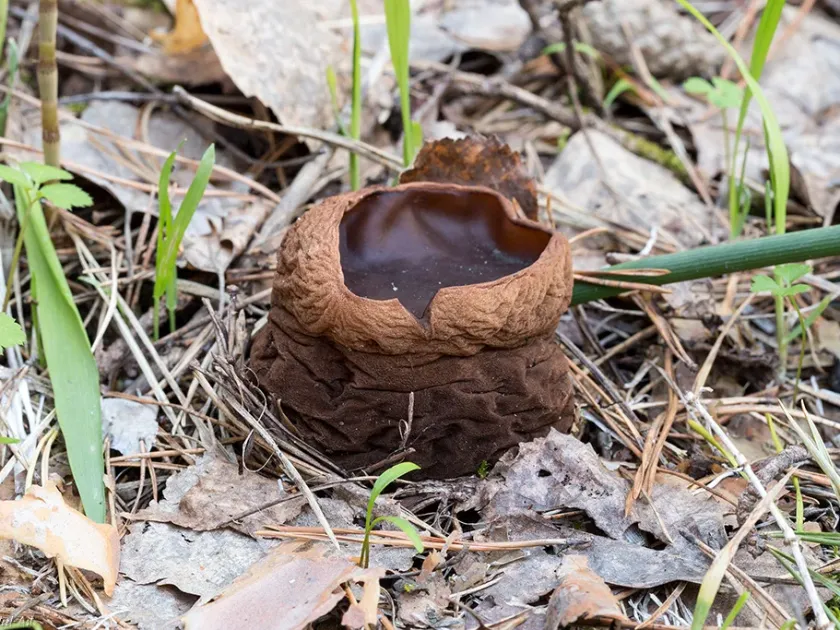
The fungus is easily recognized by its unique barrel-shaped fruit bodies. The exterior is deep brown or black, while the interior consists of a gelatinous substance that holds moisture, which is essential for the fungus during dry periods.
The distribution of this species is highly localized. It is rarely found outside of old-growth coniferous forests, making it an excellent bioindicator of pristine and stable forest ecosystems that have not been disturbed by human activity.
Due to its rarity and sensitivity to habitat alteration, Sarcosoma globosum is protected in many jurisdictions. It is considered an important element of biodiversity, and conservation efforts are focused on protecting its specific forest habitats.
Conditions for development
The development of Sarcosoma globosum relies on precise environmental conditions. It requires high humidity and a stable forest floor environment, typically found in late-successional or old-growth stands of spruce and pine trees.
Soil structure is a critical factor for the lifecycle of the fungus. It requires undisturbed leaf litter and moss cover, as even minor physical disruptions to the soil surface can destroy the delicate network of its mycelium.
The fruiting season is restricted to early spring, shortly after the snow melts. The species is highly sensitive to rapid temperature fluctuations and drought during this critical growth phase, which limits its ability to reproduce in unstable climates.
Hydrological stability is paramount for the health of the species. Large-scale drainage of forest areas or changes in the groundwater table lead to the immediate decline of populations in the affected regions.
Protection strategies emphasize the prevention of deforestation and the maintenance of mature forest stands. Limiting recreational access to known sites and maintaining a closed canopy are essential measures to ensure the species' long-term survival.
Discussion
No discussions yet — be the first.