
Sarcodon glaucopus
Sarcodon glaucopus
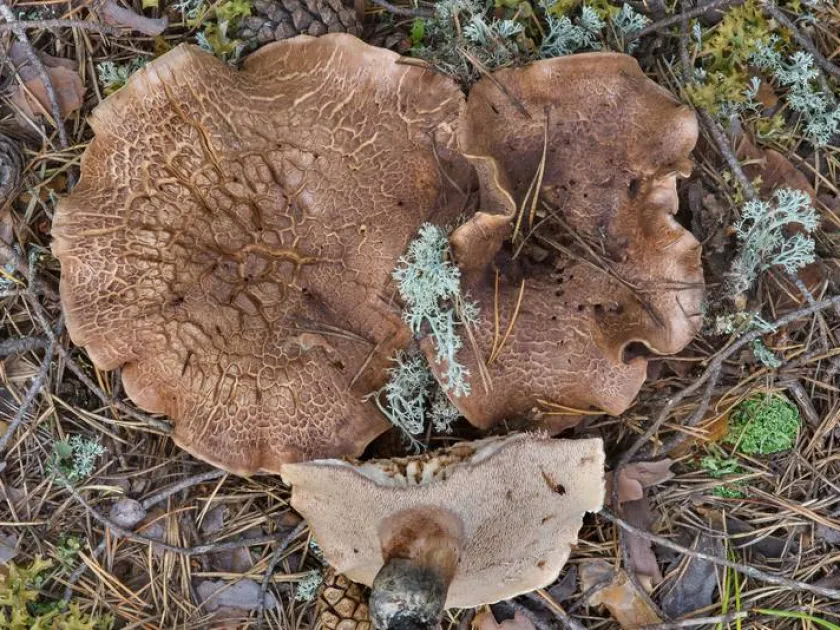
Description
Pathogen
Sarcodon glaucopus, commonly known as the Blue-footed Tooth, is not a plant disease. It is a basidiomycete fungus belonging to the Bankeraceae family. It is essential to clarify that this species is not a parasite or pathogen for agricultural crops or forestry.
Biologically, this fungus is classified as a mycorrhizal symbiont. It establishes mutualistic relationships with the root systems of trees, primarily conifers, aiding in the absorption of mineral nutrients from the soil.
This fungus does not cause any plant diseases. Instead, it contributes to the health of forest ecosystems by enhancing the tree's resilience to unfavorable soil conditions through its symbiotic interaction.
Morphologically, the species is characterized by a hydnoid hymenophore (spines) on the underside of the cap. The fruit bodies have a firm flesh and a distinct coloration, typically ranging from grayish-brown to a bluish-steel hue.
The presence of this species serves as an indicator of a healthy forest ecosystem. In an agronomic or forestry context, its presence suggests a rich and undisturbed soil microflora.
Conditions for development
For the successful development of Sarcodon glaucopus mycelium, specific ecological niches are required. The fungus prefers coniferous forests, particularly spruce and pine stands with moderate moisture levels.
Optimal growth conditions include the presence of moderately acidic forest litter and the absence of heavy chemical soil pollution. The species is sensitive to drastic changes in soil composition caused by human activity.
Spore dispersal occurs primarily via wind, while the development of fruit bodies is typically observed in late summer and autumn, when atmospheric and soil moisture levels are most favorable.
This fungus is strictly associated with the roots of conifers. Outside of this symbiotic relationship with trees, the formation of fruit bodies is virtually impossible, confirming its ecological specialization.
A stable temperature regime without extreme fluctuations is a necessary factor for the formation of basidiomes within the forest litter.
Discussion
No discussions yet — be the first.