
Russula violeipes
Russula violeipes
Description
Symptoms
The most distinctive feature of Russula violeipes is its purple or violet-tinted stem, which serves as its primary diagnostic characteristic in the field.
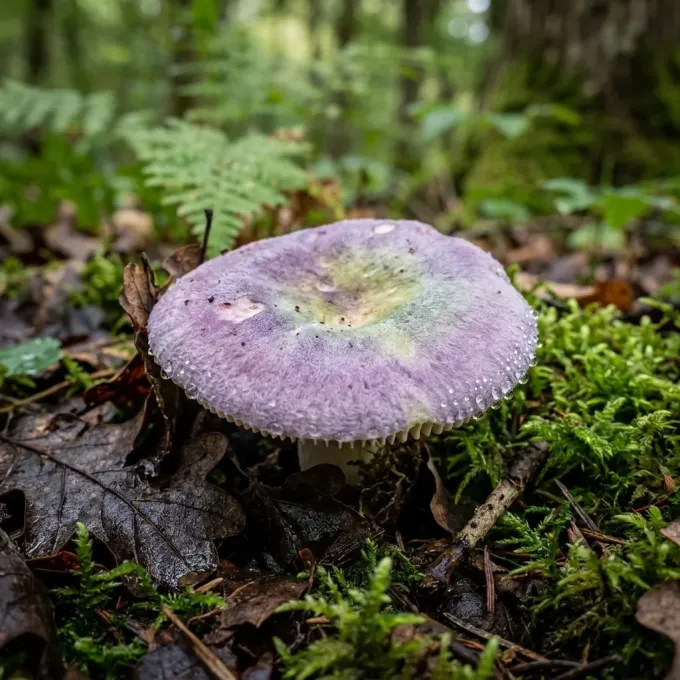
The cap typically measures between 5 and 12 centimeters in diameter, featuring a velvety texture and colors ranging from yellowish-brown to shades of green.
The gills are white or creamy, closely packed, and attached to the stem, which helps distinguish it from other mushroom species with similar cap colors.
The flesh is dense and does not change color when cut or bruised, which is a key trait for accurate identification compared to some toxic look-alikes.
The presence of fruiting bodies is indicative of a well-balanced soil environment where mycorrhizal networks are successfully established with host trees.
Pathogen
Russula violeipes, commonly known as the velvet brittlegill, is not a plant disease but a mycorrhizal mushroom belonging to the Russulaceae family.
This fungus does not act as a pathogen and does not infect agricultural crops, trees, or other vegetation through parasitic mechanisms.
Instead, it forms a beneficial symbiotic relationship with tree roots, known as ectomycorrhiza, which helps plants absorb minerals and water from the soil.
From an agronomic perspective, this species is considered a component of a healthy forest ecosystem rather than a threat to agricultural productivity.
The fungus is classified strictly as a biological organism involved in nutrient cycling, playing a vital role in maintaining the vitality of forest trees.
Conditions for development
Russula violeipes thrives in specific forest habitats, particularly those characterized by dense canopy cover and high levels of soil organic matter.
It prefers moderate temperatures and high humidity, typically appearing during the late summer to early autumn seasons following periods of rainfall.
The species is commonly found in woodlands where acidic soil conditions prevail, fostering the growth of the fungal mycelium.
Any excessive chemical soil modification or disruption of the forest floor layer may inhibit the growth of the mushroom's fruiting bodies.
A stable ecological balance, free from intensive industrial chemical exposure, is crucial for the continued presence of this species in the wild.
Why it matters
Russula violeipes poses no threat to crops or forestry, as it lacks any capability to harm or decompose the living tissue of plants.
There are no documented cases of this fungus causing any form of agricultural damage, necrosis, or decline in plant health.
In fact, the mycorrhizal relationship it facilitates is generally considered beneficial for the host trees, promoting better root development and health.
The only potential harm associated with this species is limited to the risk of accidental ingestion of toxic look-alikes if incorrect identification occurs.
Therefore, it is not considered a pest or a disease, and there is no economic loss attributed to its existence in agricultural or forestry lands.
Protection
There are no control protocols for Russula violeipes, as it is a beneficial organism that does not require eradication or management.
Preventive measures in forest management should focus on maintaining the natural habitat and avoiding unnecessary soil disturbances.
Chemical control methods, such as fungicide applications, should be avoided in areas where the fungus is present to preserve beneficial mycorrhizal health.
Monitoring the presence of these fungi can actually serve as a useful bio-indicator for the overall health and stability of the forest soil microbiome.
Public awareness and education regarding the identification of edible versus non-edible mushrooms are the only recommended management practices.
Discussion
No discussions yet — be the first.