
Russula vesca
Russula vesca
Description
Symptoms
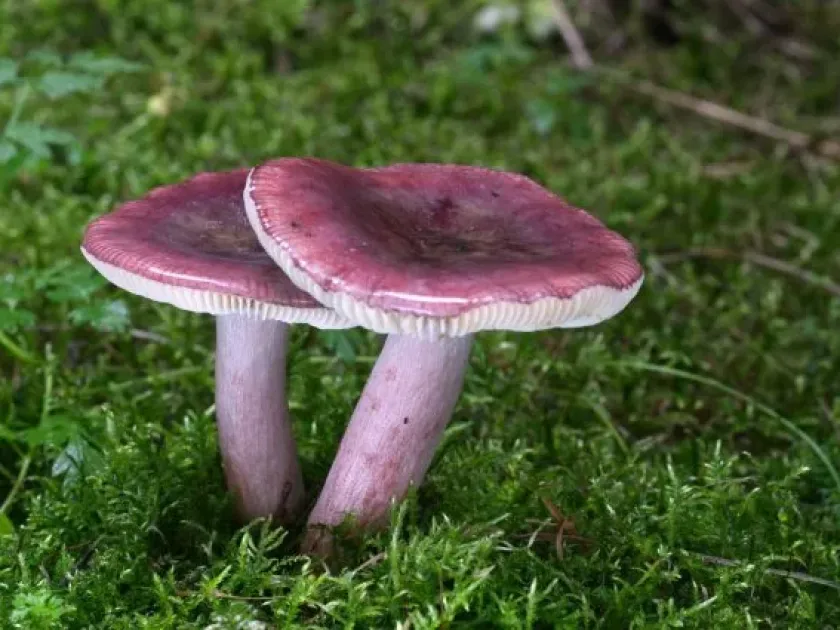
Russula vesca is characterized by a cap ranging from 5 to 12 cm in diameter, initially hemispherical and later flattening out.
The skin of the cap exhibits shades of brownish-pink, brick-red, or grayish-violet, with edges often lighter than the central area.
The gills are dense, white or cream-colored, and may be adnate to the stem or slightly decurrent, occasionally displaying brownish spots.
The stalk is robust, white, and solid, ranging from 3 to 8 cm in length, often developing rusty marks when handled or as it ages.
The flesh is firm and dense, characterized by a sweet, pleasant taste, and lacks the pungent or bitter characteristics of other species.
Pathogen
Russula vesca is not a plant disease and does not act as a pathogen against agricultural crops or woody plants.
It is a beneficial mycorrhizal fungus that forms symbiotic associations with the roots of various forest tree species.
Unlike parasitic fungi, this species does not invade host tissues, decompose living wood, or release harmful phytotoxins.
Its biological cycle is focused on the exchange of carbohydrates and mineral elements within the forest soil ecosystem.
It does not cause wilting, necrosis, or root rot, maintaining its status as a non-pathogenic component of nature.
Conditions for development
Growth occurs primarily in forested areas with a high density of deciduous trees like oaks, beeches, and birches.
Fruit bodies develop during periods of high humidity and moderate temperatures, typically peaking from early summer to autumn.
The fungus thrives in loose, humus-rich forest soils that provide the necessary organic matter for mycelial maintenance.
Mycelium establishes stable links in the rhizosphere, which are essential for its long-term survival in natural habitats.
Sufficient rainfall is critical to trigger the development of reproductive structures, which are the visible part of the fungus.
Why it matters
Russula vesca does not cause economic harm to the agricultural or forestry industries as it poses no threat to crops.
There are no recorded instances of this fungus damaging the yield or health of productive plant plantations.
Since it lacks pathogenic mechanisms, no efforts are directed toward eradicating or suppressing its population.
The fungus plays a supporting role in soil health, which indirectly benefits the overall vitality of forest environments.
It remains harmless to both plants and livestock, being essentially irrelevant to commercial pest control operations.
Protection
No control measures are necessary, as Russula vesca is a non-harmful species that occupies its natural ecological niche.
Fungicidal applications are never recommended, as they would unnecessarily disrupt the beneficial soil microbiome.
Management strategies in forests focus on maintaining soil health rather than managing this specific fungal species.
There is no requirement for monitoring or preventative interventions, as the species does not impact agrarian productivity.
The focus remains on the conservation of beneficial forest fungi to sustain the natural equilibrium of tree growth and soil nutrition.
Discussion
No discussions yet — be the first.