
Russula subnigricans
Russula subnigricans
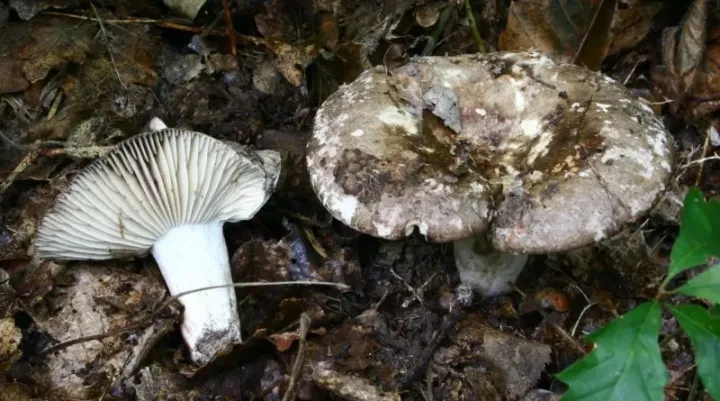
Description
Symptoms
The cap typically measures 5–10 cm in diameter, evolving from convex to funnel-shaped. The surface is dry and displays grayish to brownish hues, often appearing dull.
The gills are thick and spaced apart. A critical diagnostic feature is that the gills, like the cap flesh, darken intensely when bruised or damaged, eventually becoming coal-black.
The stem is robust and solid, matching the color of the cap. Damage to the stem results in the same immediate blackening reaction observed elsewhere on the fruiting body.
Spore prints are white or cream-colored. Microscopic analysis confirms specific spore ornamentation patterns that are standard for the Russula genus but require expert identification.
The odor is generally unremarkable, yet the raw taste can be acrid. These physical cues are not sufficient for safety, as many deadly mushrooms lack strong warning scents or tastes.
Pathogen
Russula subnigricans is a basidiomycete fungus belonging to the Russulaceae family. Unlike most edible Russula species, this specific fungus contains potent toxins that are harmful to humans.
The causative agent of toxicity is cycloprop-2-ene carboxylic acid. This toxin is notably heat-stable, meaning that cooking or drying does not eliminate the risk of severe poisoning.
The fungus forms an ectomycorrhizal relationship with tree roots. Its mycelium actively decomposes organic matter in the soil, playing a key role in the nutrient cycling of forest environments.
Classification of this species is primarily based on the rapid oxidation of its flesh. Upon injury or exposure to air, the tissues turn from white to red, and eventually to a deep black.
While it does not affect agricultural crops directly, understanding its biology is relevant for those managing land adjacent to forested areas where this species naturally occurs.
Conditions for development
This species thrives in moist broad-leaved and mixed forests. It is most frequently found in areas with high organic content in the soil, favoring damp conditions for growth.
Optimal development of fruiting bodies occurs within a temperature range of 18–24 degrees Celsius. It tends to fruit most actively during late summer and autumn months.
Soil pH levels and humus density are significant factors. The fungus prefers stable forest floor environments where the leaf litter provides necessary nutrients for the mycelium.
Dispersal is primarily through basidiospores carried by wind currents. These spores can remain dormant in the soil until suitable moisture and temperature triggers are met.
During prolonged drought, the fungus enters a dormant state. Fruiting resumes rapidly once soil moisture levels recover, ensuring the species persists across seasons.
Why it matters
Ingestion of Russula subnigricans is dangerous due to its capacity to cause rhabdomyolysis. This condition involves the rapid breakdown of skeletal muscle tissue.
Patients typically experience severe muscle pain, weakness, and potential renal failure due to myoglobinuria. Immediate medical intervention is critical for survival after ingestion.
For agriculture, this fungus presents no direct threat to crops. However, its presence near pastures or agricultural workplaces requires awareness to prevent accidental ingestion.
It acts as a competitor to beneficial mycorrhizal fungi. In high densities, it may occupy space that would otherwise support tree-symbiotic fungi, potentially impacting tree health.
There is no industrial or culinary use for this mushroom. Its extreme toxicity makes it a strictly wild, non-consumable species that must be avoided in all circumstances.
Protection
The primary control measure is public education. Identifying this mushroom requires specialized knowledge, and amateur foragers should be strictly warned against it.
In areas adjacent to agricultural lands or hiking paths, physical removal of fruiting bodies may limit spore dispersal, although it does not affect the underlying mycelial network.
No chemical fungicides are recommended or effective for managing this fungus in wild environments. Focus should be on exclusion and prevention of ingestion.
Workplace safety protocols for agricultural staff should include basic mushroom recognition, emphasizing the "never eat if unsure" rule for all wild fungi encountered.
Monitoring mycological biodiversity helps maintain the balance of forest ecosystems and provides data to alert communities about the presence of toxic mushroom species.
Discussion
No discussions yet — be the first.