
Russula sororia
Russula sororia
Description
Symptoms
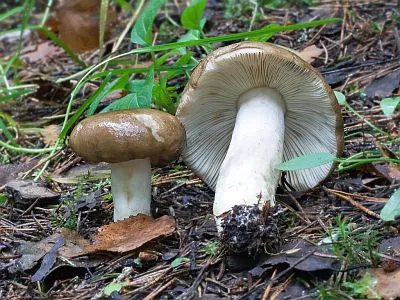
The cap typically measures 5–10 cm in diameter and is convex when young, becoming flattened or depressed at the center with age. The margins are often striate, and the surface is slimy, especially in moist conditions.
The color of the cap ranges from greyish-brown to ochre, usually darker at the center. The gills are crowded, adnate, and display a cream or yellowish hue.
The stipe (stem) is firm and cylindrical, typically white or greyish, often marked with darker spots at the base. The flesh has a distinct odor often described as resembling bitter almonds or herring.
When damaged or aged, the flesh may turn a greyish color. A key diagnostic feature is the intensely peppery and acrid taste, which is a common characteristic of many Russula species.
The spore print is cream-colored, which helps in distinguishing it from other similar Russula species that might have white spore prints.
Pathogen
Russula sororia is not a plant pathogen and does not cause diseases in agricultural or forestry crops. It is a basidiomycete fungus belonging to the Russulaceae family, characterized by a saprotrophic or mycorrhizal lifestyle.
This species does not infect living plant tissues, so it cannot be classified as a phytopathogen. Instead, it acts as a symbiont, forming mycorrhizal relationships with various hardwood tree species.
The mycelium grows within the soil and leaf litter, contributing to the decomposition of organic matter. It plays a vital role in forest ecosystems by facilitating nutrient cycling.
Unlike pathogenic fungi, Russula sororia lacks the enzymatic machinery to degrade healthy plant tissues or wood. Its presence in a forest environment is a sign of a healthy, functioning soil ecosystem.
Biologically, this mushroom is considered inedible or of very poor quality for human consumption due to its extremely acrid and burning taste, which persists even after cooking.
Conditions for development
Russula sororia prefers deciduous and mixed forests, where it associates with trees such as oak, birch, and beech. It is commonly found along forest paths and roadsides.
The most active fruiting period occurs from July to October. The fungus requires moderately moist environments with soil rich in organic material.
Development depends on stable temperatures and consistent rainfall. During prolonged dry spells, fruiting stops, although the mycelium remains active within the soil horizon.
The species is quite widespread and often grows in groups. It prefers shaded areas but can adapt to various conditions within the forest canopy.
The maintenance of leaf litter is crucial for the survival of the mycelium, as this fungus is actively involved in the mycorrhization of tree roots.
Why it matters
This species poses no threat to crops, forestry, or ornamental plants. It does not act as a parasite, so there is no need for protective measures.
From a human perspective, the only "harm" is the potential for accidental collection and consumption. Ingesting this mushroom can cause gastrointestinal distress due to its chemical composition.
The acrid compounds in the mushroom can cause significant irritation to the mucous membranes of the mouth and digestive tract if tasted raw.
Ecologically, the fungus is beneficial, aiding in humus formation and supporting tree health through symbiotic mycorrhizal connections.
Therefore, Russula sororia should be viewed as a valuable component of biodiversity rather than an object of control or eradication.
Protection
There are no specialized control measures for Russula sororia, as it is not a pest or a disease-causing agent.
If these mushrooms appear near ornamental or productive trees in your garden, it indicates healthy soil activity. Removing the mycelium is not recommended.
If it is necessary to limit the number of fruit bodies in high-traffic areas, manual collection and disposal of the caps before spore release is sufficient.
The use of chemical fungicides in the soil to eliminate such mushrooms is discouraged, as it can damage the beneficial mycorrhizal fungi essential for tree growth.
The best preventive strategy is education on safe mushroom foraging practices: only collect species that are clearly identified as edible and safe.
Discussion
No discussions yet — be the first.