
Blackening brittlegill
Russula densifolia
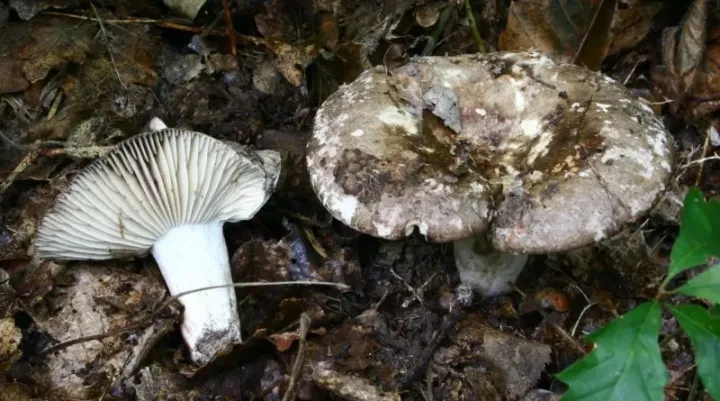
Description
Symptoms
The most visible sign of its presence is the formation of clusters of sturdy, dense fruit bodies around tree trunks. These mushrooms turn distinctively black or reddish-black when bruised or handled.
Root system examination often reveals a dense white or greyish fungal mantle covering the thin lateral roots. This mycelial covering inhibits effective water and nutrient uptake by the host tree.
Affected trees frequently exhibit signs of stress, including premature needle drop, leaf yellowing, or stunted growth. These symptoms are indicative of a compromised root system failing to meet the tree's metabolic demands.
Soil sampling in affected areas shows high mycelial density, which disrupts normal soil structure and promotes the formation of compact soil clumps, reducing porosity.
In forest plantations, areas colonized by this fungus often display inhibited growth of understory vegetation, suggesting the secretion of substances that influence the local micro-flora.
Pathogen
The Blackening brittlegill (Russula densifolia) is a mushroom species within the Russulaceae family. While primarily recognized as a mycorrhizal fungus, it can occasionally impact the stability of forest soil ecosystems in specific environmental settings.
The organism acts as a saprotroph that interacts closely with the root systems of coniferous and deciduous trees. In disturbed soil environments, the mycelial network can expand significantly, potentially competing with beneficial symbionts.
Its biological cycle is strictly tied to the presence of host trees. The fungus penetrates the rhizosphere, creating dense mats that can alter local nutrient cycling processes.
Mycologists classify its impact based on the health status of the host plants. In stressed ecosystems, Russula densifolia can exacerbate root system vulnerabilities by taking over the space required for fine root development.
The fungus is highly resilient, capable of producing extensive mycelial threads that survive in various soil types, adjusting its metabolism based on the availability of organic matter.
Conditions for development
Fungal development is highly dependent on humidity levels and organic litter accumulation. The species thrives in cool, shaded environments where the forest floor remains consistently moist.
Optimal growth temperatures for the mycelium range from 15 to 22 degrees Celsius. High moisture content after heavy rainfall significantly triggers the production of new sporocarps.
Soil acidity plays a critical role in the distribution of the Blackening brittlegill. It displays a preference for acidic forest soils, while neutral or alkaline conditions tend to suppress its growth activity.
Spores are disseminated by wind, as well as by soil-dwelling arthropods and small mammals. Human activity, such as moving soil or equipment between forest plots, is a major factor in expanding the reach of the fungus.
Poorly managed, overstocked forests with thick, undisturbed layers of needle or leaf litter provide the perfect environment for long-term survival and propagation of this fungal species.
Why it matters
The primary concern is the displacement of beneficial mycorrhizal fungi, which are essential for tree health. By monopolizing root space, the fungus limits the tree's access to vital minerals.
Increased mycelial activity can lead to a decline in tree vigor, making them more susceptible to drought, wind throw, and various insect pest infestations that target weakened wood.
Economic damage in timber production occurs due to slowed annual growth increments and reduced quality of the wood. In nurseries, it can lead to high seedling mortality rates.
Damaged root systems act as entry points for secondary pathogens, including various wood-rotting bacteria and other fungi that might lead to internal stem degradation over time.
Persistent fungal activity contributes to soil compaction, which inhibits root elongation and worsens the impact of low-nutrient availability in the forest topsoil.
Protection
Regular soil cultivation or light scarification is recommended in controlled forest areas to disrupt the surface mycelial mats and improve soil aeration for the trees.
Sanitation practices such as thinning out forest litter and removing excess debris can significantly decrease the availability of substrates required for the fungus to thrive.
Adjusting the soil pH through the application of lime is a highly effective, ecologically sound method to inhibit fungal development and create a more favorable environment for native root systems.
In high-intensity forestry or nursery operations, the use of approved systemic fungicides may be required to protect young seedlings during critical stages of root establishment.
Improving the forest canopy through selective logging increases the amount of sunlight reaching the forest floor, which promotes drying and naturally limits the expansion of fungal populations.
Discussion
No discussions yet — be the first.