
Russula delica
Russula delica
Description
Symptoms
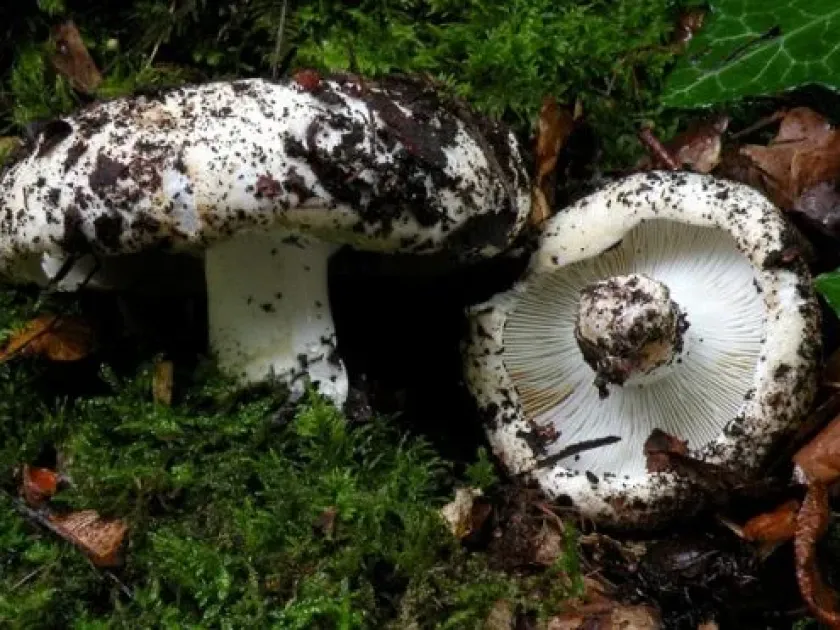
The most distinctive sign of this fungus is its appearance in forest soil, often emerging from beneath a layer of leaf litter or pine needles.
The fruit bodies are frequently found partially buried in the ground, with only the top of the cap visible, which is a key identification trait.
Unlike parasitic fungi that cause wilting or decay, Russula delica remains localized and does not produce toxins that damage the host plant tissues.
The flesh is exceptionally hard and brittle, which protects the fungus from being easily consumed by common insect larvae or pests.
There is no exudate or milky sap produced when the tissue is damaged, allowing for a clear differentiation from some species of the Lactarius genus.
Pathogen
Russula delica, commonly known as the milk white brittlegill, is a mycorrhizal fungus belonging to the Russulaceae family. It is not a plant pathogen or a disease-causing agent.
In the context of botany and mycology, this fungus acts as a symbiotic partner to various tree species, enhancing nutrient uptake and supporting forest health.
The mushroom features a robust, dense cap that is often funnel-shaped as it matures. The surface is typically white, sometimes with brownish stains, and feels firm to the touch.
The gills are white to cream, often with a slight greenish or blueish tint, and are spaced closely together, running down the short, thick stem.
Being a symbiont, Russula delica colonizes the rhizosphere of forest trees, which is a beneficial interaction rather than a parasitic one.
Conditions for development
The fungus thrives in temperate climates, showing a preference for deciduous and coniferous woodlands with well-drained, nutrient-rich soils.
Mycelial growth and fruit body formation are highly dependent on seasonal precipitation and optimal humidity levels during the late summer and autumn.
It prefers areas with a deep layer of organic leaf litter, which provides both protection and the necessary substrate for mycelium development.
The species is widespread and shows high adaptability to different soil types, provided that the symbiotic trees are present in the environment.
Temperature fluctuations within a moderate range do not inhibit the fungus; however, extreme droughts can cause the fruiting cycle to cease temporarily.
Why it matters
Russula delica poses no risk to agricultural crops, ornamental plants, or forestry operations. It is a completely benign and ecologically valuable organism.
It does not cause root rot, stem diseases, or any other form of degradation, making it a harmless presence in forest ecosystems.
The only concern regarding this fungus is human error during foraging, where it might be confused with toxic white-colored mushrooms.
From an agronomic perspective, the presence of these fungi indicates a healthy soil micro-environment and functional mycorrhizal networks.
Therefore, no protective measures or control strategies are required; instead, the fungus should be viewed as a positive indicator of natural forest biodiversity.
Discussion
No discussions yet — be the first.