
Russula cyanoxantha
Russula cyanoxantha
Description
Symptoms
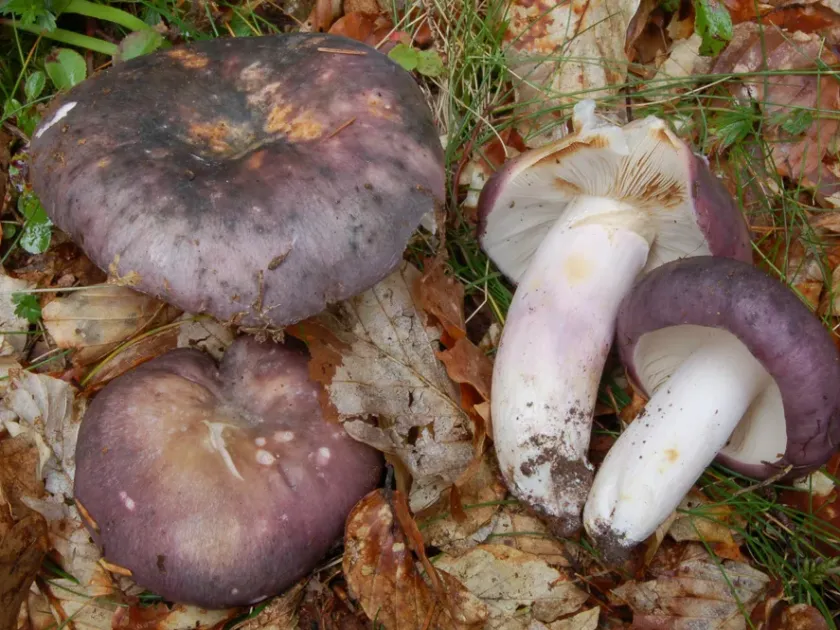
Russula cyanoxantha, commonly known as the charcoal burner, is a gilled mushroom belonging to the Russulaceae family. Its cap is variable in color, ranging from greyish-green to purple, often displaying mottled patterns.
A distinctive feature of this species is its gills, which are notably flexible and resilient. Unlike other Russula species that have brittle, chalk-like gills, those of R. cyanoxantha can be bent without breaking.
The stem is typically firm and white, occasionally with a subtle violet hue. The flesh is white, lacks a strong odor, and possesses a mild taste, which makes it a highly regarded edible mushroom.
The surface of the cap can be matte or slightly tacky under humid conditions, but it often gains a characteristic sheen as it dries out. The spore print is always white.
This mushroom does not cause any symptoms on plants such as wilting, chlorosis, or necrosis, as it functions solely through a symbiotic relationship with tree roots.
Pathogen
Russula cyanoxantha is not a plant pathogen or a disease-causing agent. It is an ectomycorrhizal fungus that lives in mutualistic symbiosis with various hardwood and coniferous trees.
It does not secrete enzymes that degrade living plant tissues. Instead, the fungus aids the host plant by increasing the surface area for water and nutrient uptake through its mycelial network.
In the context of agricultural and forest science, this mushroom is categorized as a beneficial organism. It does not initiate any infections or pathological states in the trees it associates with.
The interaction between the fungus and the host plant is entirely beneficial, involving the exchange of sugars from the plant for mineral nutrients from the soil provided by the fungus.
Classifying R. cyanoxantha as a plant disease is a biological error, as it is a natural and healthy component of the forest ecosystem, not a source of damage.
Conditions for development
The charcoal burner thrives in moist, humus-rich soils found in deciduous and mixed forests. It is particularly associated with beech, oak, and birch trees.
The optimal development of fruiting bodies occurs during periods of moderate temperatures and regular rainfall, typically from mid-summer to early autumn.
It requires a stable forest microclimate, where the leaf litter layer protects the underground mycelium from rapid fluctuations in humidity and temperature.
The presence of a suitable host tree is essential, as the mycorrhizal fungus cannot complete its life cycle without the sugar supply provided by the tree's roots.
When environmental conditions become too dry, the mycelial activity slows down, and the production of mushrooms ceases until moisture levels are restored in the soil.
Why it matters
This species poses no threat to agriculture, horticulture, or commercial forestry. It does not cause economic damage, nor does it reduce the health or productivity of the plants it colonizes.
There is no evidence of R. cyanoxantha causing rot, lesions, or any physical degradation of plant tissues. It is completely benign and economically neutral in terms of crop safety.
Its role in the ecosystem is positive, as it contributes to soil health and tree vitality. It serves as a natural indicator of a well-balanced and ecologically sound environment.
There are no recorded instances of this fungus damaging yields or negatively impacting nursery production. It does not compete with crops for resources.
The only interaction it has with plants is supportive; therefore, there is absolutely no damage associated with the growth of this fungal species.
Protection
There are no control measures or plant protection protocols for R. cyanoxantha because it is not a pest or a disease. The use of fungicides to eliminate it would be harmful to the ecosystem.
To preserve the healthy mycorrhizal population, forest management should focus on maintaining natural soil structure and avoiding excessive soil compaction from heavy machinery.
No prophylactic measures are required, as the fungus is a native component of forest biodiversity that poses no phytosanitary risk to any area.
No quarantine or regulatory actions are needed for this species. It is widely collected and appreciated as a culinary resource in many parts of the world.
Agronomists and foresters should focus on protecting trees from true pathogens rather than attempting to manage beneficial organisms like the charcoal burner.
Discussion
No discussions yet — be the first.