
Russula aurea
Russula aurea
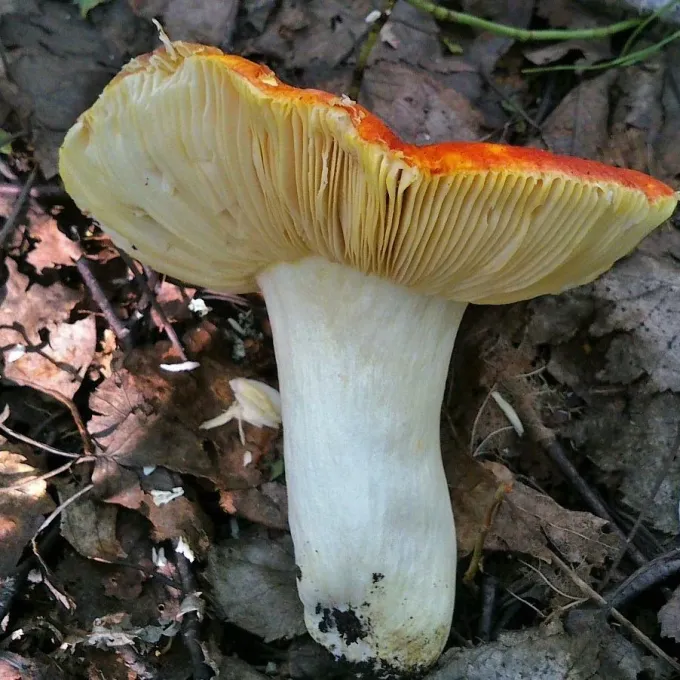
Description
Pathogen
Russula aurea, commonly known as the golden russula, is an edible basidiomycete fungus belonging to the Russulaceae family. It is strictly not a plant pathogen and causes no diseases in crops or garden plants.
This organism maintains a mycorrhizal relationship with trees, acting as a symbiont that assists in nutrient uptake rather than infecting or harming plant tissues. It is a beneficial part of the soil ecosystem.
Unlike parasitic fungi that cause wilting, root rot, or leaf spots, Russula aurea does not possess the mechanisms to decompose or parasitize healthy living plant cells.
Misidentifying this mushroom as a disease carrier is a common misconception among amateur gardeners, as it reflects a misunderstanding of the roles played by macrofungi in soil health.
There is no record of Russula aurea damaging agricultural or horticultural crops, and it should not be treated as a threat to plant health in any diagnostic protocols.
Conditions for development
The development of Russula aurea fruiting bodies is dependent on specific environmental conditions, including moderate temperatures and high soil moisture levels, typical of deciduous forests.
It thrives in association with hardwood trees like oak or beech, forming stable mycorrhizal networks in the rhizosphere that require stable, non-compacted soil structures.
The fungus is highly sensitive to soil chemistry and requires balanced, slightly acidic to neutral pH levels to maintain its mycelial presence underground.
Conditions for its appearance usually include a damp climate and the presence of organic debris, which provides a conducive environment for the fungal life cycle, distinct from plant disease infection cycles.
It does not spread through wind-borne pathogenic spores that infect foliage, but rather through slow-growing mycelial expansion and spore dispersal in natural habitats.
Why it matters
Russula aurea poses absolutely no harm to plants. It is functionally non-pathogenic, and its presence is often an indicator of high ecological quality and healthy soil microflora.
The fungus facilitates a symbiotic exchange of nutrients, enhancing the overall vigor of the host trees and surrounding vegetation, which contradicts the definition of a pest or disease.
No agricultural damage, such as yield reduction, tissue necrosis, or stunted growth, can be attributed to this species, as it lacks the physiological traits of a disease agent.
Gardeners may sometimes find the appearance of mushrooms undesirable, but this is purely a matter of garden aesthetics rather than a symptom of a botanical pathology.
Eliminating such fungi from a garden is environmentally counterproductive, as they provide ecosystem services like mineral cycling that benefit the long-term health of the garden soil.
Protection
There are no control measures or prevention protocols for Russula aurea because it is not a pathogen. Treating it as a disease is medically and agronomically groundless.
Should the mushrooms be unwanted in a specific landscape design, manual removal of the fruiting bodies is the only recommended action, which is safe and non-toxic.
Chemical fungicides must never be used to suppress this fungus, as they will inadvertently harm the beneficial soil biology and potentially cause ecological damage to the site.
Cultural management, such as regulating soil moisture or improving air circulation, may naturally limit the appearance of fruiting bodies without requiring chemical intervention.
Agronomists advise focus on proper plant care and fertilization to strengthen crops, ensuring that healthy plants can coexist with natural soil fungi without the need for control measures.
Discussion
No discussions yet — be the first.