
Willow tar spot
Rhytisma salicinum
Description
Symptoms
Initial symptoms include the appearance of small, yellow to pale green spots on the upper surfaces of the leaves in the spring.
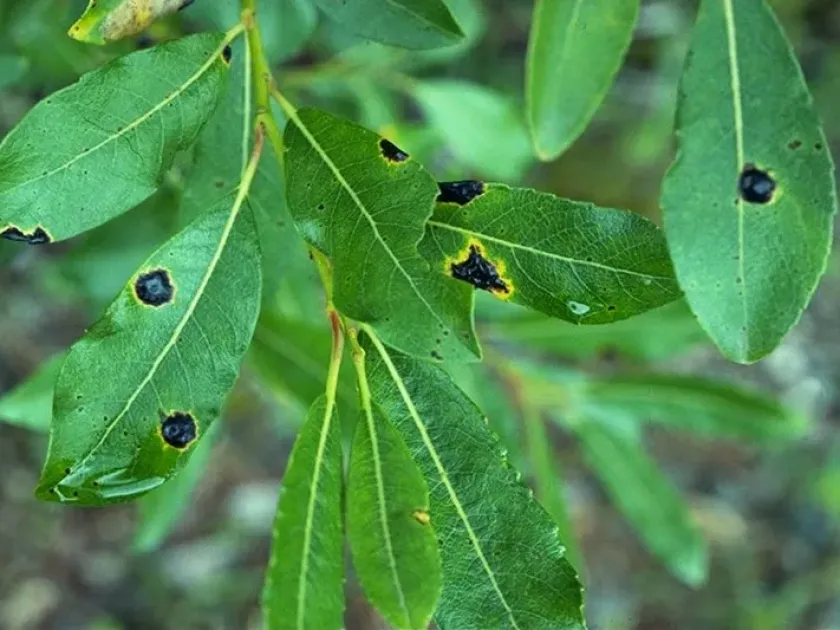
As the infection progresses throughout the summer, these spots transform into thickened, glossy, jet-black patches resembling dabs of tar.
A distinct, light-colored or yellowish halo often surrounds each black spot, creating a sharp contrast with the green tissue of the leaf.
Towards the end of the season, the black fungal structures develop small cracks or ripples, which are the precursor to spore-bearing structures.
- Glossy, raised black tar-like spots on the leaf surface.
- Chlorotic yellowing around the edges of the necrotic spots.
- Premature curling and early senescence of severely infected leaves.
Pathogen
The disease is caused by the fungus Rhytisma salicinum, a member of the Ascomycota phylum that specifically targets various species of the Salix genus.
The pathogen completes its life cycle by surviving the winter within the fallen, infected leaves, where it forms a dark, hardened stroma.
During the spring, when environmental conditions are sufficiently moist, the fungus produces apothecia that release ascospores into the air.
These spores are primarily wind-dispersed, landing on emerging young leaves and initiating a new cycle of infection during the growing season.
Once the fungus penetrates the leaf tissue, it establishes a mycelial network that eventually develops into the characteristic black spots.
Conditions for development
Willow tar spot thrives in environments characterized by high humidity, frequent rain, and prolonged morning dew throughout the spring months.
Dense canopies and lack of proper air circulation within the tree branches create an ideal microclimate for fungal spore germination.
Temperatures ranging from 15 to 20 degrees Celsius are considered optimal for the rapid colonization and growth of the fungus within leaf tissues.
The disease prevalence is significantly higher in areas where fallen leaves are left on the ground, providing a reservoir for wintering spores.
Periods of heavy rainfall allow for easier spore movement and increase the likelihood of multiple infections on a single tree canopy.
Why it matters
The primary impact of tar spot is the reduction of the leaf surface area available for photosynthesis, which stresses the affected willow tree.
Premature leaf drop caused by severe infections can lead to reduced overall plant vigor and lower carbohydrate storage for the winter.
While rarely fatal, the disease significantly detracts from the aesthetic value of ornamental willow trees used in landscaping.
In forest nurseries, high levels of infection can stunt the growth of young saplings and result in poor development of the root system.
Continuous annual infections may leave trees more susceptible to secondary pathogens and environmental stressors like drought or frost damage.
Protection
The most effective cultural practice is to rake up and destroy all fallen leaves in the autumn to eliminate the primary source of overwintering inoculum.
Proper pruning techniques that open up the tree canopy help increase airflow and sunlight penetration, making the environment less favorable for the fungus.
Fungicidal sprays containing copper or other broad-spectrum active ingredients can be applied if the disease becomes a recurring issue in high-value trees.
Maintaining optimal tree health through adequate irrigation and fertilization helps the tree withstand the minor stress caused by the fungal infection.
Choosing resistant willow species or cultivars can be a long-term solution for areas known to have high pressure from Rhytisma salicinum.
Discussion
No discussions yet — be the first.