
Barley scald
Rhynchosporium graminicola
Description
Symptoms
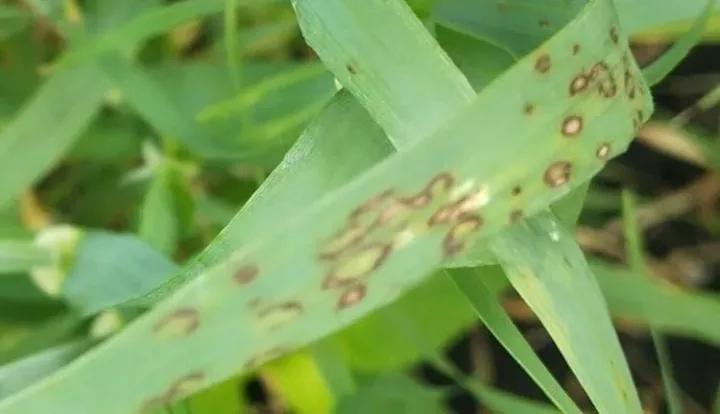
Barley scald is characterized by the appearance of distinct lesions on leaves, sheaths, and occasionally on awns. These lesions are typically oval or lens-shaped with a pale grey-white center.
A diagnostic feature of the disease is the presence of a dark brown, irregular border surrounding the pale centers. Under humid conditions, a whitish halo may develop, indicating active conidial sporulation.
As the disease progresses, these lesions enlarge and coalesce, eventually covering large portions of the leaf surface. This necrosis forces the plant to lose photosynthetic capacity, leading to premature yellowing and leaf death.
In severe infections, the disease can spread to the stem, causing weakening and lodging. Symptoms usually start from the lower, older leaves and move upwards as the season progresses through the canopy.
The appearance of the lesions resembles scalding, which gives the disease its common name. Proper identification is crucial early in the season to prevent significant damage during the grain-filling stage.
Pathogen
The disease is caused by the fungus Rhynchosporium graminicola (formerly Rhynchosporium secalis). It is a specialized fungal pathogen that primarily infects barley and various grasses.
The fungus survives between cropping seasons on infected crop debris, soil, and volunteer barley plants. It can also be carried on or within contaminated seeds, providing a source of primary inoculum.
Conidia, produced in specialized structures on the lesions, serve as the primary means of dispersal. These spores are easily splashed by rain or wind-blown to healthy leaves or neighboring plants.
The infection process involves the penetration of the leaf cuticle, followed by colonization of the intercellular spaces. Toxins produced by the pathogen cause the characteristic tissue death and lesion formation.
The pathogen is highly adaptable to cooler climates and can maintain its viability in debris for several years. Genetic diversity within the pathogen population allows it to overcome some host resistance mechanisms.
Conditions for development
Barley scald development is strongly correlated with cool, wet weather. The optimal temperature range for infection is approximately 15 to 20 degrees Celsius.
Frequent rainfall and high relative humidity are essential for the germination of spores and their transmission across the field. Prolonged leaf wetness periods are critical for successful fungal penetration.
Dense crop stands create a humid microclimate that favors rapid disease multiplication. Poor airflow within the canopy allows the fungus to spread easily from the lower leaves to the upper ones.
High nitrogen availability can stimulate lush growth, which is often more susceptible to infection. Balanced fertility management is therefore an important component of overall crop health.
Conversely, hot and dry weather (above 25 degrees Celsius) inhibits spore germination and slows the spread of the pathogen, helping to limit the severity of the disease outbreak.
Why it matters
The primary economic impact of barley scald is the reduction of green leaf area, which limits the plant's ability to fill grains. This results in significant yield loss, often ranging from 10% to 40%.
Reduced grain weight and quality are common consequences of severe infestations. The grain may become shrivelled, which negatively affects the malting quality and market value of the crop.
Infected crops are more prone to lodging, which complicates harvesting and may result in further losses due to grain shedding or poor grain recovery by machinery.
The disease reduces the vigor of the plant, making it more susceptible to secondary stressors. In brewing barley, scald can alter the protein and starch profile of the grain, rendering it unsuitable for high-quality malting.
Repeated epidemics in a region can lead to significant annual financial losses for farmers, necessitating investments in intensive chemical control programs to protect the yield potential.
Protection
Crop rotation is the first line of defense; growing non-host crops for at least two years helps to significantly reduce the inoculum present in the field's debris.
Tillage practices that incorporate crop residues deep into the soil help accelerate the decomposition of infected material, effectively breaking the disease cycle.
Using certified, disease-free seed is essential. Additionally, planting dates should be managed to avoid periods when the crop is most susceptible to early infection from nearby reservoirs.
- Selecting resistant or tolerant barley cultivars.
- Effective management of volunteer barley and wild grasses.
- Balanced NPK fertilization to improve plant resistance.
- Strategic application of systemic fungicides at the early sign of symptoms.
Monitoring the fields from the tillering stage onwards is vital. Fungicides, particularly those belonging to the triazole or strobilurin groups, should be applied when weather forecasts predict conditions favorable for further disease spread.
Discussion
No discussions yet — be the first.