
Spotted Toughshank
Rhodocollybia maculata
Description
Symptoms
The most visible indicator of its presence is the emergence of fruit bodies, typically appearing in clusters or small groups on rotting wood during late summer and autumn.
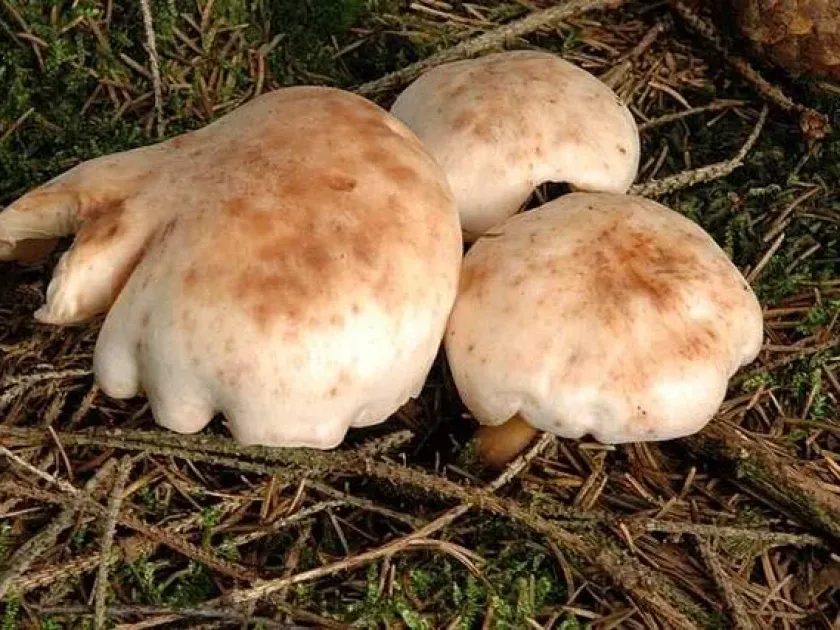
The cap, measuring up to 15 cm in diameter, displays a characteristic white surface adorned with rusty or dark brown spots that become more pronounced as the mushroom matures.
The gills underneath the cap are densely packed, white in color, and may show pinkish staining when handled or as the specimen begins to age.
Wood infected by this fungus loses its structural integrity, appearing porous and brittle, eventually transforming into a light-colored mass consistent with white rot.
Mycelial mats or rhizomorphs may sometimes be found under the bark of heavily infected logs, serving as the main vegetative component of the organism.
Pathogen
Spotted Toughshank (Rhodocollybia maculata) is a wood-decaying fungus belonging to the Marasmiaceae family, primarily known as a saprotroph within forest ecosystems.
The fungus is predominantly found growing on decaying coniferous stumps, logs, and woody debris, where it plays a vital role in decomposing organic matter.
Its biological structure consists of a firm, white cap featuring distinct reddish-brown spots, which gives the species its common and scientific names.
It propagates through basidiospores that are dispersed by wind, seeking out crevices or physical wounds in tree bark to establish its mycelial network.
The fungus is essentially a decomposer that utilizes enzymes to break down lignin and cellulose, contributing significantly to the nutrient cycling within the forest environment.
Conditions for development
The Spotted Toughshank thrives in cool, moist, and shaded forest environments, which are essential for the survival of its mycelium and the production of fruiting bodies.
High levels of forest floor humidity and the presence of abundant woody substrate are the primary factors that dictate the density and spread of this fungal population.
Fruiting occurs most frequently following periods of heavy or consistent rainfall in late summer, as moisture levels are critical for the development of the mushrooms.
The fungus is highly resilient and can remain dormant within the wood for extended periods, waiting for optimal climatic conditions to resume active growth.
While soil acidity and tree species composition can influence its prevalence, the availability of dead coniferous wood remains the single most important ecological factor.
Why it matters
In natural forest settings, this fungus is not considered a primary pathogen, as it is largely beneficial for the decomposition of deadwood and forest hygiene.
However, in managed forests or plantations, it can become an opportunistic invader, targeting stressed or weakened trees and causing internal root or stem decay.
Such infections can lead to a decline in timber quality and reduced tree stability, increasing the susceptibility of the stand to windthrow and mechanical failure.
If left unchecked in proximity to valuable timber crops, the fungus can create persistent infection centers that may gradually spread to neighboring compromised trees.
The economic impact is generally limited to the loss of commercial timber value if rot infiltrates the heartwood, necessitating additional sanitary interventions.
Protection
The primary control measure in forestry is the practice of regular sanitary logging, which involves the timely removal of deadwood, diseased trees, and old stumps.
Maintaining high stand vigor through proper thinning and site management helps trees resist opportunistic fungal infections and minimizes the risk of rot.
Avoiding mechanical damage to the tree trunks during harvest operations is essential, as these injuries provide the entry points for fungal spores to colonize the tree.
In cases of infestation, removing infected material and burning or disposing of it properly helps reduce the local spore load and prevents further spread.
Integrated forest management strategies focus on preventing the accumulation of large amounts of woody debris, which limits the potential habitat for the Spotted Toughshank.
Discussion
No discussions yet — be the first.