
Rhizopogon vulgaris
Rhizopogon vulgaris
Description
Symptoms
The presence of Rhizopogon vulgaris is often first indicated by the accumulation of thick, felt-like mycelial cords around the fine roots of seedlings. This is sometimes confused with healthy mycorrhizal associations, but unlike beneficial symbionts, this leads to visible growth retardation.
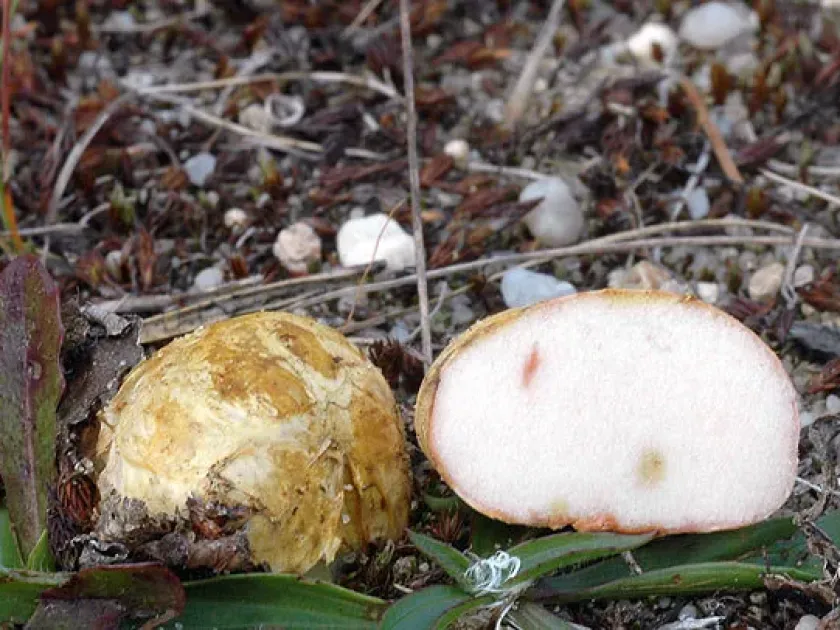
The most diagnostic feature is the emergence of small, tuber-like fruiting bodies near the base of the stem. These bodies, usually yellowish-brown, are found when the surface soil layer is gently disturbed or during irrigation.
Above-ground symptoms include chlorosis and general lack of vigor. Needles may show premature yellowing as the root system, overwhelmed by fungal activity, loses its ability to transport essential minerals to the crown.
Infected seedlings exhibit a significantly reduced growth rate compared to healthy stock. Their root architecture often appears brittle and exhibits a reduced count of healthy tertiary root branches, indicating long-term stress.
Microscopic analysis of root tips and soil samples is necessary for a definitive diagnosis. Such tests confirm whether the fungal presence is causing significant harm or is within the range of standard mycorrhizal colonization.
Pathogen
Rhizopogon vulgaris is a basidiomycetous fungus within the Boletales order. While primarily recognized as a mycorrhizal symbiont in nature, in managed nursery environments, it can shift into a parasitic role that compromises the health of young seedlings.
The fungus produces hypogeous or sub-epigeous fruiting bodies known as false truffles. Its mycelium colonizes root systems, forming dense fungal mats. When the environmental balance is disrupted, these structures can interfere with the tree's nutrient uptake efficiency.
The fungus establishes an ectomycorrhizal relationship. Under optimal conditions, this is beneficial; however, in intensive agricultural setups, the high concentration of mycelium can compete with the host plant, leading to stunted development and signs of physiological stress.
The lifecycle involves the formation of spores within subterranean fruiting bodies. Spore dispersal is facilitated by small mammals, water run-off, and contaminated tools used during routine maintenance of nursery beds.
For forestry professionals, understanding the transition from symbiont to pathogen is crucial. Monitoring Rhizopogon vulgaris population density is an essential aspect of quality management in pine and spruce cultivation programs.
Conditions for development
Development is most robust in soils with high organic matter content and consistent moisture. An ambient temperature range of 15–22°C (59–72°F) is considered ideal for mycelial expansion and spore germination.
Acidic soil conditions (pH 4.5–6.0) favor the dominance of this fungus. In such environments, the fungus often transitions into a more aggressive interaction with the host roots, depleting plant carbon reserves.
Improper irrigation management, resulting in soil saturation and poor drainage, is a primary driver for the spread of Rhizopogon vulgaris. Excessive moisture degrades root bark, making it easier for the fungus to penetrate the tissue.
Repeated use of the same nursery beds without soil sterilization promotes the buildup of fungal biomass. If previous crops were infected, the soil remains a reservoir of spores, waiting for the next planting cycle.
Dense planting configurations limit air circulation and allow for direct contact between root systems, which significantly increases the horizontal transmission rate of the fungus within the nursery block.
Why it matters
The primary economic harm is the reduced survival rate of nursery-grown seedlings. Plants damaged by this fungus perform poorly when outplanted, leading to significant losses in reforestation projects.
The fungus acts as a metabolic drain on the host. By sequestering amino acids and carbohydrates intended for the plant's growth, it reduces the overall vigor, making the trees susceptible to secondary pathogens and climate stress.
Large-scale infestation within a nursery can lead to the necessity of total site decontamination or the disposal of entire seedling batches, incurring substantial costs for the forestry operator.
Seedlings infected by Rhizopogon vulgaris often fail to meet quality standards for root-to-shoot ratios, which increases the time required for them to reach market size and drives up production costs.
Long-term environmental harm occurs when infected nursery stock is moved to new forest sites, potentially introducing the pathogen to previously healthy forest ecosystems and disrupting native microbial populations.
Protection
Management begins with careful site selection and the removal of residual organic matter from soil. Incorporating proper drainage systems prevents the soil conditions that favor fungal development.
Maintaining optimal spacing between seedlings prevents root-to-root transmission. Regular monitoring during the growing season allows for early detection of fruiting bodies, enabling targeted interventions before the pathogen spreads.
The use of biological control agents, such as beneficial fungal antagonists (e.g., *Trichoderma* spp.), is an effective, eco-friendly method to suppress Rhizopogon vulgaris* populations in the soil.
In cases of severe infestation, targeted application of soil-active fungicides can be utilized. These treatments are best applied early in the cycle to protect the root systems of young seedlings without affecting their growth.
- Improve soil aeration and drainage to reduce moisture stress.
- Ensure strict sanitation of tools to prevent spore distribution.
- Use certified, pathogen-free substrate for containerized seedlings.
- Cull and discard symptomatic plants to reduce inoculum pressure.
Discussion
No discussions yet — be the first.