
Rhizoctonia root rot of conifers
Rhizoctonia butinii
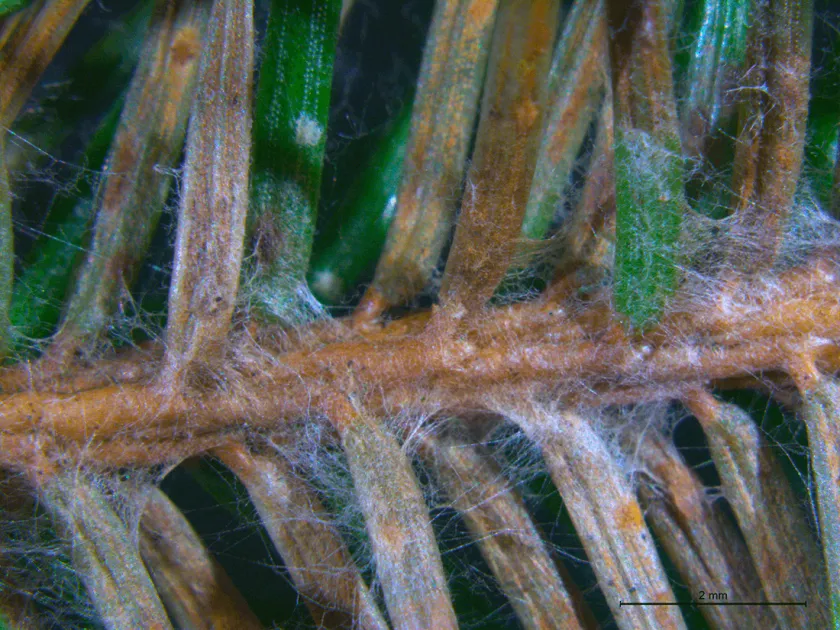
Description
Symptoms
The primary sign of the disease is sudden wilting and subsequent browning of needles in young plants. Specific lesions form in the root collar area and on the roots themselves, leading to the rapid death of the seedling.
Loose mycelium of the fungus can often be observed on the affected tissues, which eventually densifies and turns brown. Upon inspection, the root system shows characteristic decay of the bark, exposing the wood.
The infection often manifests in patches, with groups of plants in nurseries dying in close proximity. A constriction at the base of the stem is frequently noted, indicating a disruption of nutrient supply.
In high humidity, a whitish or greyish film may appear around the affected areas. The plant loses turgor, the needles turn a greyish-brown color and fall off easily at the slightest touch.
Under severe infection, the root system is completely destroyed, turning into a decayed mass. This prevents any further nutrient intake, causing the plant to dry out within a very short period.
Pathogen
The disease is caused by the soil-borne pathogenic fungus Rhizoctonia butinii, which belongs to the Basidiomycetes. This organism can survive in the soil for long periods as mycelium or specialized structures called sclerotia.
The pathogen is highly versatile and can affect a wide range of coniferous species, especially at the seedling and young sapling stages. The fungus penetrates the plant tissues primarily through root hairs and micro-cracks in the bark.
The pathogen's life cycle is closely linked to soil moisture and the presence of organic debris. Rhizoctonia butinii actively uses exoenzymes to break down the host cell walls, causing necrotic processes.
The fungus is capable of switching to saprotrophic feeding, using dead plant matter as a reserve energy source. This complicates control, as it can survive long after the host plant has died.
The infection is spread through contaminated soil, planting material, as well as rain and irrigation water. In nurseries, infection is often transferred via non-disinfected tools and containers.
Conditions for development
The most favorable conditions for disease development are high soil moisture combined with moderately warm temperatures. Excessive watering and poor drainage significantly increase the risk of seedling infection.
Dense, heavy soils with low aeration contribute to the accumulation of spores and mycelium in the root zone. Lack of oxygen in the soil weakens the conifers' immunity, making them more susceptible.
Crowded plantings create a microclimate with stagnant air, which further triggers the spread of the fungal infection. Under these conditions, the pathogen moves more quickly from one plant to the next.
Temperature fluctuations and stress-weakened saplings (due to lack of light or nutrient deficiencies) make conifers an easy target for Rhizoctonia.
Failure to rotate crops and returning coniferous species to the same site at short intervals helps build up the infectious background in the soil to critical levels.
Why it matters
The main damage consists of mass mortality of young seedlings in nurseries, causing direct economic losses. Rhizoctonia can destroy entire batches of planting material in a short period.
The disease hinders growth and development even in surviving plants, rendering them weak and sub-standard. Such saplings often fail to pass quality control and must be discarded.
The harm also lies in the difficulty of isolating the infection source. Since the fungus persists in the soil, any plantings on the site are at high risk for many years.
Infected saplings, when planted in a permanent location, can become a source of infection for existing conifer stands, posing a threat to decorative gardens and forest areas.
Rhizoctonia complicates cultivation technology, requiring additional costs for expensive fungicide treatments and regular monitoring of plant health.
Protection
The key protection method is the use of healthy planting material and sterile substrates. Before sowing, seeds should be treated with approved fungicides.
It is important to strictly follow agronomic practices: ensure proper soil drainage, avoid overwatering, and maintain optimal planting density. Good ventilation reduces infection risk.
Upon detecting the first signs of the disease, affected plants must be removed immediately along with the surrounding soil. The site should be disinfected with specialized products.
For prevention, soil can be drenched with systemic fungicide solutions. Regular disinfection of tools and equipment is a mandatory procedure in nurseries.
Biological control methods, including the application of beneficial soil fungi (such as Trichoderma species), help suppress pathogen development and increase root system resistance.
Discussion
No discussions yet — be the first.