
Rhexocercosporidium blight of ginseng
Rhexocercosporidium panacis
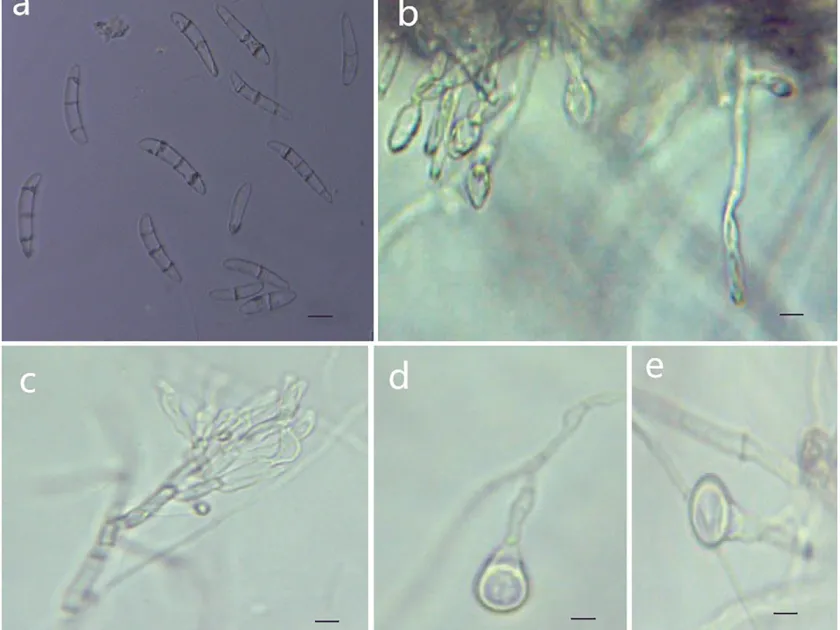
Description
Symptoms
Early symptoms appear as small, dark, irregular spots on the leaves and petioles. These lesions grow rapidly under favorable conditions, eventually leading to leaf blight.
The most severe damage occurs on the roots, which become soft, discolored, and necrotic. The tissue turns from light tan to dark brown or black, often becoming pulpy.
Affected plants exhibit premature wilting, as the damaged vascular system can no longer transport water and nutrients efficiently from the roots to the shoots.
In humid conditions, a fine, grayish fungal growth may be visible on the surface of the lesions. This fungal mat produces spores that serve as secondary inoculum.
Root rot caused by this pathogen often leads to the complete death of the plant if left untreated. The root loses its medicinal integrity and becomes commercially worthless.
Pathogen
The disease is caused by the pathogenic fungus Rhexocercosporidium panacis. This microorganism is a significant threat to ginseng cultivation, specifically targeting both root systems and foliage.
The pathogen survives in the soil as mycelium or resistant spores, which can remain dormant for extended periods. It is highly adapted to the specific ecological niche occupied by Panax species.
Infection is typically transmitted through contaminated soil, irrigation runoff, and the movement of infected plant debris. It spreads rapidly in high-density production systems.
The fungus produces specialized enzymes that break down plant cell walls, leading to tissue collapse. This enzymatic activity is the primary driver of the rapid necrosis observed in infected roots.
Given its specificity, the pathogen is well-established in commercial ginseng plantations, where it acts as a limiting factor for plant longevity and quality.
Conditions for development
High soil moisture and inadequate drainage are the primary factors that facilitate disease development. Stagnant water creates the perfect environment for spore germination.
The fungus thrives at temperatures ranging from 18°C to 25°C. These moderate temperatures allow for rapid mycelial colonization of the ginseng root tissues.
Poor soil aeration and overcrowding of plants are significant risk factors. Proper spacing is essential to ensure adequate airflow and prevent humidity buildup.
The use of infected planting stock or equipment that has not been sanitized is a common cause of initial outbreaks in previously clean plots.
Environmental stress, such as improper fertilization or shade management, weakens the plant's natural defense mechanisms, making it more vulnerable to infection.
Why it matters
The disease causes substantial economic losses, with mortality rates in susceptible ginseng crops potentially exceeding 60% in severe cases.
Root destruction renders the harvested product useless for the pharmaceutical market, as the bioactive compounds are degraded by the rotting process.
The persistent nature of the pathogen in the soil means that once a plot is infested, it requires extensive remediation before it can be used for ginseng cultivation again.
Management costs increase significantly due to the necessity of frequent monitoring, the use of preventive fungicides, and the labor required for roguing infected plants.
Without strict control, the disease can wipe out entire nurseries, forcing growers to abandon production on long-term investment sites.
Protection
Integrated pest management (IPM) is the most effective approach. This includes selecting disease-free planting material and preparing the seedbed with thorough sterilization.
Maintaining optimal drainage and avoiding excessive irrigation are critical. Growers should use soil moisture sensors to ensure the roots do not sit in saturated soil.
Immediate roguing (removal) of infected plants, along with the surrounding soil, is necessary to prevent the disease from spreading to healthy neighbors.
- Strict sanitation of all tools and machinery between use.
- Maintaining proper plant density to encourage air circulation.
- Application of bio-fungicides to establish beneficial microbial competition in the soil.
Long-term rotation strategies should be strictly followed, ensuring that the ginseng crop returns to the same plot only after a recovery period of several years.
Discussion
No discussions yet — be the first.