
Rhagadolobium dicksoniifolium
Rhagadolobium dicksoniifolium
Description
Symptoms
The hallmark of a Rhagadolobium dicksoniifolium infection is the appearance of small, dark, and distinct spots on the leaf blades. Over time, these spots can expand and merge, forming crust-like patches.
Chlorotic halos often develop around the margins of the fungal colonies, indicating that the fungus is actively siphoning nutrients and disrupting the plant's physiological processes, including localized photosynthesis.
As the disease progresses, the infected leaves lose their natural sheen and vitality. Severe cases result in premature leaf senescence and defoliation, which severely restricts the plant's ability to produce energy.
While the primary damage is on the foliage, the pathogen can also manifest on young, succulent stems. This leads to stunted growth and distortion of the plant's normal architecture.
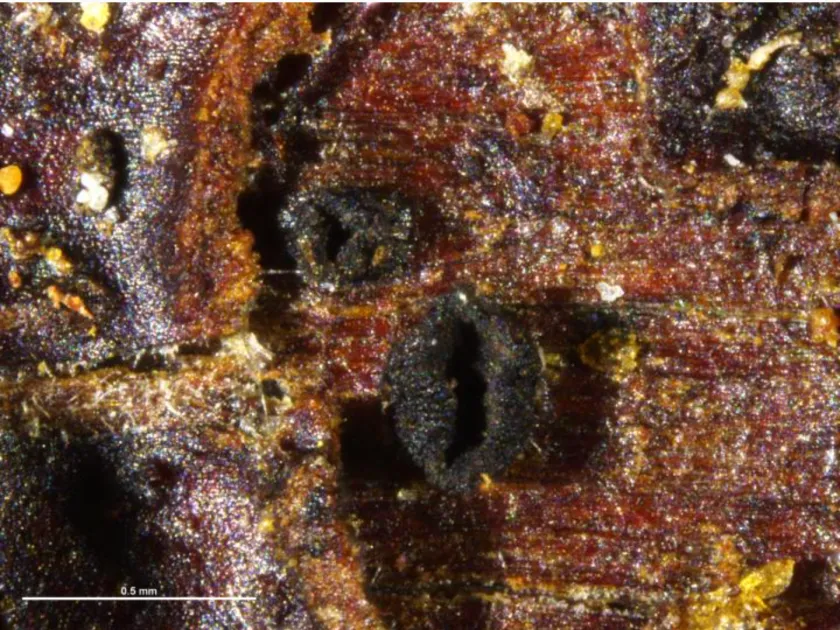
Identification is confirmed by observing the presence of dark, round thyriothecia on the leaf surface. These structures appear as pin-point black dots and are a diagnostic feature of this specific fungal genus.
Pathogen
Rhagadolobium dicksoniifolium is a specialized fungal parasite belonging to the order Microthyriales. It is a microscopic organism that has evolved to colonize the leaves of specific host plants, acting as an obligate parasite.
The pathogen is classified as an ascomycete. It produces specialized fruiting bodies known as thyriothecia, which form directly on the epidermis of leaves. These structures are adapted to securely anchor the fungus to the plant surface.
The life cycle of this pathogen is synchronized with the growth of its host plant. It spreads primarily through the release of ascospores, which are dispersed by wind currents or splashing water during rainfall events.
As a sub-cuticular pathogen, it thrives by accessing the nutrients within the host tissue while maintaining its structures on the exterior. This biological strategy makes it resilient and capable of persisting on susceptible species for extended periods.
Understanding the biology of this fungus requires advanced microscopy, as its tiny fruiting bodies often blend into the natural texture of the leaf surface, complicating early field identification.
Conditions for development
High humidity and moisture are the most critical factors for the development of Rhagadolobium dicksoniifolium. The fungus requires prolonged periods of leaf wetness to facilitate spore germination and infection.
The pathogen prefers moderate temperatures, typically between 15°C and 25°C. These conditions are common in sheltered, shaded habitats or dense plant stands where air circulation is restricted.
Dense vegetation or poorly ventilated garden areas create a perfect microclimate for the fungus to establish itself. The lack of air movement allows moisture to persist on leaf surfaces for extended periods, favoring the pathogen.
Environmental stress, such as over-watering or improper irrigation techniques, can inadvertently create ideal conditions for the disease to flourish. Stability in the microclimate is key to the fungus's success.
Poor sanitation within the orchard or nursery setting, particularly regarding the retention of leaf litter, ensures that the pathogen has a reservoir to survive during the winter months.
Why it matters
The primary impact of the infection is a significant reduction in the plant's overall productivity. By damaging foliage, the pathogen limits photosynthesis, leading to reduced growth rates and weakened vigor.
Weakened plants are significantly more susceptible to secondary environmental stressors such as drought, frost, and other opportunistic pests or diseases. The cumulative stress often leads to decline.
In ornamental and forest settings, the disease causes substantial aesthetic damage. The loss of leaf health and structural integrity diminishes the ornamental value, making the plants unsuitable for display.
Economic damage in nurseries can be severe due to the loss of marketable stock. Infections can lead to high culling rates, as infected plants may fail to meet quality standards and carry the risk of spreading.
The long-term harm to perennial plants includes cumulative depletion of carbohydrate reserves, which may result in poor flowering or failure to survive the winter dormancy period.
Protection
Effective management begins with good cultural practices. Promoting airflow by pruning dense branches and maintaining proper spacing between plants significantly reduces the risk of infection.
Sanitation is paramount. Collecting and removing all fallen leaves and infected plant debris in the autumn is essential to eliminate the primary sources of inoculum for the following season.
Chemical control, when necessary, involves the use of fungicides. Systemic products are often more effective against ascomycetes because they provide protection to the internal tissues that the fungus targets.
Regular monitoring of plants, especially during wet weather, is critical. Early detection allows for the prompt application of control measures, which is far more cost-effective than attempting to treat an established infection.
- Use only disease-free nursery stock to prevent introducing the pathogen.
- Maintain balanced plant nutrition to support strong, resilient growth.
- Consider biological control agents if approved and available for specific horticultural use.
Discussion
No discussions yet — be the first.