
Rhacodiella
Rhacodiella
Description
Symptoms
Symptoms typically start as darkened, sunken lesions on the branches or trunks, which gradually expand and develop into deep, necrotic cankers.
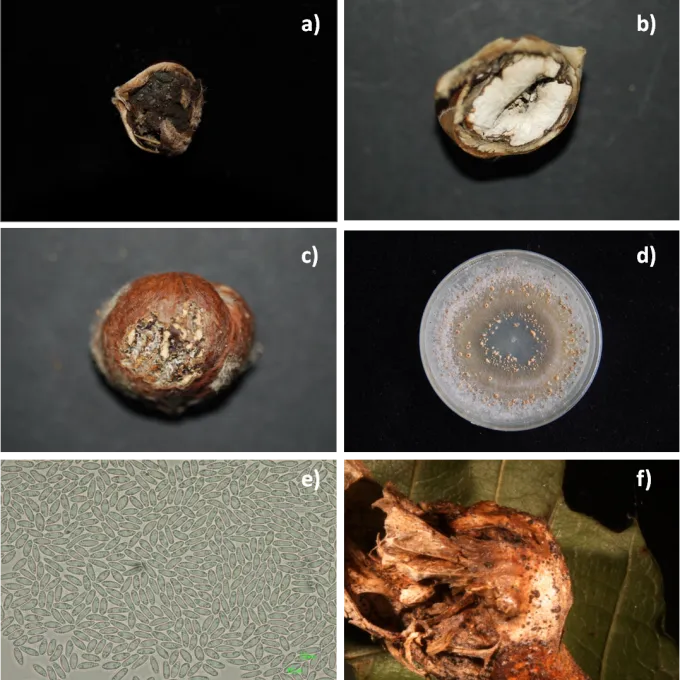
In humid conditions, a characteristic sporulation layer may appear on the surface of the lesions, indicating active development of the fungus within the bark tissue.
Leaves on infected limbs often show signs of premature yellowing (chlorosis) followed by wilting, as the fungus restricts the supply of water and nutrients to the canopy.
Internal examination of the branches often reveals extensive browning and decaying of the wood, which is a clear indication of systemic colonization by the mycelium.
Over time, the affected branches become brittle and may break under the weight of fruits or during high winds, leading to a distorted and thinning crown structure.
Pathogen
The disease is caused by the fungus Rhacodiella castaneae (also known in some contexts as Rhacodiella lupini). It is a parasitic fungus that primarily attacks the bark and cambium layers of woody plants.
The pathogen exists as a mycelium that spreads through the vascular system and cortical tissues of the host tree, causing necrosis and disrupting the flow of essential nutrients and water.
Reproduction occurs through conidia, which are disseminated by wind, rainwater splash, and human activity, facilitating the rapid spread of the fungus across the orchard.
The fungus is capable of surviving for long periods in infected plant debris, making it a persistent threat that requires consistent sanitary management to suppress.
The biology of this pathogen is characterized by its ability to take advantage of weakened plant tissues, effectively turning minor injuries into chronic sites of infection.
Conditions for development
High humidity and moderate temperatures are the most critical environmental factors that promote the germination and growth of Rhacodiella spores.
The disease frequently establishes itself through entry points such as pruning wounds, frost cracks, or mechanical damages caused by agricultural machinery or hail.
Poor orchard hygiene, characterized by the presence of dense canopies with limited airflow, creates a moist microclimate that is extremely conducive to fungal proliferation.
Trees that are nutritionally stressed or suffering from poor soil drainage exhibit lower resistance levels, allowing the pathogen to colonize tissues more aggressively.
Autumn and winter seasons with frequent rainfall are often the periods when the pathogen is most active in spreading its spores across the bark surfaces.
Why it matters
The primary economic impact involves reduced yields due to the decline in tree vigor and the eventual loss of fruit-bearing branches.
Chronic infection weakens the structural integrity of the trees, leading to significant losses from branch breakage and the need for expensive structural support systems.
In nurseries, this disease can be devastating, causing high mortality rates among young saplings and leading to substantial commercial losses for growers.
Constant maintenance and the need for specialized chemical control treatments increase the overall cost of production and orchard management.
Advanced infections can cause the complete death of the host tree, necessitating total removal and replanting, which impacts the long-term productivity of the orchard.
Protection
The most effective strategy is a combination of rigorous sanitation, including the pruning and burning of all infected branches at least 10–15 cm below the visible lesion.
All pruning tools must be disinfected between trees to prevent the cross-contamination of healthy plants during the maintenance process.
- Application of copper-based fungicides as a preventative measure in early spring.
- Maintaining proper tree spacing to ensure good light penetration and air circulation.
- Balanced fertilization to ensure trees remain vigorous and better able to resist infection.
Protecting trunks and scaffold branches with white-wash painting helps prevent bark injuries from sunscald and temperature fluctuations, reducing pathogen entry points.
Improving orchard drainage systems is crucial to reducing the ambient humidity and moisture levels that the fungus requires for rapid development.
Discussion
No discussions yet — be the first.