
Rhabdonema arcuatum
Rhabdonema arcuatum
Description
Symptoms
The primary symptom of infestation is the accumulation of a brownish, slippery biofilm on the surfaces of submerged equipment, pipes, and filters.
In hydroponic setups, it can be identified by the coating that covers roots or substrate surfaces, which often feels slimy or gelatinous to the touch.
Visual observation shows dense, brownish colonies that can significantly reduce water flow efficiency in irrigation channels.
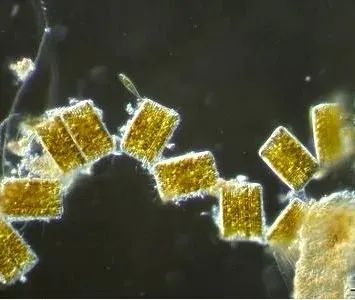
Microscopic analysis of water samples reveals characteristic chain structures with distinct, curved morphological features typical of this species.
Reduced plant vigor and nutrient uptake issues may occur if the algae mass interferes with the root system's ability to breathe.
Pathogen
Rhabdonema arcuatum is a species of diatomaceous algae belonging to the class Bacillariophyceae, characterized by its unique silica-based cell wall.
These organisms are primarily aquatic and often grow as epiphytes on various surfaces or as filamentous chains in the water column.
While not a disease-causing pathogen of crops in the traditional sense, its proliferation can cause significant operational disruptions in farming.
The cells are interconnected by specialized structures, forming curved, ribbon-like colonies that are highly resistant to environmental stressors.
Biological research on this genus highlights its role in nutrient cycling and its capacity to dominate habitats rich in dissolved silica.
Conditions for development
The growth of Rhabdonema arcuatum is strongly correlated with the availability of dissolved silica, a necessary component for its silica frustule development.
Optimal light exposure is a key factor, as this species requires photosynthesis for its lifecycle, making open-water reservoirs highly susceptible.
Temperature fluctuations, particularly in the 15–25°C range, promote rapid colonization of static or slow-moving water bodies.
Stagnant water in irrigation pipes creates the perfect niche for biofilm formation and the expansion of algae populations.
The presence of excess inorganic nutrients, specifically phosphorus and nitrogen, can trigger exponential growth and blooming events.
Why it matters
The most significant harm involves the clogging of drip irrigation lines, nozzles, and filtration systems, leading to uneven water distribution.
Accumulated biomass creates a substrate for bacterial and fungal growth, which may increase the overall disease pressure on the cultivated crops.
In aquaculture, mass development can lead to rapid shifts in dissolved oxygen levels, potentially impacting the health of aquatic life.
Root aeration is frequently compromised when algae form thick mats around the base of plants or hydroponic growth media.
Higher operational costs are incurred due to the need for frequent cleaning of irrigation infrastructure and the application of control agents.
Protection
Prevention relies on limiting sunlight exposure to water reservoirs and implementing strict monitoring of nutrient levels in irrigation water.
Ultraviolet (UV) water sterilizers are highly effective at suppressing algal population density within recirculating systems.
Periodic maintenance involving non-toxic algaecides or diluted hydrogen peroxide washes can effectively remove existing biofilms from piping.
Improved water filtration systems help catch debris and prevent the spread of algal filaments throughout the irrigation network.
- Frequent inspection of emitters and drip tape for blockages.
- Use of opaque tanks to inhibit photosynthetic activity.
- Regular cleaning schedules for all water distribution components.
Discussion
No discussions yet — be the first.