
Pythium root rot
Pythium yorkensis
Description
Symptoms
Initial symptoms are often subtle and manifest as general stunting or wilting of the plants, particularly during the hottest parts of the day when water demand is high.
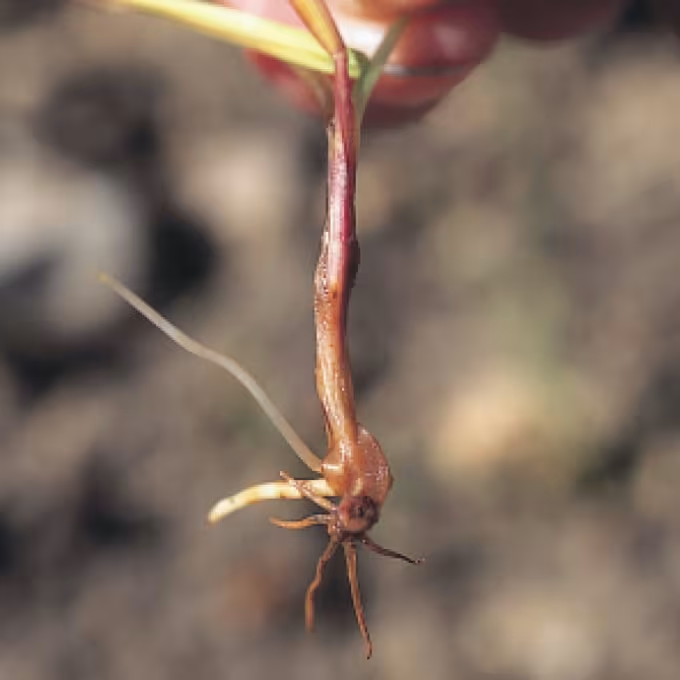
A closer examination of the root system reveals browning and softening of the tissues. Unlike healthy white roots, infected roots become mushy, discolored, and may emit a distinct rotting odor.
A diagnostic characteristic is the "sloughing off" of the outer cortical layer of the root when pulled, leaving only the central vascular strand exposed. This indicates a severe infection.
Above-ground, leaves may show chlorosis (yellowing) starting from the lower canopy. As the infection progresses, the plant's growth slows significantly, and in extreme cases, the plant may collapse and die.
In containerized plants or hydroponics, the infection spreads quickly across the root zone, often causing total plant failure within a very short timeframe due to constant moisture.
Pathogen
The causal agent of this disease is the oomycete Pythium yorkensis. Unlike true fungi, this pathogen belongs to the group of water molds, which dictates specific approaches for its effective management in agricultural systems.
The pathogen survives in the soil as thick-walled oospores, which are highly resilient structures capable of persisting for several years without a host plant. They serve as the primary source of inoculum in the field.
Infection occurs via zoospores, which are motile structures that use flagella to swim through the water film in the soil. These zoospores are attracted to root exudates, specifically targeting young, developing root tissues.
This pathogen has a wide host range, infecting various field crops, vegetables, and ornamental plants. It is particularly devastating in cool, wet soil conditions that favor the motility of zoospores.
The biological life cycle of Pythium yorkensis is strictly dependent on moisture. Once the pathogen establishes itself within the root cortex, it spreads rapidly, causing tissue necrosis and decay.
Conditions for development
The primary factor facilitating disease development is excessive soil moisture. Saturated soil conditions create a pathway for the zoospores to move and infect the root system efficiently.
Poor soil aeration, caused by compaction or heavy clay textures, increases the susceptibility of plants to Pythium attack by stressing the root system and reducing oxygen availability.
Cooler soil temperatures, often seen during early spring planting, can delay crop development, while the pathogen remains active, allowing Pythium yorkensis to easily colonize seedlings.
High plant density and lack of crop rotation lead to the accumulation of inoculum in the soil, which creates a high-pressure environment for subsequent growing seasons.
Poor water quality, particularly irrigation water taken from surface sources that have been contaminated with runoff, is a frequent transmission route in commercial agriculture.
Why it matters
The disease causes significant damage by killing seedlings, often referred to as "damping-off," which results in poor stand establishment and substantial economic loss for growers.
Surviving plants remain significantly weakened, exhibiting poor vigor and reduced yield potential. Their compromised root systems are incapable of nutrient uptake and water absorption.
Infection by Pythium often predisposes plants to secondary pathogens, including various fungi and bacteria, which can accelerate the total decay of the plant tissue.
Fields with chronic infestations of Pythium yorkensis become difficult to manage, often requiring changes in crop selection or expensive soil sterilization techniques.
The financial impact includes not just the loss of potential yield but also the increased costs associated with replanting, fungicide applications, and intensive labor for crop management.
Protection
Integrated pest management (IPM) is essential. Crop rotation with non-host species is the first line of defense to reduce the pathogen population in the soil over time.
Improving soil drainage and optimizing irrigation schedules are critical. Avoiding excessive watering prevents the formation of the saturated zones required for zoospore movement.
Seed treatment with specific fungicides targeting oomycetes is highly recommended for sensitive crops to ensure protection during the vulnerable germination phase.
Biological control agents, such as beneficial Trichoderma strains, can be applied to the soil to compete with Pythium and protect the rhizosphere of the young plant.
- Ensure good sanitation of greenhouse tools and containers.
- Use high-quality, certified disease-free seeds.
- Monitor soil moisture levels closely during early development.
- Remove and destroy all infected plant residues after harvest.
Discussion
No discussions yet — be the first.