
Pythium root rot
Pythium torulosum
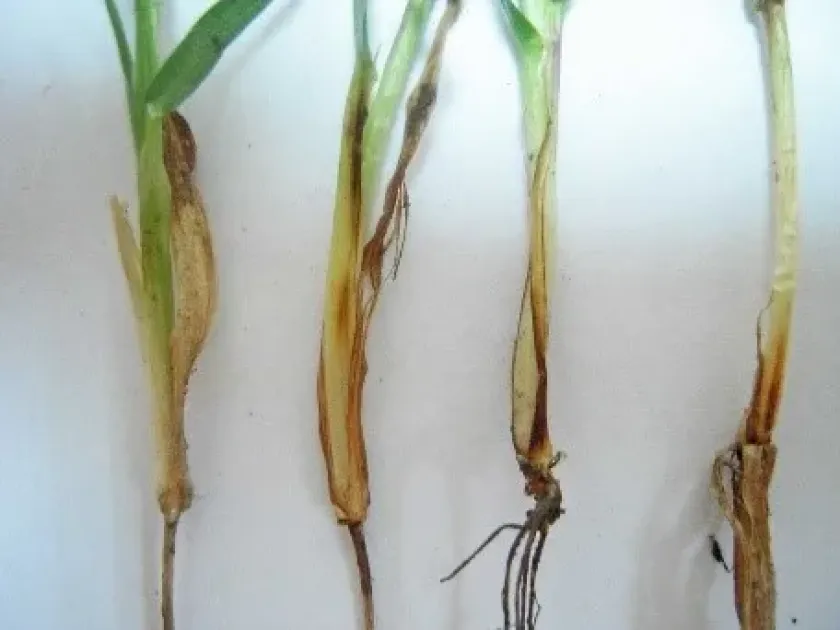
Description
Symptoms
Initial symptoms of Pythium root rot include general stunting, yellowing of foliage, and wilting during periods of high temperature or water stress.
Affected roots exhibit a characteristic dark, mushy appearance. The cortical layer often sloughs off easily when pulled, leaving only the central vascular cylinder exposed.
In turfgrass settings, the disease manifests as irregular patches of yellow or reddish-brown grass that can spread rapidly during humid and warm weather conditions.
At the base of the plant, near the soil line, there may be signs of blackened or water-soaked tissues, which indicates advanced stages of root decay and secondary infection.
Plants affected by this pathogen often show signs of nutrient deficiency, as the compromised root system can no longer uptake sufficient water and minerals from the soil.
Pathogen
The disease is caused by Pythium torulosum, an oomycete or water mold that thrives in wet soil conditions. Unlike true fungi, this pathogen is highly adapted to aquatic environments.
The pathogen utilizes motile zoospores that can swim through the soil water film to locate and infect the root tips of susceptible plants, including turfgrass and various vegetables.
It produces oospores, which are thick-walled resting structures capable of surviving in the soil for several years, even in the absence of a host plant, making management difficult.
The infection process starts when zoospores are attracted to root exudates. Once they penetrate the root tissue, the pathogen secretes enzymes that break down the plant cell walls.
Spread of the pathogen occurs primarily through contaminated soil, irrigation water, movement of gardening equipment, and infected plant debris distributed across fields or landscapes.
Conditions for development
The development of Pythium torulosum is strongly associated with high soil moisture levels, poor drainage, and frequent standing water after irrigation or rainfall.
While the pathogen is active across a range of temperatures, warm and humid conditions significantly accelerate the rate of zoospore production and disease spread.
Soil compaction is a critical risk factor, as it creates anaerobic conditions in the root zone, which inhibits root respiration and facilitates the invasion of the pathogen.
Excessive application of nitrogen fertilizers promotes succulent plant growth, which provides an ideal substrate for the fungus to colonize and damage the plant tissues.
Crowded planting or dense turf stands that prevent airflow maintain a high humidity microclimate, creating optimal conditions for the disease to develop and persist.
Why it matters
Pythium root rot is highly destructive, capable of causing widespread plant death within a very short timeframe if environmental conditions remain favorable for the fungus.
By destroying the root system, the disease inhibits nutrient and water uptake, leading to reduced vigor, impaired development, and often the complete loss of the affected plants.
The persistence of oospores in the soil makes it difficult to re-establish healthy plantings, often requiring comprehensive soil decontamination or long-term management.
Economic losses are significant due to the costs associated with fungicide applications, labor for area restoration, and the loss of product yield or landscape value.
Secondary infections by soil-borne bacteria often follow the initial Pythium damage, leading to total collapse of the plant and increasing the difficulty of recovery.
Protection
The most effective management strategy is to improve soil drainage to prevent the accumulation of water, which is essential for the mobility and survival of the pathogen.
Irrigation should be managed carefully to ensure the surface soil has adequate time to dry out, and soil aeration should be performed regularly to improve oxygen levels in the rhizosphere.
Cultural practices, such as balanced fertilization and the removal of infected plant residues, are crucial to reducing the pathogen inoculum levels in the soil.
- Apply systemic fungicides specifically targeting oomycetes, such as those containing metalaxyl or propamocarb.
- Introduce beneficial biological control agents like Trichoderma species to suppress pathogen growth.
- Implement strict sanitation protocols for tools and footwear to prevent cross-contamination between areas.
Monitoring environmental conditions and applying preventative fungicides during high-risk periods can significantly mitigate the impact of the disease.
Discussion
No discussions yet — be the first.