
Pythium splendens
Pythium splendens
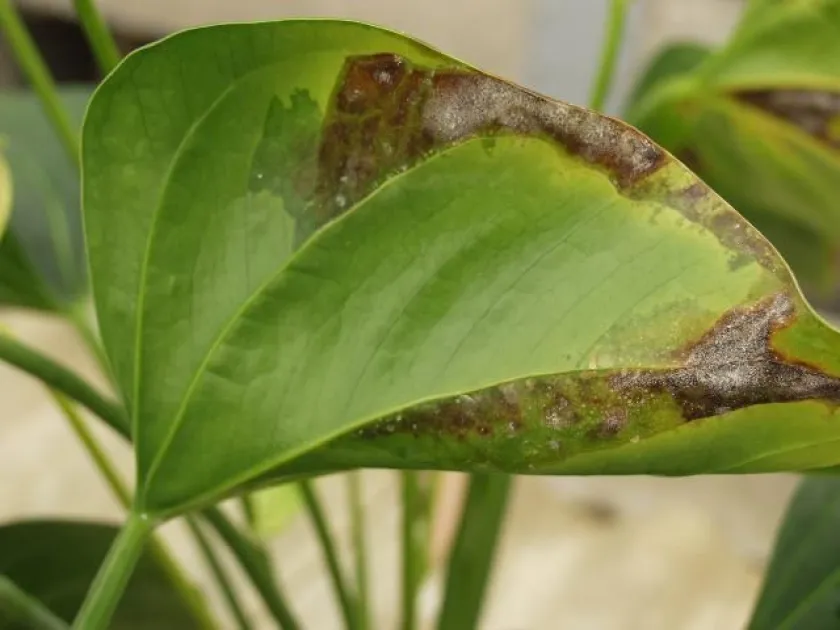
Description
Symptoms
Initial symptoms are often subtle, starting with daytime wilting of the plants. While they may appear to recover at night, the wilting becomes permanent as the disease progresses and the root system is decimated.
Leaves often display yellowing (chlorosis) and may start dropping from the bottom of the plant upwards. The overall growth is severely stunted, and the plant eventually collapses due to the inability to take up nutrients and water.
When examining the roots, they appear brown, soft, and mushy. A key diagnostic feature is the disintegration of the root cortex, leaving behind only the central vascular cylinder, which remains intact for a time.
Stem lesions may appear at the base of the plant where it touches moist soil. These lesions can quickly expand to encircle the stem, leading to the "damping-off" effect, especially common in seedlings.
Under high humidity conditions, a sparse, cottony white mycelial growth may become visible on the soil surface near the stem. This indicates a severe infection and active expansion of the fungal colony.
Pathogen
The causal agent of this disease is Pythium splendens, a soil-borne pathogen belonging to the oomycetes class. This microorganism is a formidable parasite that survives in the soil and on plant debris by producing highly resistant oospores.
The biology of the pathogen relies on mobile zoospores that use chemotaxis to navigate through water films in the soil. Once they reach the host root system, they infect root hairs and small wounds, rapidly colonizing the plant tissues.
Unlike many other Pythium species, this pathogen exhibits high aggressiveness across a wide temperature range. It thrives in both parasitic and saprophytic modes, allowing it to persist in the environment even when no live host is present.
The mycelium of Pythium splendens spreads rapidly between cells, secreting enzymes that degrade plant cell walls. This enzymatic action causes tissue softening and eventual necrosis, which is characteristic of Pythium root rot.
Laboratory diagnosis involves isolating the fungus on selective culture media. Identification is confirmed by observing typical sporangia and oogonia structures, which are essential for distinguishing Pythium splendens from other similar species.
Conditions for development
The primary driver for Pythium splendens development is excessive soil moisture or waterlogging. Poor drainage in pots or greenhouse beds creates a perfect environment for zoospore motility and root infection.
Temperatures between 20°C and 30°C provide the optimal range for the pathogen's rapid growth and spread. Greenhouse environments, if not properly managed for airflow and humidity, are highly susceptible to outbreaks.
Poor sanitation practices, such as reusing non-sterilized pots or contaminated tools, are primary vectors for the spread of this disease. Once introduced into a greenhouse, it can quickly contaminate the entire system.
Overcrowding of plants prevents proper air circulation and increases humidity at the soil level, providing the necessary moisture for the fungus to flourish and infect neighboring plants.
High levels of undecomposed organic matter in the soil serve as a nutrient reservoir for the pathogen. Fresh manure or poorly composted materials can act as a catalyst for disease outbreaks.
Why it matters
The primary economic impact is the severe loss of seedlings, which can reach up to 100% in untreated areas. This leads to costly replanting efforts and significant delays in the production cycle.
In mature plants, the disease causes major yield losses, as infected root systems cannot support fruit or vegetable development. Plants become small, produce low-quality harvests, and are prone to premature death.
Pythium-infected plants are significantly more susceptible to secondary infections from bacteria or other fungi, leading to complex disease profiles that are much harder to manage and treat.
Persistence of the pathogen in the soil renders infested land unsuitable for sensitive crops for years. This necessitates costly soil solarization or chemical treatments to restore agricultural productivity.
Quality issues, such as uneven ripening or poor storage life of fruits from infected plants, lead to market losses and reduced consumer acceptance, impacting the overall profitability of the enterprise.
Protection
Prevention is the most effective strategy. This involves implementing strict moisture management, ensuring excellent drainage, and avoiding over-watering in all cultivation stages.
Cultural practices such as crop rotation, using clean or sterilized planting media, and maintaining high hygiene standards in greenhouses are crucial to limiting the spread of Pythium splendens.
Chemical control focuses on applying fungicides containing active ingredients like metalaxyl or propamocarb as soil drenches. These treatments are most effective if applied at the first signs of disease.
Biological control methods involve the use of beneficial microorganisms such as Trichoderma species. These fungi compete with the pathogen for space and nutrients, effectively suppressing its development.
- Regular disinfection of all tools and containers.
- Prompt removal and destruction of symptomatic plants.
- Improvement of soil aeration by incorporating inorganic substrates.
- Selection of resistant or tolerant cultivars for high-risk areas.
Discussion
No discussions yet — be the first.