
Pythium root rot
Pythium solare
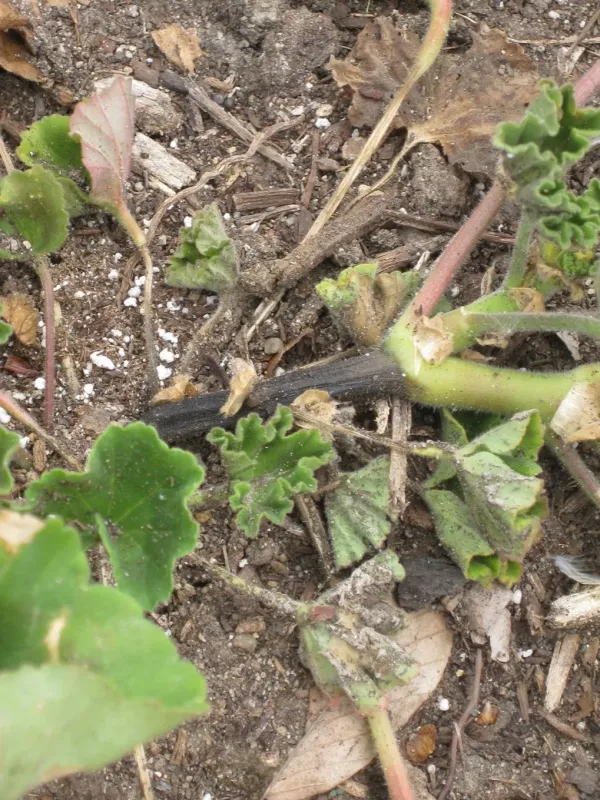
Description
Symptoms
The initial symptoms include stunted growth and general unthriftiness. Leaves may exhibit chlorosis, and in cases of severe infection, plants show signs of temporary wilting during peak daylight hours, eventually failing to recover even after irrigation.
The most diagnostic symptoms occur underground. Roots lose their firm, white, healthy appearance and become discolored, typically turning light to dark brown. The affected tissue becomes soft, mushy, and water-soaked due to the necrotic progression of the rot.
A classic sign of severe root rot is the sloughing off of the outer root cortex. If a plant is gently pulled from the soil, the outer layer of the root may strip away, leaving behind only the thin, stringy vascular cylinder.
In advanced stages, the plant develops a severely reduced and inefficient root system. The lack of feeder roots severely limits water and nutrient uptake, leading to overall plant decline and potentially death if the environment remains conducive to the pathogen.
Under humid conditions, a sparse, cottony white mycelium may sometimes be visible around the root collar at the soil line, indicating that the pathogen is actively spreading on the surface of the growing medium.
Pathogen
The disease is caused by the soil-borne pathogen Pythium solare, which belongs to the class Oomycetes. These are fungus-like organisms that thrive in moist environments and are primary pathogens of plant root systems globally.
The pathogen persists in the soil through thick-walled structures known as oospores. These resting spores are highly resistant to environmental stressors, allowing the organism to survive for extended periods in contaminated soil until susceptible roots appear.
Under favorable conditions, such as high soil moisture, oospores germinate to produce zoospores. These mobile spores can swim through the water films between soil particles to locate host roots, attracted by chemical signals exuded by the plant.
Infection begins when zoospores encyst on the root surface, forming germ tubes that penetrate the root tissues. The pathogen rapidly colonizes the root cortex, secreting enzymes that break down plant cells to extract nutrients.
Pythium solare has a wide host range, impacting various vegetables, ornamental flowers, and field crops. It is particularly destructive in intensive greenhouse systems where continuous cropping provides a constant host supply.
Conditions for development
High soil moisture is the primary driver of Pythium development. Because the pathogen relies on water for zoospore movement, waterlogged conditions or poorly drained substrates are ideal for infection cycles.
Temperatures ranging from 15°C to 22°C are often optimal for Pythium solare activity, though it can remain active across a broader range depending on the specific host and environmental stability of the greenhouse.
Poor soil aeration, caused by compaction or frequent over-watering, creates anaerobic conditions that stress the plant roots. Stressed roots are significantly more susceptible to infection by oomycetes compared to healthy, well-oxygenated roots.
High planting density in greenhouses creates a stable, humid microclimate that favors pathogen spread. The lack of air movement around the base of the plant prevents the soil surface from drying out, prolonging the infection window.
Contamination of the growing area through infected tools, seedling trays, or infested irrigation water is the most common way for the disease to spread rapidly through a crop cycle.
Why it matters
The most immediate harm is the destruction of seedling stands, often leading to total loss of early crops. This causes significant financial strain for growers who must restart production or suffer yield gaps.
Mature plants suffer from reduced nutrient absorption and overall vigor, leading to decreased fruit set, smaller harvest sizes, and lower quality yields, as the root system cannot support the metabolic needs of the plant.
Pythium rot facilitates entry for secondary pathogens, such as bacteria or Fusarium, which can accelerate the death of the plant. This complex of diseases often makes diagnosis and control more difficult.
Long-term soil infestation leads to increased costs associated with soil sterilization, chemical treatments, and the replacement of growing media. It restricts the ability of growers to rotate crops effectively.
The disease is a major economic burden in protected agriculture, as it impacts both the quality and quantity of the final produce, often forcing growers to adopt expensive mitigation strategies.
Protection
The most effective strategy is the maintenance of good drainage in all growing media. Proper irrigation management, ensuring that the root zone is not kept constantly saturated, is the first line of defense.
Sanitation is critical; using only sterile propagation trays, clean tools, and high-quality, pathogen-free growing media significantly lowers the probability of an initial outbreak.
Chemical control involves the use of systemic fungicides formulated specifically for Oomycetes, such as those containing metalaxyl or propamocarb. These treatments are most effective when applied preventatively or at the earliest sign of disease.
Biological control using beneficial fungi like Trichoderma harzianum can help protect the roots by competing with the pathogen for space and nutrients, as well as by producing compounds that inhibit Pythium growth.
- Regularly check root health during the vegetative stage.
- Ensure adequate greenhouse ventilation to manage humidity.
- Promptly remove and destroy infected plant debris.
- Avoid re-using old soil or substrates without proper disinfection.
Discussion
No discussions yet — be the first.