
Pythium root rot
Pythium paroecandrum
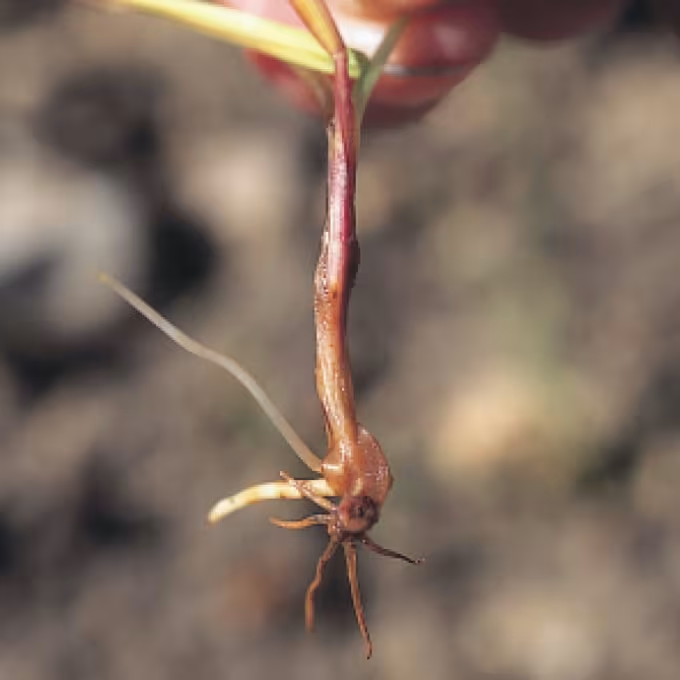
Description
Symptoms
The primary symptom of infection is the browning and softening of the root system. The roots typically lose their firmness and appear water-soaked or translucent in early stages.
Above-ground symptoms often include stunted growth, wilting during peak sunlight, and yellowing (chlorosis) of the lower leaves, reflecting the plant's inability to uptake water.
A distinctive feature of Pythium rot is the ease with which the outer root cortex can be stripped away, revealing the discolored or decayed vascular cylinder beneath.
In high-humidity environments, such as greenhouses, a fine, cobweb-like mycelial growth may appear on the soil surface near the stem base.
- Reduced root mass and loss of fine lateral root hairs.
- Overall lack of plant vigor and foliage yellowing.
- Root discoloration ranging from pale tan to dark brown.
Pathogen
The causal agent of this disease is the oomycete Pythium paroecandrum. While often classified under fungal diseases, this organism belongs to a distinct group of water molds that thrive in aquatic and soil environments.
This pathogen possesses highly motile zoospores that navigate through saturated soil pores to infect the roots of susceptible host plants. It is a persistent soil-borne organism capable of surviving long periods through resilient oospores.
The life cycle of the pathogen is closely tied to water availability. It can act as a saprophyte, utilizing organic matter when living host tissue is not immediately available, ensuring its survival between growing seasons.
Once the host is detected, the pathogen penetrates the epidermis of the roots. It rapidly secretes enzymes that break down cell walls, leading to the collapse of the plant's vascular system.
Given its aggressive nature, Pythium paroecandrum is particularly dangerous in early crop development stages, when the root system is small and easily compromised by infection.
Conditions for development
Excessive soil moisture and poor drainage are the most critical factors for the development of the disease. Saturated conditions suppress oxygen flow, which weakens the roots and facilitates pathogen movement.
While the pathogen can remain active across a range of temperatures, it generally flourishes in mild to moderate environments, typically between 15°C and 22°C.
Soil compaction serves as a major contributing factor, as it creates anaerobic conditions and traps water around the root zone, creating a perfect habitat for the oomycete.
High nutrient concentrations or sudden shifts in soil pH can also cause physiological stress in plants, making them significantly more vulnerable to Pythium attacks.
The repetition of susceptible crops in the same area without proper rotation leads to the buildup of high inoculum levels in the soil, increasing the probability of severe outbreaks.
Why it matters
The disease causes significant economic losses, particularly in vegetable production and nursery settings, where it leads to seedling damping-off.
By destroying the root infrastructure, the pathogen severely limits the plant's capacity to absorb nitrogen and water, resulting in reduced yields and poor product quality.
The physiological stress caused by root damage makes crops more susceptible to other biotic and abiotic threats, further compounding the damage to the field.
Pythium rot can lead to complete stand loss if left unmanaged, necessitating expensive replanting and disruption of the entire agricultural production cycle.
Damage to the fine root system often remains hidden until the plant is already severely compromised, making early diagnosis and intervention particularly difficult.
Protection
Effective management begins with improving soil drainage and ensuring that irrigation practices do not lead to prolonged waterlogging in the root zone.
Seed treatments using systemic fungicides specifically targeted at oomycetes are essential for protecting seeds and seedlings during the germination phase.
Crop rotation should be implemented, alternating between susceptible and non-host crops to starve the soil-borne pathogen and reduce its natural population.
Sterilization of greenhouse growing media through steam or solarization is a standard practice to eliminate resting spores before planting new cycles.
Enhancing soil biological health by incorporating beneficial microbes can create a competitive environment that suppresses the growth and colonization of Pythium paroecandrum.
Discussion
No discussions yet — be the first.