
Pythium root rot
Pythium middletonii
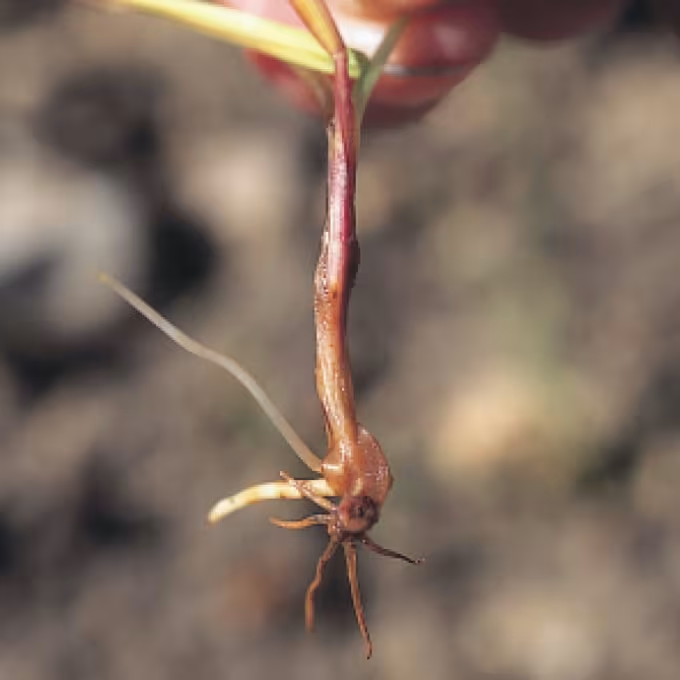
Description
Symptoms
The most common symptom of Pythium root rot is general wilting of the foliage, which often appears most pronounced during the hottest hours of the day when transpiration rates are high.
The roots become discolored, shifting from a healthy white to brown or black. In advanced stages, the outer cortex of the root sloughs off, leaving only the central vascular core, which is often termed "rat-tail" roots.
Seedlings infected by this pathogen frequently collapse near the soil line, a condition known as "damping-off." The stem becomes thin, watery, and dark, ultimately leading to the plant's death.
Stunted growth and chlorosis are typical long-term symptoms. Because the root system cannot function properly, plants remain small and exhibit nutrient deficiency patterns despite adequate fertilization.
- Wilting of leaves during peak heat
- Brown, necrotic, and mushy roots
- Loss of root cortex (sloughing)
- Stunting and slow development
- Damping-off of young seedlings
Pathogen
The disease is caused by the oomycete Pythium middletonii, a soil-borne pathogen. Although commonly referred to as a fungus, it is technically a fungus-like organism that thrives in moist environments.
The pathogen reproduces via motile zoospores that can swim through the water film in the soil to reach plant roots. This mobility allows it to spread rapidly under conditions of excessive irrigation or rainfall.
It forms thick-walled oospores, which are resting structures that allow the pathogen to survive for several years in the soil even in the absence of a suitable host plant.
Infection begins when zoospores are attracted to chemical signals (exudates) released by roots. Upon contact, the pathogen encysts and penetrates the root epidermis, leading to cellular degradation.
The versatility of Pythium middletonii allows it to infect a broad spectrum of ornamental and vegetable crops, making it a significant challenge in nursery production.
Conditions for development
High soil moisture is the primary driver of disease development. Environments with poor drainage or over-irrigation provide the ideal water-filled pore space for zoospore movement.
The pathogen prefers moderate to cool temperatures but remains active across a wide range of climatic conditions. Fluctuations in moisture combined with low oxygen levels in the substrate are particularly conducive to infection.
Poor sanitation practices, such as reusing contaminated soil or using non-sterilized planting equipment, are the most frequent causes of outbreaks in greenhouse environments.
Plants under abiotic stress, such as mechanical damage to roots or improper pH levels, are significantly more susceptible to infection by Pythium middletonii compared to healthy, vigorous plants.
Dense planting can inhibit soil evaporation, maintaining a permanently moist microclimate around the root zone, which facilitates the persistence and activity of the oomycete.
Why it matters
The primary economic impact is the loss of young seedlings, which forces growers to repeat planting cycles, leading to significant increases in production costs and labor requirements.
For mature crops, the disease reduces the overall yield and marketability of the product. Plants that survive often produce inferior fruit or flowers due to the compromised root system.
Pythium root rot creates a long-term contamination issue for agricultural sites. Once the pathogen is established, it requires intensive sanitation or soil replacement to restore the area for production.
The infection significantly impairs the plant's ability to absorb water and fertilizers, rendering nutrient management programs ineffective and wasteful.
By compromising the plant's natural defenses, Pythium middletonii often acts as a precursor to more severe secondary infections from other soil-borne pathogens like Fusarium or Rhizoctonia.
Protection
Effective management begins with strict sanitation: disinfecting greenhouse surfaces, tools, and containers with approved cleaning agents to prevent the introduction of the pathogen.
Managing soil water content is the most crucial cultural practice. Ensuring proper drainage and allowing the substrate to dry slightly between irrigation cycles helps suppress pathogen activity.
Biological control agents, such as beneficial Trichoderma species or Bacillus strains, can colonize the rhizosphere and outcompete the pathogen, providing a natural defense mechanism.
If chemical control is necessary, specific fungicides labeled for oomycetes (such as metalaxyl or mefenoxam-based products) should be applied according to local regulations and safety guidelines.
Using healthy, certified seeds and high-quality, sterile growing media is essential to prevent the pathogen from entering the cropping system at the start of the season.
Discussion
No discussions yet — be the first.