
Pythium root rot
Pythium irregulare
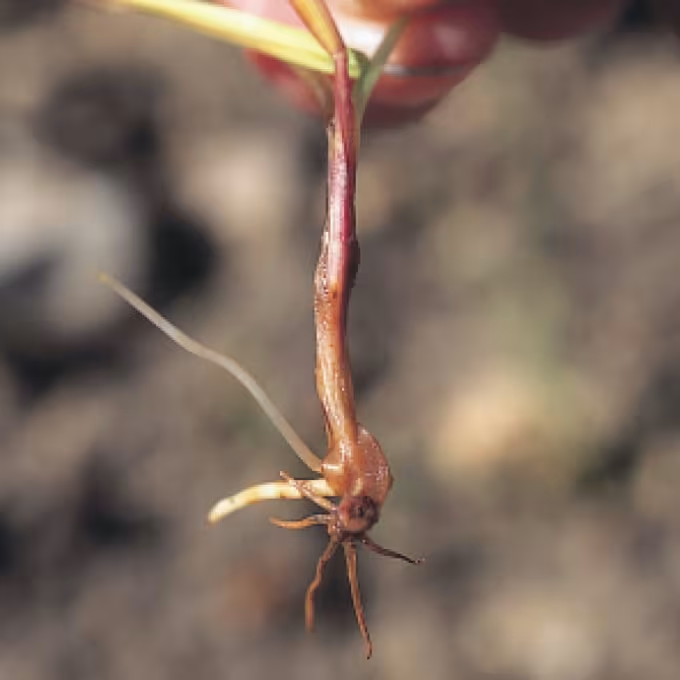
Description
Symptoms
The initial symptom is sudden wilting of the plant, typically seen during the hottest part of the day. The root system of infected plants turns brown or tan.
A classic sign is the sloughing off of the root cortex. When pulled, the outer layer of the root easily slides off, leaving behind a thread-like, white or brownish stele.
In seedlings, the disease causes damping-off. The base of the stem becomes soft, water-soaked, and dark, resulting in the young plant collapsing quickly.
Lateral root development ceases entirely. In severe cases, the entire root system becomes slimy, emits a foul odor, and eventually decomposes into a mushy mass.
- Yellowing of lower leaves.
- Stunted growth and poor vigor.
- Mass death of sprouts.
Pathogen
The causal agent of this disease is the oomycete Pythium irregulare. It is a soilborne pathogen, often categorized as a water mold, known for its high motility in wet conditions.
This microorganism can persist in the soil for extended periods as oospores, which are highly resistant to adverse environmental conditions. It affects a wide range of host plants.
Infection begins when zoospores move through the soil water to reach young root tissues. The pathogen actively exploits the host plant's resources to complete its life cycle.
Development involves the secretion of digestive enzymes that break down plant cell walls, leading to rapid tissue necrosis and systemic failure of the root system.
The life cycle concludes with the formation of resting spores that can be easily spread by irrigation water, farm equipment, or contaminated soil particles.
Conditions for development
Optimal conditions for Pythium irregulare are high soil moisture levels. Waterlogged or poorly drained soils are the primary drivers of zoospore movement.
While the pathogen is active across a broad temperature range, it is particularly destructive during cool, wet periods that stress the host plant.
Compacted soils with poor aeration favor the infection process, as they often stay wet for longer periods, providing an ideal environment for the oomycete.
Excessive irrigation in greenhouses is the most common factor that triggers an epidemic of root rot, allowing the pathogen to move between plants.
The presence of decomposing organic matter in the soil provides a food base for the pathogen, allowing it to survive between growing seasons.
Why it matters
Pythium root rot can cause catastrophic losses, sometimes destroying entire crops in greenhouses if left unmanaged. The economic impact is significant.
Affected plants suffer from severe nutrient deficiency due to root loss, resulting in stunted growth and drastically reduced yields.
The presence of this pathogen in the soil makes it difficult to produce healthy seedlings, requiring continuous use of treatments or soil sterilization.
The disease spreads rapidly across growing beds, creating hotspots of infection that are difficult to contain once established.
Damaged roots are highly susceptible to secondary infections, such as bacterial soft rot, which accelerate the total decay of the plant.
Protection
The cornerstone of control is effective water management. Ensuring proper drainage and avoiding waterlogged soil is essential for prevention.
Using pathogen-free substrates and disinfected containers is critical. Sanitation of tools and walkways in greenhouses helps prevent the spread of zoospores.
Biological control agents, such as beneficial fungi and bacteria, can be introduced to the soil to compete with and suppress Pythium populations.
Chemical control involves the application of fungicides specifically labeled for oomycete diseases, particularly during the early stages of plant development.
Maintaining optimal soil temperatures and promoting vigorous plant growth through balanced fertilization can help plants withstand minor infections.
Discussion
No discussions yet — be the first.