
Pythium root rot
Pythium inflatum
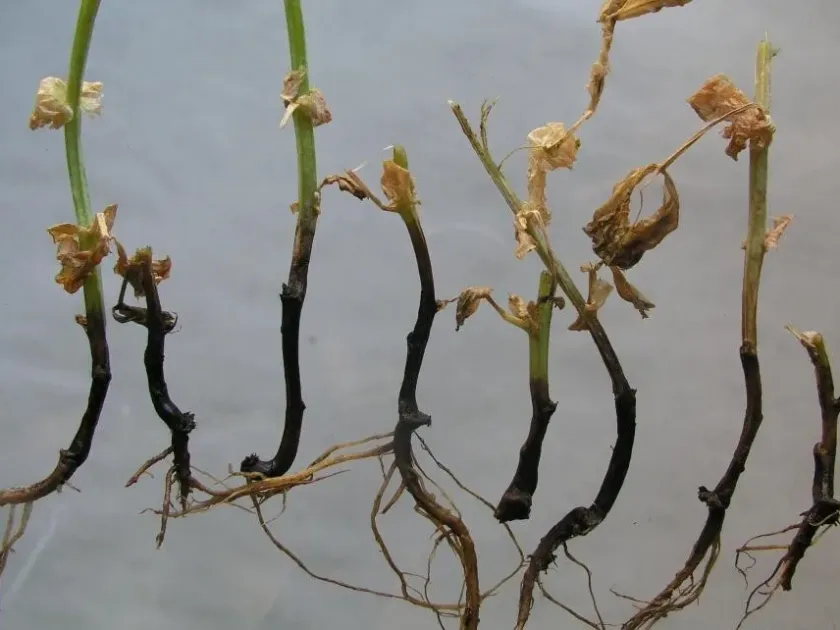
Description
Symptoms
Symptoms of Pythium root rot begin with the browning and softening of the roots. The infected root tips usually become mushy and necrotic, losing their structural integrity.
Above-ground symptoms include stunted growth, chlorosis, and general wilting. This often happens because the root system is no longer able to support the plant's water demands.
A diagnostic characteristic is the "sloughing off" of the outer root cortex, where the central vascular cylinder remains visible like a thin, light-colored thread when the root is pulled.
In cases of severe seedling infection, the plants may collapse and die before or shortly after emergence, leading to noticeable gaps in crop rows.
In highly saturated environments, a fine, cottony white mycelium may appear on the surface of the soil or the base of the stem, indicating the active growth of the pathogen.
Pathogen
The pathogen Pythium inflatum is an oomycete, a type of water mold often grouped with fungi due to similar lifestyles. It is a highly destructive soil-borne organism that primarily attacks the root systems of various plant species.
The organism persists in the soil through thick-walled oospores, which allow it to survive in the environment for several years even in the absence of a suitable host plant.
When moisture levels are high, the oospores germinate and release motile zoospores that use flagella to swim through the soil water film towards the roots of young plants.
The pathogen identifies the host through chemotaxis, attracted by exudates released from the plant roots. Once it reaches the root surface, it infects the tissue using specialized enzymes.
Continuous infection cycles lead to the degradation of root tissues, effectively cutting off the plant's supply of nutrients and water from the soil.
Conditions for development
High soil moisture is the primary driver for Pythium inflatum development. Waterlogged soil conditions provide the necessary environment for the zoospores to swim.
The disease thrives in moderate temperatures, typically between 15°C and 25°C. These conditions are common during early spring plantings, making young seedlings particularly vulnerable.
Poor soil structure and inadequate drainage contribute significantly to the disease prevalence, as water stagnation favors the spread of oomycetes.
Over-fertilization with nitrogen can create soft, succulent roots that are more susceptible to penetration by the pathogen.
Introducing infested soil via machinery, tools, or contaminated irrigation water is a common way the pathogen spreads into clean fields or nursery environments.
Why it matters
The damage caused by Pythium root rot ranges from poor stand establishment to the total loss of plants, which forces farmers to replant or accept significant yield reductions.
Plants that survive the infection usually produce significantly lower yields, as the compromised root system cannot supply adequate nutrients during the critical growth phases.
The disease weakens the plant's physiological defenses, opening the door for other opportunistic pathogens such as Fusarium or Rhizoctonia, leading to a complex rot scenario.
In greenhouse and nursery operations, an outbreak can lead to the condemnation of entire batches of plants, causing substantial financial losses.
Long-term harm includes the persistent build-up of inoculum in the soil, which complicates future management and may limit the choice of crops in the rotation cycle.
Protection
Effective management begins with the use of high-quality, treated seed to protect the crop during the most vulnerable germination stage.
Improving soil drainage through subsoiling or the installation of tile drainage is critical to reducing the periods of water saturation that favor the pathogen.
Implementing a diverse crop rotation is a standard practice to reduce the population of Pythium in the soil and prevent the rapid build-up of the inoculum.
Biological control agents, such as specific strains of Trichoderma, have been proven effective in creating a protective zone around the roots and suppressing the oomycete.
- Ensure proper sanitation of tools and greenhouse equipment.
- Avoid over-irrigation during cool and wet weather.
- Utilize resistant varieties where available.
Discussion
No discussions yet — be the first.