
Pythium root rot
Pythium hydnosporum
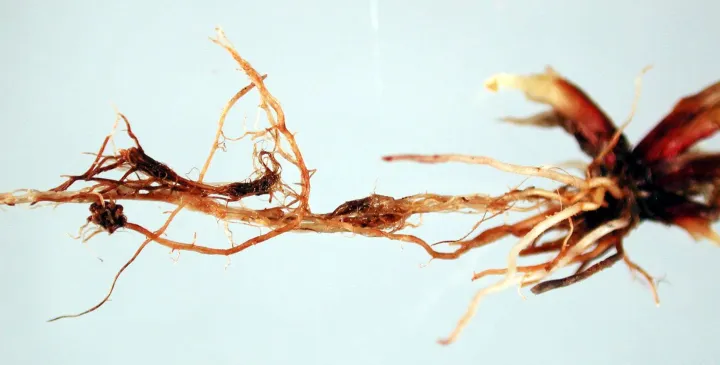
Description
Symptoms
The primary symptom is root browning and softening. Infected roots often lose their turgidity and become mushy, making them unable to perform their primary function of water and nutrient uptake.
Above-ground, plants exhibit signs of stress, including chlorosis, wilting, and stunted growth. These symptoms are often mistaken for nutrient deficiencies or simple drought stress.
A classic diagnostic sign is the ease with which the root epidermis can be stripped away. This leaves behind a thin, cord-like stele, which is a hallmark of severe Pythium infection.
In seedlings, the disease causes damping-off. The base of the stem becomes constricted and darkened, causing the plant to collapse and perish very quickly after emergence.
- Brown, soft root systems
- Stunted plant growth
- Wilting during peak daylight
- Sloughing of the root cortex
- Seedling damping-off
Pathogen
The causative agent of this disease is the oomycete Pythium hydnosporum. Unlike true fungi, oomycetes belong to a distinct group that requires high moisture levels for their life cycle.
The pathogen produces motile zoospores, which are specialized reproductive cells capable of swimming through soil water. These zoospores are highly effective at finding and attacking root tissues.
The mycelium of the pathogen colonizes the root cortex. By secreting specific enzymes, the organism breaks down plant cell walls, leading to the collapse and decay of the roots.
Pythium hydnosporum produces resilient structures known as oospores. These allow the pathogen to survive in the soil for years, waiting for suitable conditions or a susceptible host to appear.
The pathogen is known for its ability to persist on decaying plant material as a saprophyte. This versatility ensures its survival in the environment even when live host roots are unavailable.
Conditions for development
Waterlogged soil is the primary prerequisite for disease development. Excessive irrigation or poor drainage creates the wet environment necessary for zoospores to move.
Cool soil temperatures are highly conducive to the growth of Pythium hydnosporum. While plants are struggling to grow in chilly conditions, the pathogen thrives and infects the roots.
Compacted soil lacks the necessary oxygen for healthy root development. Anaerobic conditions stress the roots and weaken their defense mechanisms against invading oomycetes.
High salt levels in the soil can further exacerbate the susceptibility of plants to root rot. Stress factors generally make the plant exudates more attractive to the pathogen.
Contaminated equipment, tools, and even runoff water from infected areas can introduce the pathogen into clean growing spaces, leading to rapid spread within a greenhouse.
Why it matters
The economic impact of Pythium root rot is significant, particularly in nursery production. Entire batches of seedlings can be lost within a few days of an outbreak.
Reduced crop yield is a major concern. Even if plants survive the initial infection, their root systems are crippled, leading to lower fruit production and poor quality of the final product.
Infected crops often become more susceptible to other diseases. A weakened plant is easily compromised by secondary bacterial infections that target the damaged root tissue.
The persistent nature of the pathogen in the soil creates a long-term problem for growers. Future crops planted in the same soil remain at high risk of immediate infection.
Management costs increase substantially due to the need for chemical treatments, frequent soil testing, and the potential requirement for complete soil sterilization or replacement.
Protection
Prevention is the most effective approach. Implementing strict sanitation practices in greenhouses, such as disinfecting tools and work surfaces, prevents the spread of the pathogen.
Improving drainage and soil aeration is essential. Ensuring that growing media are well-drained and using sterile containers significantly reduces the incidence of the disease.
Biological control agents, particularly beneficial fungi like Trichoderma, can be used to colonize the root zone and protect it against Pythium species.
Chemical control involving fungicides specifically labeled for oomycetes can be applied when conditions are high-risk. These should be part of a rotation program to prevent resistance.
Adopting proper crop rotation and fallowing techniques helps to decrease the pathogen load in the soil naturally over time, providing a more sustainable management solution.
Discussion
No discussions yet — be the first.