
Pythium root rot
Pythium graminicola
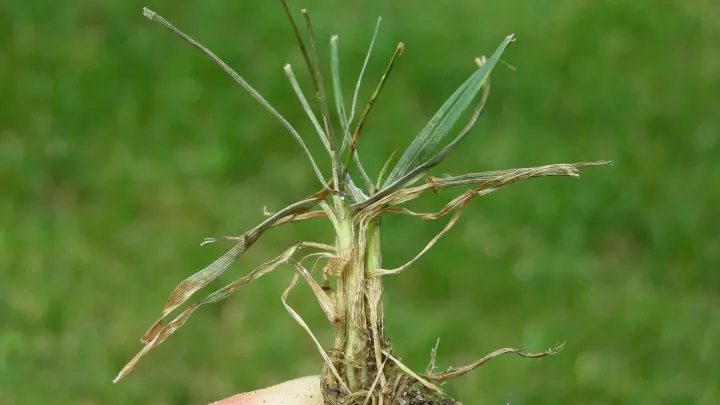
Description
Symptoms
The primary symptom of infection is the yellowing and wilting of leaves, which is often misidentified as nitrogen deficiency or drought stress.
Upon examination of the root system, browning and softening of the root tissues are observed, often accompanied by a slimy texture in moist soil.
A distinctive feature is the rot of the root tips, which turn dark brown or black, a process frequently followed by the decay of fine root hairs.
During the early growth stages, plants show stunted development, uneven seedling stands, and poor tillering, resulting in inconsistent crop growth.
In field conditions, affected areas often appear as patches of depressed or dying plants that gradually expand throughout the growing season.
Pathogen
The disease is caused by the soil-borne oomycete pathogen known as Pythium graminicola.
The pathogen persists in the soil as oospores, which are highly resistant to adverse environmental conditions and can remain viable for several years.
Infection begins with the germination of zoospores, which travel through soil water to actively attack root hairs and meristematic tissues.
The biology of this pathogen allows it to rapidly colonize the rhizosphere whenever environmental conditions favor its active reproduction and movement.
It is crucial to note that Pythium graminicola acts as a facultative parasite, capable of surviving for long periods on crop debris in the soil.
Conditions for development
The main factor triggering an infection outbreak is excessive soil moisture, which facilitates the movement of zoospores toward host roots.
Cold, wet springs with soil temperatures ranging from 10°C to 15°C create optimal conditions for the aggressive development of Pythium rot.
Poor soil aeration caused by compaction prevents healthy root development and makes plants significantly more vulnerable to fungal entry.
Short crop rotations and monocropping of cereals on the same field consistently increase the soil pathogen load over time.
Excessive nitrogen application without balanced mineral nutrition can compromise plant immunity and accelerate the progression of root rot diseases.
Why it matters
The primary damage results in mass seedling death, leading to significantly thinned stands and a reduction in the overall productive stem density.
A compromised root system is unable to provide adequate nutrients and water to the plant, which inevitably leads to a decline in grain yield.
The disease can cause lodging due to the destruction of the roots' structural integrity, which makes harvesting operations much more difficult.
In cases of early-season infection, plants may fail to produce spikes entirely, causing direct economic losses to the farming enterprise.
An additional risk is that Pythium often acts as a precursor to secondary fungal infections, further complicating the field's phytosanitary status.
Protection
The cornerstone of protection is the use of high-quality seeds treated with fungicides specifically effective against oomycetes.
Implementing crop rotation, including the use of cover crops and legumes, helps to break the pathogen's life cycle within the soil.
Implementing agronomic practices that improve field drainage and soil aeration significantly reduces the likelihood of disease development.
Optimizing planting dates by sowing into warmer soil allows plants to quickly pass the most vulnerable stages and establish a robust root system.
- Application of balanced phosphorus and potassium fertilizers to boost plant resilience.
- Removal of crop residues and deep tillage to reduce pathogen inoculum.
- Use of biological control agents based on Trichoderma strains.
Discussion
No discussions yet — be the first.