
Pythium root rot
Pythium erinaceum
Description
Symptoms
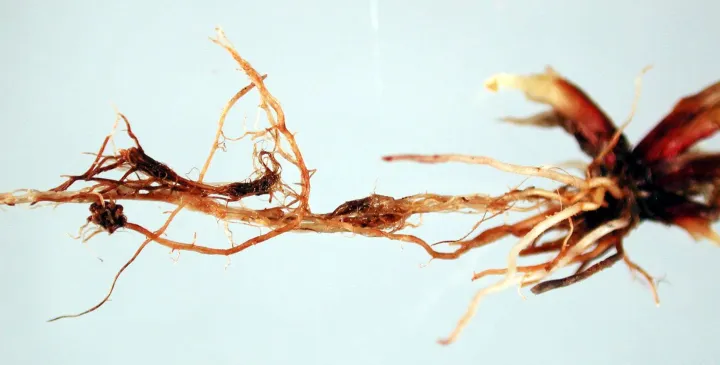
The most characteristic sign is the discoloration of the roots, which become soft, mushy, and typically brownish in color. The outer cortex of the root often sloughs off, leaving only the central vascular strand exposed.
Above-ground symptoms include stunting, chlorosis (yellowing of foliage), and general wilting. These plants often wilt during the hottest parts of the day because their damaged root systems cannot meet transpirational demands.
In seedlings, the infection results in "damping-off," where the stems collapse at the soil line, leading to death. The root system remains underdeveloped, with few or no secondary rootlets present.
Infected fields often exhibit patchy growth patterns, with stunted or dying plants clustered in lower-lying areas where water has accumulated for extended periods.
In cases of high humidity, a thin, white, cottony mycelial growth may be observed near the base of the stem or on the root surface, though this is not always diagnostic in the field.
Pathogen
The disease is caused by Pythium erinaceum, a soil-borne organism belonging to the class Oomycetes. Often referred to as water molds, these organisms are highly adapted to aquatic and semi-aquatic environments.
Pythium species spread primarily through the production of zoospores, which are motile spores that swim in soil water films to locate host roots. Once they find a root, they encyst and penetrate the tissue.
The pathogen utilizes enzymes to degrade plant cell walls, leading to the rapid destruction of root cortex tissue. This process impairs the plant's ability to absorb water and essential mineral nutrients.
The life cycle includes the production of oospores, which are thick-walled resting structures. These can survive in the soil for several years, making the pathogen extremely difficult to eradicate once it is established.
While some species of Pythium are saprophytic, P. erinaceum is a significant parasite that thrives in poorly drained soils, often affecting a wide range of crop hosts.
Conditions for development
Excessive soil moisture is the primary driver of Pythium root rot. Saturated soils deprive roots of oxygen, weakening their natural defense mechanisms and providing an ideal medium for zoospore movement.
Temperature significantly influences the disease cycle. While Pythium is active over a range of temperatures, it is particularly problematic in cool, wet spring conditions that slow down plant growth while favoring pathogen activity.
Poor soil structure, such as compaction or high clay content, prevents proper drainage. These conditions ensure that the soil remains saturated for longer, extending the window of opportunity for the pathogen to infect roots.
Excessive organic matter or the presence of uncomposted plant debris can act as a reservoir for the pathogen, allowing it to persist and build up inoculum levels over time.
Physical stress to the root system, whether caused by poor soil conditions, nematode damage, or mechanical disturbance, makes plants much more susceptible to colonization by the fungus.
Why it matters
The economic impact of Pythium root rot is substantial, primarily due to stand loss and uneven crop establishment. This often necessitates costly replanting operations.
In surviving plants, the damage to the root system results in significantly reduced yields. Plants are unable to achieve their full genetic potential due to chronic nutrient and water stress.
The infection can extend to underground plant parts such as tubers, bulbs, or fruits, leading to soft rot in storage and reducing the overall quality of the harvested product.
Pythium infections frequently serve as a precursor for secondary colonization by other opportunistic pathogens, complicating the disease complex and making management more difficult.
The disease reduces the efficiency of inputs such as fertilizers and irrigation, as damaged roots cannot effectively utilize these resources, leading to lowered farm profitability.
Protection
Effective crop rotation is the cornerstone of control. Avoid planting susceptible crops in succession and implement rotation schemes that include non-host crops to reduce the soil inoculum load.
Improve field drainage through the use of sub-surface tiles, raised beds, or contour plowing to prevent water stagnation. Maintaining good soil aeration is crucial for plant health.
The use of fungicide-treated seed is a critical preventative measure. These treatments protect seedlings during the highly vulnerable germination and emergence stages.
Integrated Pest Management (IPM) strategies, including the use of biological control agents like Trichoderma or Bacillus, can help establish beneficial microbial populations that suppress Pythium growth.
Manage fertilization practices carefully to avoid excessive nitrogen, which promotes succulent growth that is more easily invaded by the pathogen. Regular monitoring for early symptoms allows for timely intervention.
Discussion
No discussions yet — be the first.