
Pythium root rot
Pythium echinulatum
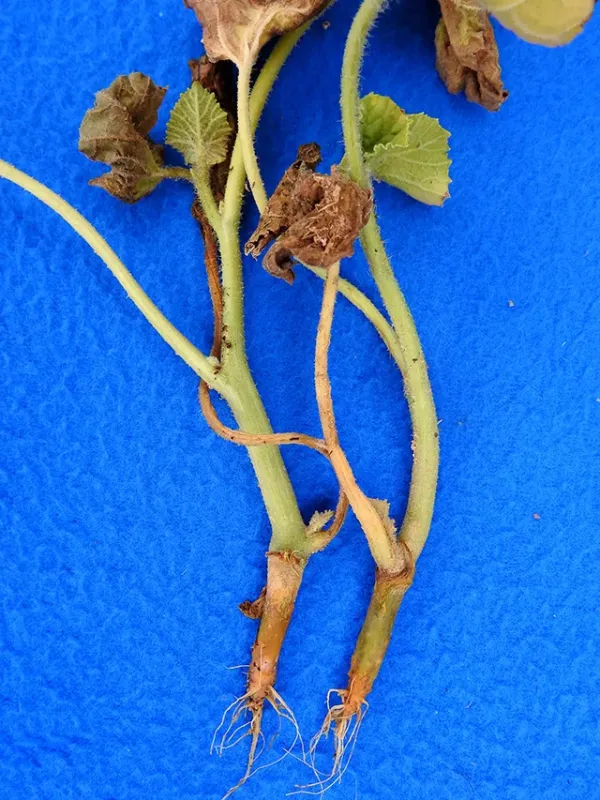
Description
Symptoms
The initial symptom of infection is sudden wilting of the plant, which fails to recover even after adequate watering.
Inspection of the root system typically reveals brown, soft, and decayed tissues, often with the outer cortex sloughing off the inner root core.
Roots lose their turgidity and frequently develop a slimy texture due to the onset of secondary bacterial colonization.
The plant canopy exhibits yellowing and stunted growth, showing a clear decline in overall vigor compared to healthy plants.
Under high humidity conditions, a faint, white, cottony mycelium may occasionally be observed near the root collar or soil surface.
Pathogen
The causative agent of this disease is a soil-borne pathogenic organism belonging to the class Oomycetes — Pythium echinulatum.
This organism is a facultative parasite capable of surviving for long periods in the soil through thick-walled resting spores known as oospores.
The pathogen primarily attacks the root system, infiltrating tissues and disrupting the plant's vascular function early in the growth stage.
Reproduction occurs via motile zoospores, which utilize soil moisture to actively seek out and infect host roots.
The disease spreads easily through contaminated soil, irrigation water, and the use of unsterilized agricultural tools.
Conditions for development
The primary driver for Pythium root rot development is excessive soil moisture and poor drainage in the root zone.
The pathogen thrives in moderate temperature ranges between 15 and 22 degrees Celsius, making it a persistent issue in greenhouse environments.
Compacted, heavy soils that lack sufficient aeration provide an ideal environment for the spread of Pythium echinulatum zoospores.
High planting density and stagnant air contribute to a microclimate that supports rapid fungal growth and disease transmission.
Plants weakened by nutrient deficiencies or environmental stress are significantly more susceptible to infection by this oomycete.
Why it matters
Pythium root rot can cause significant losses at the seedling stage, leading to mass damping-off and failure of germination.
In mature crops, the disease leads to substantial yield reductions because the damaged roots cannot effectively transport water and nutrients.
Infected plants become weak, making them highly vulnerable to secondary opportunistic pathogens and various abiotic stressors.
Persistent presence of the pathogen in the soil can render an area unsuitable for susceptible crops for several growing seasons.
Economic impact includes both direct loss of crop biomass and increased expenditures for greenhouse disinfection and soil treatments.
Protection
Effective management begins with sound agronomic practices, such as ensuring proper soil drainage and avoiding over-irrigation.
Using high-quality, disease-free seed and sterilizing growing media prior to planting are critical preventative measures.
Biological controls, particularly beneficial fungi like Trichoderma species, are effective at creating a protective zone around roots.
If an outbreak occurs, applying fungicides specifically targeting oomycetes, such as those containing propamocarb or metalaxyl, is recommended.
Maintaining strict sanitation protocols for equipment, tools, and greenhouse benches is essential to prevent the mechanical spread of the pathogen.
Discussion
No discussions yet — be the first.