
Pythium root rot
Pythium dissotocum
Description
Symptoms
Initial signs include wilting of the foliage during the warmest parts of the day, even when soil moisture levels seem adequate. Recovery at night often fails as the disease progresses.
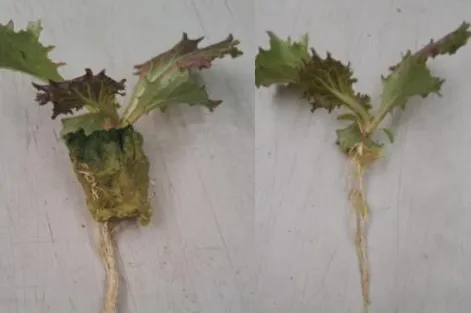
Root system inspection reveals a characteristic brown discoloration and softening of the roots. A diagnostic "sloughing" effect occurs where the outer root layer (epidermis) easily slips off, exposing the thin, thread-like central stele.
Stunted growth is a hallmark of this infection. Plants appear chlorotic and weak, failing to reach their expected size or fruit production potential compared to healthy specimens in the same greenhouse.
In hydroponic setups, roots often develop a slimy appearance and an unpleasant, pungent odor. The fine root hairs, responsible for nutrient and water uptake, are the first to be destroyed by the pathogen.
The disease usually presents in localized patches. Because the zoospores are mobile in water, the infection spreads rapidly from a single focal point to neighboring plants within the same irrigation system.
Pathogen
The disease is caused by the oomycete Pythium dissotocum, a soil-borne pathogen that survives as resting spores (oospores) in the soil, substrate, or contaminated water systems for long periods.
The pathogen produces motile zoospores that swim through water to find root exudates. This chemotaxis allows the oomycete to target healthy roots efficiently, especially in moist or aquatic environments.
Pythium dissotocum is particularly problematic in greenhouse environments and hydroponic systems. Its biology allows it to thrive in nutrient-rich solutions, which serve as an ideal medium for its rapid propagation.
Unlike true fungi, oomycetes respond differently to fungicides, making management a unique challenge for agricultural producers. The pathogen destroys the root architecture by infiltrating the cortical tissues.
Through its complex lifecycle, which includes both asexual and sexual stages, the pathogen ensures its survival even when host plants are not present, persisting in contaminated tools, trays, and water pipes.
Conditions for development
Excessive moisture is the primary driver of Pythium dissotocum outbreaks. Poorly drained soil or over-saturated growth media provide the perfect conditions for zoospore movement and root infection.
Oxygen deficiency in the root zone (hypoxia) significantly increases susceptibility. When roots are deprived of oxygen, their natural metabolic defenses against pathogen invasion are severely weakened.
Temperature fluctuations are a significant stress factor. Unfavorable temperature levels, particularly those too low for optimal root growth, make the host more vulnerable to the fast-growing pathogen.
High nutrient salt concentrations or incorrect water pH levels can create a stressful environment for the plant, encouraging the oomycete to colonize the root system more aggressively.
Poor sanitation practices are critical contributors. Recirculating water systems without proper disinfection or contaminated irrigation water are common vectors for introducing the pathogen into a clean environment.
Why it matters
The economic impact of Pythium root rot is severe, particularly for high-value greenhouse crops. It can cause total loss of seedlings, leading to significant delays and replanting costs.
Mature crops show a marked decline in yield quality. Fruit size and sugar content are often reduced, and the overall commercial value of the harvest drops drastically due to the lack of nutrients.
The destruction of the root system leaves the plant prone to secondary infections. Bacteria and other fungi often colonize the already damaged roots, leading to complex disease profiles that are hard to treat.
Plants affected by Pythium exhibit reduced tolerance to environmental stress, including high temperatures or drought, which often leads to the death of the crop if conditions become harsh.
In commercial hydroponics, a single infestation can lead to the necessity of destroying the entire crop and thoroughly decontaminating the infrastructure, resulting in massive operational losses.
Protection
Sanitation is the cornerstone of prevention. Keeping production areas, trays, tools, and irrigation equipment impeccably clean is essential to stop the pathogen from spreading.
Water management is vital. Implementing water treatment technologies, such as UV sterilization or ozone treatment in recirculating systems, is highly effective at destroying swimming zoospores.
Biological control agents, such as beneficial fungi like Trichoderma species or bacteria like Bacillus subtilis, can be introduced to protect the rhizosphere and outcompete the pathogen.
- Ensure proper substrate drainage to maintain root oxygenation.
- Regular monitoring of EC and pH levels in hydroponic systems.
- Avoid over-watering and maintain optimal soil aeration.
- Use systemic fungicides specifically labeled for oomycete control, if necessary.
Early detection and immediate removal of infected plants, including the surrounding soil or substrate, are crucial steps to minimize the spread of the pathogen to the rest of the crop.
Discussion
No discussions yet — be the first.