
Pythium root rot
Pythium deliense
Description
Symptoms
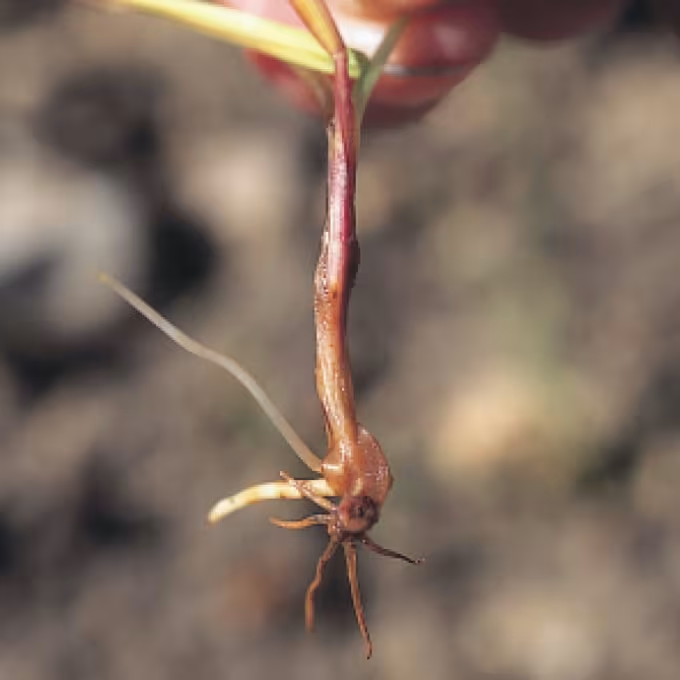
The initial symptom is the browning and softening of root tips. The root system loses its integrity, and tissues become water-soaked and mushy, eventually turning into a necrotic mass.
Above-ground symptoms include stunted growth, leaf chlorosis, and wilting during periods of high temperature or water stress. The plants look stressed as the damaged roots fail to supply sufficient nutrients.
A closer inspection of the root system reveals the destruction of fine root hairs and lateral roots. In severe cases, the taproot may also collapse, leading to the total death of the host plant.
Seedlings are particularly vulnerable, often exhibiting the "damping-off" symptom. The base of the stem becomes thin, darkened, and weakened, causing the seedling to collapse and perish on the soil surface.
In greenhouses or hydroponic systems, the infected root zone often emits a foul, musty odor, which is a clear indicator of active tissue decay caused by the pathogen.
Pathogen
The causative agent of the disease is Pythium deliense, a soil-borne pathogen belonging to the class of oomycetes. Although often called fungi, they are biologically distinct and closer to algae in their evolution.
The pathogen persists in the soil through thick-walled oospores. These survival structures are extremely resilient and can withstand adverse environmental conditions for several years.
Under moist conditions, the pathogen produces zoospores, which are motile spores equipped with flagella. These allow them to swim through the soil water film to reach and infect the roots of susceptible plants.
Pythium deliense exhibits a saprotrophic lifestyle, meaning it can survive on decaying organic matter in the soil, making it a persistent resident that is difficult to eradicate completely.
It has a wide host range, attacking various horticultural crops, cereals, and turfgrasses, particularly during the critical early stages of germination and seedling establishment.
Conditions for development
Excessive soil moisture is the primary driver of disease development. High humidity levels provide the aquatic environment necessary for zoospores to move and infect new roots.
The disease thrives in warm to moderately hot temperatures. Once the temperature and moisture levels are optimized, the spread of the pathogen can become rapid and destructive.
Poor soil aeration, caused by soil compaction or excessive irrigation practices, significantly increases the risk of infection. Reduced oxygen levels inhibit root health and defense mechanisms.
The pathogen is easily transmitted via contaminated water sources, agricultural machinery, and infected transplants, leading to rapid spread across larger areas of production.
Monoculture farming practices contribute to a high inoculum density in the soil, as the pathogen continuously finds suitable hosts to fuel its reproductive cycle.
Why it matters
The disease causes significant economic losses through the widespread death of seedlings, forcing farmers to perform costly replanting procedures and disrupting the cultivation schedule.
In mature plants, root infection leads to poor nutrient uptake, resulting in significantly reduced yields and substandard product quality, which may not meet market requirements.
Plants compromised by Pythium deliense are highly susceptible to opportunistic secondary infections, such as bacterial soft rots or Fusarium-related wilts, which complicate management.
In commercial vegetable production, the disease reduces the shelf life and storage potential of harvested produce, leading to further losses during post-harvest handling.
The long-term presence of the pathogen in the soil can render fields unusable for highly sensitive crops, requiring expensive soil sterilization treatments or shifts in agricultural strategy.
Protection
Implementing a proper crop rotation strategy is essential to break the infection cycle. Alternating between non-host crops and susceptible varieties helps manage pathogen populations in the soil.
Improved irrigation management and the installation of effective drainage systems are critical to preventing waterlogging. Maintaining optimal moisture levels keeps the pathogen in check.
Seed treatment with systemic fungicides is a standard preventive measure. Coating seeds provides early protection to the emerging radicle and reduces the impact of initial soil inoculum.
Biological control agents, such as beneficial Trichoderma species or certain strains of Bacillus subtilis, are highly effective in colonizing the rhizosphere and suppressing Pythium activity.
Strict sanitation protocols, including the disinfection of tools and machinery and the use of pathogen-free water for irrigation, are necessary to prevent the introduction of Pythium deliense to clean fields.
Discussion
No discussions yet — be the first.